

The Architect of Influence: Crafting Persuasion with Integrity
Golden Hook & Introduction
SECTION
Nova: You think persuasion starts when you open your mouth, right? When you finally deliver that brilliant pitch, that meticulously crafted argument? Turns out, you're already too late. The real battle for minds, the genuine opportunity for influence, is won long before the first word is ever spoken.
Atlas: Whoa, really? That sounds like something out of a spy thriller – the invisible art of mind-bending. I mean, for most of us, we spend all our energy on to say, the perfect wording. Are you telling me that's not even the main event?
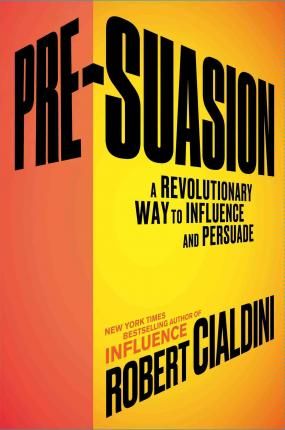
Nova: Exactly! It's actually the pre-game show that matters most. Today we're diving into, and specifically, the groundbreaking work of social psychologist Robert Cialdini, particularly his concept of 'pre-suasion.' Cialdini is this fascinating figure, renowned for decades of rigorous, ethical research into the science of influence. His insights are never about manipulation; they're about understanding human psychology to foster genuine receptivity.
Atlas: Okay, so it’s not about tricking people, but about… setting the mood? I’m curious, because for leaders, especially those trying to introduce groundbreaking innovation, getting genuine buy-in, not just compliance, is everything. How does this 'pre-suasion' actually work?
Pre-Suasion: The Ethical Architecture of Receptivity
SECTION
Nova: It’s precisely about setting the mood, Atlas, but in a very specific, strategic way. Cialdini defines 'pre-suasion' as the process of arranging for recipients to be receptive to a message they encounter it. Think of it as creating a mental pathway, a predisposition, that makes your core message resonate more effectively.
Atlas: So, you're essentially warming up the audience's brain? Like, if I'm about to talk about a bold new AI initiative, I wouldn't just launch into the features. I'd… what? Ask them if they value efficiency or future-proofing first?
Nova: You're on the right track! It could be as subtle as that. Cialdini shares a fantastic example from his research: imagine a furniture store looking to sell more expensive, comfortable couches. In one version of their website, before customers even saw the furniture, a small pop-up asked, "Are you more of a comfort-seeker or a budget-saver?" In another, it was "Are you more of an economy-seeker or a luxury-lover?" The results were striking.
Atlas: I'm guessing the "comfort-seeker" group bought more plush, expensive sofas. Is that it? Because that feels almost too simple.
Nova: It absolutely is! Customers who were subtly primed to think about "comfort" were significantly more likely to prioritize and purchase the higher-priced, comfort-oriented furniture. The preceding question, the 'pre-suasive' moment, made the idea of comfort more accessible in their minds, and therefore, more influential when they saw the products. The cause was the subtle prime, the process was the unconscious activation of a mindset, and the outcome was altered purchasing behavior. It's almost like their internal compass was gently nudged towards a specific direction before they even knew they were navigating.
Atlas: That’s fascinating, but it also raises an immediate flag for an ethical architect. How do you ensure that's genuine receptivity and not just a clever trick? For innovative leaders, we're driven by impact, by fostering growth. We need our teams to genuinely new ideas, not just be subtly swayed.
Nova: That's a crucial distinction, and Cialdini is very clear on this. Ethical pre-suasion isn't about manipulation; it's about. It's about identifying the existing values, needs, or desired states of your audience and then,, bringing those to the forefront of their minds just before you deliver your message. If you’re pitching an innovative solution that genuinely comfort or efficiency, then priming for those values is simply ensuring your message lands on fertile ground. It's about ensuring your ethical innovations are not just heard, but genuinely considered and embraced.
Atlas: That makes sense. It's not creating a false desire, but activating a latent one that genuinely connects to your offering. So, how does this play out beyond sales? Like, for a mentoring leader, trying to guide younger colleagues through complex ethical AI dilemmas or disruptive business models, how do you pre-suade them to be open to challenging conversations or new ways of thinking?
Nova: Consider a charity asking for donations. Research shows if you first display images of people helping others, or ask a question like "Do you consider yourself a helpful person?", you significantly increase the likelihood of donations. The act of bringing prosocial behavior to mind makes people more inclined to act generously. Similarly, for your mentoring, before diving into a complex ethical debate, you might start by asking, "What's the most important value you uphold in your work?" or "How do you define integrity in innovation?"
Atlas: Oh, I see. By making them consciously affirm their commitment to integrity or values, you're essentially priming them to approach the subsequent discussion from that ethical framework. It makes those values more salient. I imagine a lot of our listeners, those assertive innovators, struggle with getting through to cynical or resistant teams. This could be a game-changer for fostering genuine open-mindedness.
Nova: Precisely. It's about creating an environment where their ethical compass is already active, ready to guide their reception of your message. It ensures your ideas resonate effectively. The tiny step the book suggests is: before your next important presentation, consider one small, ethical action you can take to make your audience more receptive to your core message. It could be a question, a shared value, a common goal you highlight.
Atlas: That’s actually really inspiring. It shifts the focus from "how do I convince them?" to "how do I create the space for them to truly hear and embrace this?" For navigating complex innovation with integrity, that's paramount. It's about building bridges, not just delivering blueprints.
Synthesis & Takeaways
SECTION
Nova: Absolutely, Atlas. The profound insight here is that influence isn't a singular event, but a carefully constructed journey. Ethical pre-suasion teaches us that the most impactful communication begins not with the message itself, but with the thoughtful, integrity-driven preparation of the mind. It fundamentally shifts our approach from forcing ideas onto others to creating an environment where those ideas are genuinely welcomed, considered, and embraced. It’s about being an architect of receptivity, not just a speaker of words.
Atlas: That’s such a hopeful way to look at it, especially for leaders driven by impact. It makes you realize that fostering growth in others isn’t just about the advice you give; it’s about the mental landscape you help them cultivate. So, for our listeners, the challenge is clear: before your next crucial conversation, your next pitch, or your next mentoring session, ask yourself: what’s that one ethical action, that subtle prompt, that will open the door for your message to truly land? How can you become an architect of influence, not just for your ideas, but for the growth of those around you?
Nova: A powerful question to reflect on. This is Aibrary. Congratulations on your growth!