

The Transparency Yield: Radical Honesty in Business and Life
Golden Hook & Introduction
SECTION
Nova: Think about the last time a business partnership or a project started to drift. You noticed a delay, or maybe a shift in attitude, but instead of saying exactly what you observed, you kept it polite. You told yourself a story to keep the peace, right? But what if that polite silence is actually a slow-burning poison for your operations, your relationships, and your peace of mind? Today, we are breaking out of the polite holding pattern. Welcome to the show, everyone. I am Nova, and joining me today is Mohamed Kanu, an entrepreneur who knows a thing or two about managing complex systems, data, and agricultural networks. Mohamed, it is wonderful to have you here.
MOHAMED KANU: It is great to be here, Nova. You know, that opening question really strikes a chord with me. In my line of work, whether you are looking at academic records, data spreadsheets, or agricultural supply chains, any hidden friction or inaccurate data always shows up later as a major bottleneck. We often think we are saving trouble by withholding the hard truths, but we are actually just compounding the interest on a debt we will eventually have to pay.
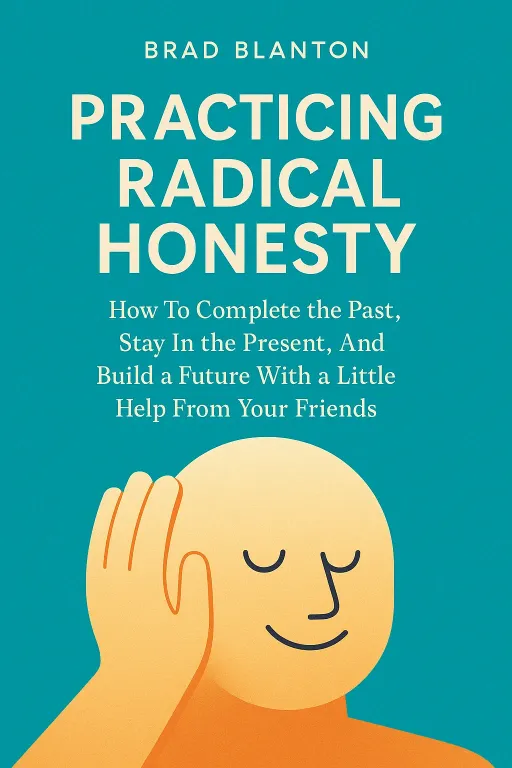
Nova: Oh, compounding interest on operational debt, I love that framing. Today, we are diving deep into Brad Blanton's classic,. We are going to tackle this transformative book from three distinct angles. First, we will look at how withholding the truth acts as a massive drag on our mental and operational systems. Second, we will explore the crucial difference between what we actually notice in reality versus the elaborate stories our minds construct. And finally, we will discuss how to build what Blanton calls a conscious community, applying these ideas to create transparent, high-yielding networks in our work and our lives.
MOHAMED KANU: It is a fascinating roadmap, Nova. As someone who values accuracy and systematic efficiency, the idea that lying or even just withholding information is the primary source of human stress is highly logical. When you look at it from a systems perspective, maintaining a lie or an act requires a continuous expenditure of energy. It is like running a background process on a computer that slowly eats up all your random access memory until the whole system crashes.
Nova: Exactly. Your mental CPU is just spinning its wheels trying to maintain the facade. Blanton argues that our entire culture is caught in this low-level state of exhaustion and depression because we have made lying a lifestyle. We do it to navigate social situations, to protect people's feelings, or to manage how others perceive us. But the cost is that we lose touch with who we actually are and what is happening right in front of us.
The High Cost of Withholding in Systems
SECTION
Nova: Let's look at how this plays out in the real world. Blanton shares a story in the book about a man who suffered from chronic, severe insomnia. He was struggling at his job, his marriage was on the rocks, and he was just completely drained. He decided to take the ultimate risk. He went to his boss and laid out his specific, unvarnished resentments about how the company was being run. He fully expected to get fired. But instead, his boss actually gave him a raise because the feedback was so clear and actionable. Then he went home and told his wife the absolute truth about his feelings and actions. Instead of leaving him, they actually fell in love again. And the funniest side effect? His insomnia completely disappeared.
MOHAMED KANU: That is an incredible case study, Nova. From an administrative viewpoint, what that man did was clear out a massive backlog of unresolved data. When we withhold our true thoughts and feelings, we are essentially keeping double books. We have the official ledger that we show to the world, and then we have the private ledger of our actual experiences, resentments, and observations. Running two sets of books is incredibly stressful and inefficient. It makes perfect sense that his insomnia cleared up once he consolidated his records into a single, transparent system.
Nova: Yes, he finally integrated his ledgers. We spend so much energy on impression management, trying to control what other people think of us. Blanton points out that when we are honest, we are suddenly freed from that exhausting task. We don't have to remember what version of the story we told to whom.
MOHAMED KANU: It is about reducing systemic redundancy and error. In agriculture, if a farmer hides the fact that a crop is failing or that a pest issue has started, the entire cooperative suffers because the collective planning is based on false data. By the time the truth comes out, the window for intervention has closed. Radical honesty is essentially a real-time reporting system. It might be uncomfortable to report a pest outbreak or a personal failure immediately, but it is the only way to ensure the survival of the larger enterprise.
Nova: That is a perfect parallel, Mohamed. But why do we find it so incredibly hard to do this? Why do we choose the slow poison of withholding over the quick sting of truth?
MOHAMED KANU: I think it comes down to our early training. Blanton talks about the family as a sort of university of dysfunction where we are systematically taught to prioritize moralistic rules and pretense over our actual sensory experiences. We learn very early that expressing our true feelings, especially anger or disappointment, is dangerous. So we develop these elaborate defense mechanisms to protect ourselves.
Nova: Right, we become master performers. We learn to say we are fine when we are actually hurting, or we pretend to agree with decisions we secretly oppose. We trade our authenticity for a false sense of safety. But as Blanton says, adults are often just large children who have forgotten how to play because we are so weighed down by these self-imposed obligations and roles.
Noticing vs. Interpreting in the Field
SECTION
Nova: This brings us to one of the most powerful distinctions in the book, the difference between noticing and interpreting. Blanton divides our awareness into three areas: what we notice happening outside of us, what we notice happening inside our bodies, and the stories or interpretations our minds construct about those observations. He argues that most of our suffering comes from confusing our interpretations with actual reality.
MOHAMED KANU: This is a highly analytical distinction, and it is incredibly useful. In data processing, we have raw data, and then we have the analysis or the models we build from that data. The raw data is what we observe, like the temperature of the soil, the amount of rainfall, or the exact words someone spoke. The interpretation is the story we build, like assuming a partner is lazy because they missed a deadline, or believing a market shift is a personal conspiracy against us.
Nova: Exactly. The mind is a relentless model-maker. It takes a tiny sliver of raw data and immediately spins a massive, dramatic narrative around it. Blanton uses the vivid example of a young woman named Sally to show how this reactive mind operates. When Sally was a child, her brother snatched her toy boat, she chased him, tripped over their dog, fell on the concrete, and got the wind knocked out of her. Her mother cleaned her up and gave her candy, saying she was not hurt. Years later, as a college student, she goes on a picnic with her boyfriend. He squeezes her knee, says she is not hurt when she says ouch, and the sun glints off his glasses. Suddenly, Sally feels intensely nauseated and decides she has to break up with him. Her mind constructed a logical story about why he was wrong for her, but in reality, her reactive mind was just triggered by the sensory associations of that childhood fall, the glint of the glasses, and the phrase, you are not hurt.
MOHAMED KANU: That story is a powerful reminder of how our past programming runs our present decisions without our conscious consent. Sally's mind came up with rationalizations to justify a purely physical, associative reaction. She thought she was making a logical decision, but she was actually just reacting to old, uncompleted data. In business, we do this constantly. We react to a new partner or a new market challenge based on a bad experience we had ten years ago, completely missing the unique reality of the present moment.
Nova: Yes, we are fighting ghosts from our past instead of dealing with the person standing right in front of us. And the tragedy is that we believe our own stories. We defend our interpretations as if they are absolute truths, which Blanton says is a major source of conflict and destruction, both personally and globally.
MOHAMED KANU: It really is. When we are attached to our models of how things should be, we resist how things actually are. We spend our energy wishing the weather was different, or wishing our partners were different, instead of accepting the raw data and working with it. Accepting the reality of a situation is not passive resignation; it is the necessary starting point for any effective action. You cannot design a successful irrigation system based on the rainfall you wish you had; you have to design it based on the actual measurements.
Nova: That is a beautiful way to put it, Mohamed. We have to ground ourselves in the actual measurements of our lives. Blanton suggests that the way to break free from this mental jail is to focus on our direct perception, to describe what is happening without the layer of abstraction and judgment. Instead of saying, you are being completely irresponsible, we say, I notice you arrived thirty minutes after our agreed time, and I notice my chest feels tight and I am feeling angry.
MOHAMED KANU: That shift in language is profound because it separates the raw data from the emotional interpretation. It prevents the other person from going on the defensive because you are not attacking their character; you are simply stating verifiable facts and your own internal experience. It creates a clean space for communication.
Expressing Friction Directly for Real Growth
SECTION
Nova: It really does. But to get to that clean space, we often have to deal with the backlog of unexpressed emotions, especially anger. Blanton has some very radical, and frankly, quite challenging ideas about how to deal with anger. He argues that we cannot truly forgive someone until we have expressed our resentment directly, specifically, and face-to-face to the person we are mad at.
MOHAMED KANU: This is probably the most controversial part of his philosophy, but from a systems-maintenance perspective, it makes a lot of sense. If you have a glitch in a software program, you don't fix it by ignoring it or by writing a polite letter to another part of the system. You have to address the specific line of code where the error is occurring. Blanton suggests that withholding anger is like holding onto a live grenade, hoping it will only hurt the other person, but it actually ends up destroying our own well-being and the aliveness of our relationships.
Nova: Yes, he uses that exact grenade analogy. We think we are being heroic by suppressing our anger to protect the relationship, but that suppressed anger just turns into quiet resentment, passive-aggression, and eventually, a complete loss of intimacy. The relationship becomes a hollow shell where two people are just politely tolerating each other.
MOHAMED KANU: I see this frequently in entrepreneurial ventures and community organizations. People avoid direct confrontation because they fear it will break the group apart. But by avoiding the temporary discomfort of a direct conversation, they allow a toxic buildup of unspoken grievances. Eventually, a minor disagreement triggers a massive explosion, and the partnership dissolves. If they had practiced radical honesty from the beginning, expressing their resentments as they arose, they could have resolved the issues when they were still manageable.
Nova: Exactly. Blanton provides very specific guidelines for expressing this friction. He says we need to talk face-to-face, use present-tense statements, and be incredibly specific about what we resent. We don't say, you always ruin everything. We say, I resent you for changing the meeting time yesterday without calling me, and I am mad right now.
MOHAMED KANU: Being specific is key. It keeps the conversation grounded in the physical world rather than the abstract world of character assassination. It is the difference between saying, this soil is terrible, and saying, this soil has a nitrogen deficiency of fifteen percent. One is a useless complaint; the other is a specific problem that you can actually solve.
Nova: Yes, and once you express that specific resentment fully, and let yourself actually feel the anger in your body, Blanton says it naturally dissipates. It clears the air, and suddenly, genuine appreciation and love can return. You can actually forgive the person because the emotional charge is gone.
MOHAMED KANU: It is a process of completion. In administration, we talk about closing a file. An open file takes up mental space and attention. Expressing resentment directly is how we close the file on past conflicts so we can free up our energy to create something new in the present.
Building the Cooperative of Being
SECTION
Nova: Freeing up energy to create is exactly what the second half of the book is about. Once we clear away the past through honesty, we can use our minds for what they were actually designed for, which is creation, play, and service. Blanton talks about moving from a victim mentality to a creator mentality, where we consciously design our lives and our projects.
MOHAMED KANU: This is where the book becomes incredibly practical for entrepreneurs. Blanton introduces the concept of the umbrella project, which is a high-level framework for managing all the different domains of our lives, like family, career, health, and community. He suggests that instead of just reacting to whatever happens to us, we should write up detailed project outlines with clear visions, measures, and action items.
Nova: Yes, and he emphasizes that these project outlines are not rigid, unyielding plans. They are more like training wheels or learning tools. We write them, we act on them, we modify them as we get new data, and we even discard them when they no longer serve our life purpose. It is a dynamic, creative process.
MOHAMED KANU: I really appreciate that flexibility. In business, we often fall into the trap of becoming slaves to our own business plans. We get so attached to our initial model that we ignore the changing reality of the market. Blanton's approach encourages us to treat our plans as temporary guides. We remain committed to our vision, but completely flexible and even nonchalant about the specific outcomes, because we know we can always adapt and recreate.
Nova: That combination of total commitment and complete nonchalance is such a powerful mindset. It is what allows us to play the game of life with full passion without being paralyzed by the fear of failure.
MOHAMED KANU: It really is. And to sustain this way of living, Blanton argues that we need a supportive community of friends who also practice radical honesty. We cannot do this alone because the gravity of the surrounding culture, which is built on pretense and illusion, is too strong. We need people who will call us out when we start lying to ourselves, and who will support us in our creative endeavors.
Nova: Yes, we need a conscious community. In an agricultural context, this is like building a cooperative where farmers don't just share equipment, but they share their true experiences, their failures, and their visions. Imagine how much more resilient a farming community would be if they could be completely honest about their struggles without fear of judgment or loss of status.
MOHAMED KANU: It would be revolutionary, Nova. In many farming communities, there is a lot of pride and a fear of showing vulnerability. Farmers will struggle in silence with debt, crop failure, or mental health issues until it is too late. A cooperative built on the principles of radical honesty would create a safety net of genuine trust. It would allow for collective problem-solving based on accurate, real-time data, and it would foster a deep sense of connection and mutual support that is sorely missing in our modern, isolated world.
Synthesis & Actionable Takeaways
SECTION
Nova: It is a beautiful vision, Mohamed, and it shows how these seemingly personal, psychological ideas can scale up to transform entire systems and communities. As we wrap up our conversation today, let's synthesize the key takeaways from our deep dive into.
MOHAMED KANU: I think the first major takeaway is the importance of clearing our operational debt by telling the truth. We need to identify where we are keeping double books in our lives, where we are withholding our true thoughts and feelings to maintain a false peace, and take the risk to have those direct, honest conversations.
Nova: Yes, and the second takeaway is to constantly distinguish between what we are actually noticing in reality versus the stories our minds are spinning. We need to ground ourselves in the raw data of our sensory experiences and our bodily sensations, and hold our mental models very lightly.
MOHAMED KANU: And finally, we need to actively design our lives as creators, using tools like the umbrella project to focus our energy, while building conscious communities of support. We need to surround ourselves with friends and partners who value truth over pretense, so we can collaborate and create a world that works for everyone.
Nova: I couldn't have said it better myself, Mohamed. To our listeners out there, we leave you with a simple, actionable challenge for this week. Find one area in your life or your work where you have been withholding a difficult truth or a lingering resentment. Ground yourself in the raw facts of what you noticed, step out of the dramatic story in your mind, and have that face-to-face, radically honest conversation. Clear out that old data and see how much energy and aliveness it frees up for your future. Mohamed, thank you so much for sharing your incredible insights and systems perspective with us today.
MOHAMED KANU: Thank you, Nova. It has been an absolute pleasure.
Nova: And thank you to all our listeners. Keep noticing, keep sharing, and we will see you next time on the show. Goodbye, everyone.
MOHAMED KANU: Goodbye.









