The Paradox of Influence: Leading with Conviction, Not Control
Golden Hook & Introduction
SECTION
Nova: Alright, Atlas, challenge accepted. We're diving into a book today that truly flips the script on leadership. Give me your five-word review of "The Paradox of Influence: Leading with Conviction, Not Control." Go!
Atlas: Five words? Hmm. "Power isn't a four-letter word."
Nova: Oh, I love that! That's brilliant. It immediately captures the essence of what we're exploring today. We're talking about "The Paradox of Influence: Leading with Conviction, Not Control," a book that really challenges the conventional wisdom about what it means to lead effectively. It's born from observing those quiet successes, the leaders who operate outside the spotlight of overt authority, yet achieve massive impact.
Atlas: Right? And for anyone, especially those of us who might be navigating complex policy landscapes or guiding innovation, the idea of "leading with conviction, not control" can sound… well, a bit utopian, maybe even a little risky. We're often taught that control is the bedrock of stability and results.
Nova: Exactly. That's the blind spot the book identifies. It's easy to equate leadership with direct control, especially in complex, high-stakes fields like healthcare or biotechnology ethics. But it argues that true, lasting influence often comes from a deeper, much more subtle understanding of human dynamics.
The Illusion of Control: Recognizing the Blind Spot in Leadership
SECTION
Atlas: Okay, but for our listeners who are managing high-pressure teams, or trying to push through critical initiatives, control feels not just necessary, but essential. It’s like trying to steer a supertanker with just a tiny paddle, you need that big rudder, that direct command, to make any real headway, right?
Nova: That's a great analogy, Atlas. And it perfectly illustrates the common misconception. The book argues that often, that big rudder of direct control is actually causing more drag than direction. It's not about being hands-off, but about a different of hand-on. Imagine a hospital administrator, let's call her Dr. Evelyn, tasked with implementing a new, complex electronic health record system.
Atlas: Oh, I know that feeling. That’s a nightmare scenario for many.
Nova: Absolutely. Now, one approach is for Dr. Evelyn to simply mandate the new system. She sends out memos, sets strict deadlines, and dispatches IT teams to enforce compliance. The here is a top-down directive. The is often met with resistance, frustration, and workarounds from overwhelmed staff who feel unheard. The? A system that's technically implemented, but poorly adopted, leading to errors, burnout, and ultimately, a failure to improve patient care. She had control, but no real influence.
Atlas: Wow. That's actually really disheartening. I imagine a lot of our listeners have seen that play out in various forms. It's the classic "we're doing it because I said so" approach.
Nova: It is. Now, consider another Dr. Evelyn. This Dr. Evelyn starts by spending weeks observing her staff, talking to nurses, doctors, and administrative assistants, understanding their current workflows, their pain points with the old system, and their fears about the new one. She forms a task force with representatives from every department, not just to them about the new system, but to the implementation plan. The is empathy and understanding. The is collaborative, with staff feeling heard and invested. The? A system that's not just adopted, but embraced, because it's tailored to their needs, and they feel a sense of ownership. She didn't dictate; she navigated.
Atlas: That's incredible. It highlights the difference between compliance and commitment. One comes from fear, the other from buy-in. So, it's not about being passive, it's about actively engaging with the human element.
Nova: Precisely. It's about recognizing that in complex human systems, direct control often creates friction, while understanding and navigating those human dynamics unlocks genuine influence.
Unpacking the Mechanisms of Influence: Power, Persuasion, and Ethical Navigation
SECTION
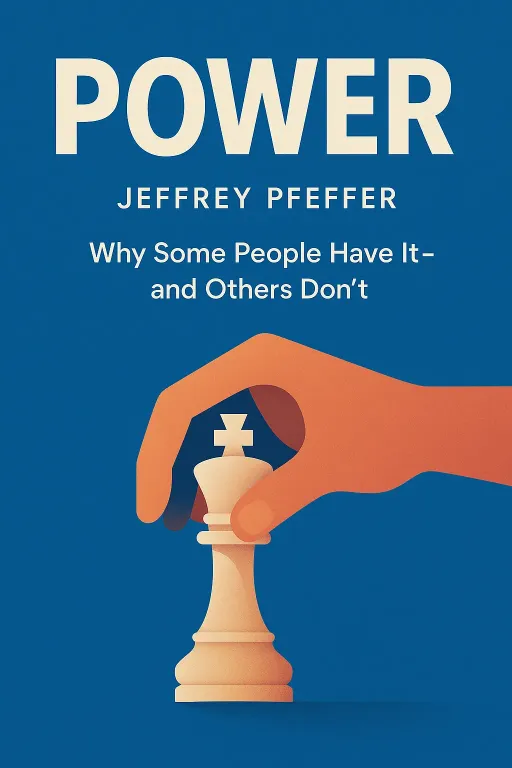
Atlas: That makes perfect sense. And that "different kind of hand-on" you mentioned, Nova, that's where the insights from books like Jeffrey Pfeffer's "Power" and Robert Cialdini's "Influence" really come into play.
Nova: Absolutely. Pfeffer deconstructs the mechanisms of influence, arguing that understanding power dynamics is essential for effective leadership. But here's the kicker: he shows power isn't inherently negative.
Atlas: Hold on, power often feels like a dirty word. For someone working in biotechnology ethics, for example, the term "power dynamics" can immediately conjure images of corporate greed or undue influence. How can it be "not inherently negative"?
Nova: That's a great question, and it's a critical reframing. Pfeffer looks at power simply as the capacity to influence behavior. Think of a dedicated healthcare advocate. This advocate uses their —their deep knowledge of patient needs, their established network with policymakers, their reputation for integrity—to influence legislation that benefits vulnerable populations. They aren't coercing; they're strategically applying their capacity to shape outcomes for the greater good. That's power in action, but for a positive, ethical purpose.
Atlas: Right, like a skilled diplomat navigating international relations, not a dictator.
Nova: Exactly! And then we have Robert Cialdini with "Influence," which reveals the psychological principles that drive compliance and persuasion. Cialdini gives us the 'how.' He breaks down influence into six universal principles: reciprocity, commitment and consistency, social proof, authority, liking, and scarcity.
Atlas: Can you give us a quick, relatable example of one of those? Just to ground it for our listeners.
Nova: Of course. Take 'social proof.' Imagine a public health campaign trying to encourage flu vaccinations. Instead of just listing medical benefits, they highlight that "70% of people in your community have already gotten their flu shot." That simple statement harnesses social proof, making vaccination seem like the widely accepted, normal, and desirable behavior. It's incredibly effective because we're wired to look to others for cues on how to act.
Atlas: That's a perfect example. So, Pfeffer gives us the 'what'—power is a tool, a capacity—and Cialdini gives us the 'how'—the psychological levers to activate that capacity. But let's be honest, those levers can feel a bit like manipulation if not used ethically.
Nova: And that's precisely where Nova's Take comes in. Real influence isn't about dictating or manipulating; it's about skillfully navigating human behavior and organizational structures to achieve meaningful change. It's about ethical guidance, building consensus, and aligning interests, rather than resorting to overt authority.
From Dictation to Navigation: Applying Influence for Transformative Change
SECTION
Nova: That’s a crucial distinction, Atlas. It's about understanding the currents, not just trying to dam the river. So, turning to the deep question posed in the book: where in your current work could you shift from trying to control outcomes to strategically influencing perspectives? For leaders in healthcare policy or biotechnology ethics, this is a massive paradigm shift. What’s the starting point for someone who wants to make that change?
Atlas: That makes me wonder, how does this actually work on the ground? For a strategist who’s used to clear objectives and direct lines of command, this might feel like a leap of faith. How do you start influencing perspectives without feeling like you're losing control?
Nova: You start by mapping your stakeholders, not just your direct reports. Understand their motivations, their fears, their goals, and their existing networks. It's about active listening, asking powerful questions, and identifying shared values or common ground. Instead of announcing a new policy, you might first engage key opinion leaders, gather their input, and allow them to become champions, thereby influencing their peers through social proof and authority.
Atlas: So, it's like a chess game, but where everyone on the board has their own will and motivations. You're not just moving pieces; you're convincing them to move themselves in a direction that aligns with the overall strategy.
Nova: Beautiful analogy, Atlas. And it requires a deep trust in your own insights and ability to lead. The book implicitly reinforces that your analytical depth, your understanding of context, your strategic foresight – these are all forms of power you can leverage for influence. It's about understanding the subtle forces at play, much like a historian understands the complex interplay of events that shape an era. You work the flow to guide it.
Atlas: That's actually really inspiring. It means that the impact we seek, especially in advancing healthcare for all or guiding innovation responsibly, isn't about having the loudest voice or the highest title. It's about the intelligence of our approach.
Nova: Exactly. It's about amplifying your influence through conviction and strategic navigation, not brute force control. It’s a call to trust your insights, Atlas, and to understand that true leadership is often a subtle art, not a blunt instrument.
Synthesis & Takeaways
SECTION
Nova: So, to bring it all together, the paradox is truly profound: by letting go of the for direct control, you gain far greater, more sustainable influence. It’s about becoming a master navigator of human systems, understanding the psychological currents, and steering with wisdom rather than sheer force.
Atlas: And for anyone looking to shape the future of healthcare, guide innovation responsibly, or simply amplify their positive influence in their own sphere, this isn't just theory. It's an actionable blueprint for impact. It’s a reminder that sometimes, the most powerful levers are the ones you can’t see, but you can certainly feel.
Nova: Absolutely. So, our challenge to you, dear listener, is to identify one area this week where you typically try to control an outcome. Instead, try to shift your mindset and strategically influence perspectives. Observe the difference.
Atlas: It’s a powerful shift. And it really does resonate with the idea that your insights are valuable, and your ability to lead is inherent, not just granted by a title.
Nova: That’s it. It's about unlocking your true leadership potential.
Atlas: This is Aibrary. Congratulations on your growth!