Mastering the Art of Persuasive Communication
Golden Hook & Introduction
SECTION
Nova: You know, Atlas, I think we've all been there. You've got this brilliant idea, this crucial message, and you just if people truly understood it, everything would click. You articulate it perfectly in your head, maybe even practice in the shower.
Atlas: Oh, absolutely. Then you open your mouth, the words come out, and... crickets. Or worse, blank stares. Or even worse, polite nods that mean absolutely nothing. It’s like you’re speaking a completely different language.
Nova: Exactly! What if I told you that the very act of "just speaking your mind" often sabotages your influence? That the directness we sometimes pride ourselves on can be the biggest barrier to connection?
Atlas: Whoa, that's a bold claim. Because for a lot of our listeners, especially those who are strategic thinkers, directness and clarity are seen as virtues. It's about getting to the point. But you’re suggesting it might actually be a trap?
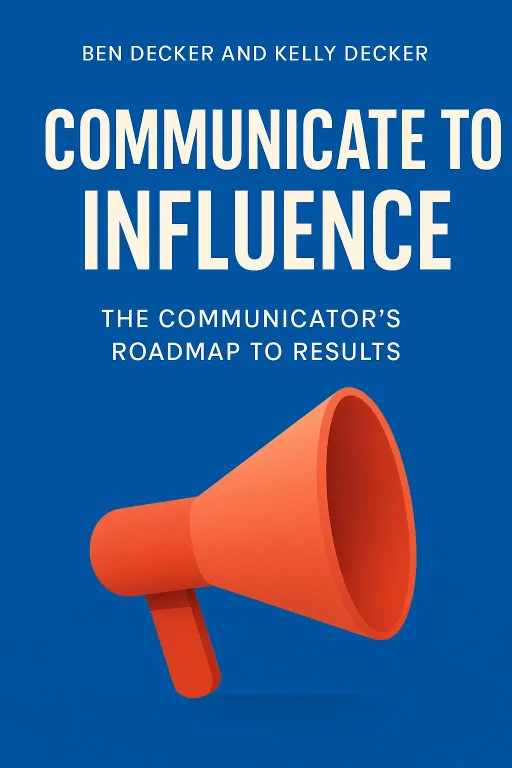
Nova: In many situations, yes. And that's what we're dissecting today, drawing powerful insights from two communication titans. We're looking at "Communicate to Influence" by Ben and Kelly Decker, who run Decker Communications, a global training firm whose methodology shapes executives worldwide. And we're also pulling from John C. Maxwell's "The 16 Undeniable Laws of Communication," principles that have sold over 30 million books and are cornerstones of countless leadership programs.
Atlas: That’s a powerful duo. So, we’re talking about moving beyond just a message, to actually it in a way that creates impact. For anyone building capable teams or leading complex projects, being heard and understood is paramount.
Nova: Precisely. It’s not just about what you say, but how you say it, who you’re speaking to, and the underlying intent of your message. It's about designing your communication for influence. And we’re going to start by looking at how these experts lay out the foundational frameworks for that.
The Framework of Influence: Structuring for Impact
SECTION
Nova: So, let's dive into the first core idea: the absolute necessity of structuring your message for maximum impact. The Deckers introduce something called the 'Decker Grid,' which essentially forces you to be clear, concise, and compelling.
Atlas: Okay, so "clear, concise, compelling." That sounds like pretty standard advice on the surface. But how do you achieve that, especially when you're dealing with really complex information? For someone who's an insightful architect, they're often trying to convey incredibly nuanced strategies. How do you make that concise without losing the depth?
Nova: That’s the magic of the Decker Grid, and it ties into Maxwell's "Law of Simplicity." It's not about dumbing down your message, Atlas. It's about ruthless prioritization. The Deckers ask you to identify your. Just one.
Atlas: Just one? That sounds almost impossible sometimes. I can imagine a strategist trying to present a quarter's worth of complex data and being told, "Boil it down to one sentence." They'd probably laugh. Or cry.
Nova: I know, it sounds counterintuitive, especially for those who value depth. But think of it like this: a master architect doesn't just present a pile of blueprints. They present first – the single most important outcome, the core purpose of the building. The details support that vision, but they don't with them. The Decker Grid helps you find that core vision, that one clear takeaway you want your audience to remember and act on.
Atlas: I guess that makes sense. It's like, if you can't articulate the you want someone to walk away with, then you're probably just rambling. So, the Law of Simplicity isn't about avoiding complexity, but about making the clear, even if the underlying topic is complex.
Nova: Exactly! Maxwell puts it beautifully: "If you can't say it simply, you don't understand it well enough." Simplicity isn't a lack of sophistication; it's the of deep understanding. It's about removing noise, not substance. Imagine a leader trying to rally their team around a new, ambitious project. If they present a 30-slide deck filled with jargon and projections, they'll lose everyone. But if they start with, "Our single most important message today is that by Q4, we will launch the product that redefines our industry," suddenly, the team has a clear target, a compelling vision.
Atlas: That's a great example. It shifts the focus from "here's all the information" to "here's what matters most." I can see how that would empower a team, giving them a clear North Star. It's like providing a clear blueprint, rather than just a pile of bricks.
Nova: Precisely. The Decker Grid provides that blueprint for your message. It's about asking, "What do I want my audience to or as a result of hearing me?" Not just "what information do I want to transmit?"
Atlas: So, it's not just about getting the words right, but getting the and the right from the very beginning. That's a powerful reframing for anyone in a leadership position, especially when you're trying to build really capable teams.
The Audience & Intent: The Heart of Connection
SECTION
Nova: And that naturally leads us to our second core idea, which is equally, if not more, critical: understanding your audience and the underlying intent of your message. Because clarity is useless if it's not tailored to the people you're talking to.
Atlas: Oh, I love this. This resonates deeply with the "Empathetic Strategist" within our listeners. It's not just about what want to say, but what need to hear to be empowered. But how do you understand your audience's needs, especially when you're trying to delegate effectively or navigate a tricky conflict? It's often more than just surface-level information.
Nova: Absolutely. This is where Maxwell's "Law of Connection" comes in. He argues that you have to connect with people you try to move them. And the Deckers emphasize tailoring your message to your audience's needs and interests to maximize engagement. It means stepping outside your own head and into theirs. What are their concerns? Their motivations? Their pain points?
Atlas: That makes me wonder, how do you discover those deep-seated needs and interests without being intrusive or making assumptions? For an empathetic strategist, it's about genuine connection, not just a tactical maneuver.
Nova: That’s where active listening comes in, Atlas – one of our growth recommendations for our listeners. It's about asking open-ended questions and truly hearing their answers, not just waiting for your turn to speak. Before you even craft your "single most important message," you need to listen. For example, if you're delegating a critical project, instead of just saying, "Here's your task," an empathetic strategist might start by asking, "What are your current priorities? What support would make you feel most confident tackling this?"
Atlas: That’s such a fundamental shift. Instead of just delivering instructions, you're creating a dialogue. It sounds like the intent isn't just to get the task done, but to empower the person doing it, to build their capability.
Nova: Precisely. Let's take that delegation example. A manager needs to delegate a complex task to a team member who seems hesitant. If the manager just says, "I need you to handle this report by Friday," the team member might feel overwhelmed or resentful. But if the manager has first connected, listened, and understood that the team member is worried about their workload, or feels they lack a specific skill, the message can be tailored.
Atlas: So, instead of just the "what," the manager would focus on the "why" for.
Nova: Exactly. They might say, "I know you're juggling a lot, but this report is crucial for our Q3 strategy, and frankly, your analytical skills are exactly what we need to make it shine. I'm confident you can handle it, and I'm here to support you with X, Y, and Z resources. This is a real opportunity for you to lead on a high-visibility project."
Atlas: Wow, that's powerful. It acknowledges their concerns, highlights their value, and offers support. That's not just delegating; that's empowering. It speaks to their potential, which aligns perfectly with that "growth catalyst" mindset. It's using communication to foster genuine growth and cohesion, turning a potential challenge into an opportunity.
Nova: That’s the Law of Connection in action. It's about bridging the gap between you and your audience, finding common ground, and then delivering your message in a way that resonates with world, not just yours. It's empathy in action, leading to influence.
Synthesis & Takeaways
SECTION
Nova: So, when we bring these two ideas together – the structural clarity of the Decker Grid and Maxwell's Law of Simplicity, combined with the audience-centric approach of the Law of Connection and tailoring your message – we see that influential communication isn't about being the loudest voice in the room. It’s about being the most strategic and empathetic.
Atlas: That’s actually really inspiring. The "tiny step" from the book content – identifying your single most important message and tailoring it – becomes incredibly powerful when you apply these frameworks. It's about moving from just "having a message" to "creating an impact."
Nova: Indeed. It transforms communication from a one-way broadcast into a two-way connection. It’s about building bridges, not just shouting across a chasm. It’s about ensuring your intent, your message, and your delivery all align to meet your audience where they are, and then guide them to where you need them to be.
Atlas: For our listeners who are constantly navigating complex team dynamics, delegating vital tasks, or even resolving conflicts, this isn't just theory. It's a practical toolkit. So, if there's one final thought you could leave them with, one actionable insight to apply right now, what would it be?
Nova: Before your next important conversation or presentation, don't just think about you'll say. Instead, pause and consider: are you speaking to? do you want them to internalize? And most critically, as a direct result of your words? Design your communication with that clarity and empathy, and watch your influence grow exponentially.
Atlas: That’s a profound shift in perspective. It really highlights that true influence isn't about manipulation, but about understanding and connection.
Nova: Absolutely. It's about honoring your audience and your message with equal weight.
Nova: This is Aibrary. Congratulations on your growth!