

Unpacking Power: The Enduring Legacy of Colonialism
Golden Hook & Introduction
SECTION
Nova: You know, Atlas, I was thinking about how we often talk about history, right? Like it's this dusty collection of facts, neatly packaged and filed away. But what if the very way we look at history—the lens through which we view it—is actually a powerful tool, not just for understanding the past, but for controlling the present?
Atlas: Oh, I like that. So you’re saying it’s not just what happened, but we’re told it happened, and that ‘how’ has an agenda? That makes me wonder, are we ever truly seeing history objectively, or is it always filtered through some kind of power structure?
Nova: Exactly! And that’s precisely what we’re digging into today with a couple of foundational texts that fundamentally reshaped how we understand global power dynamics. We're talking about the enduring legacy of colonialism, not just as a historical event, but as an ongoing influence.
Atlas: Right, like the ripples still spreading from a stone dropped centuries ago. This is crucial for anyone who looks beyond the headlines and wants to understand the deeper currents shaping our world.
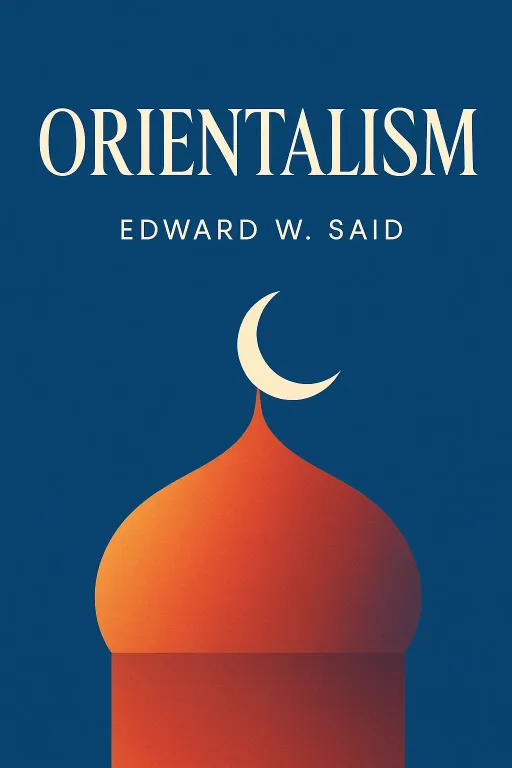
Nova: Absolutely. And to guide us, we’re looking at two seminal works: first, Edward Said’s groundbreaking "Orientalism," and then Robert J. C. Young’s comprehensive "Postcolonialism: An Historical Introduction." Said, a brilliant literary theorist, really exposed how Western scholarship and culture created a specific, often romanticized and prejudiced, image of the 'Orient,' which then served as a justification for political domination.
Atlas: That’s fascinating. So it wasn't just about military might, but about shaping the narrative, creating a story that made conquest seem natural or even necessary. It’s like, if you can define who someone is, you can control what they become.
Nova: Precisely. And this idea of the "colonial gaze" that Said introduced was truly revolutionary. Before him, much of Western thought about the Middle East, for instance, was accepted as objective truth. Said, who was born in Jerusalem and spent his life navigating multiple cultures, brought this incredible insider-outsider perspective. He wasn't just critiquing from afar; he lived the complexities he wrote about. His work, initially published in the late 70s, sparked massive academic debate and really ignited the field of postcolonial studies. It wasn't universally loved, of course; some critics argued he oversimplified the West's view or ignored internal dynamics within the 'Orient.' But its impact on how we analyze power and representation is undeniable.
Atlas: Wow, that’s powerful. It makes me think about how much of what we 'know' about other cultures might just be a reflection of our own biases, rather than an accurate picture of them. So, the military aspect is one thing, but the intellectual and cultural domination… that’s a whole different battlefield.
Deconstructing the Colonial Gaze
SECTION
Nova: It absolutely is. And that’s where Said’s work really shines a light. He argued that 'Orientalism' wasn't just a collection of false ideas; it was a structured system of thought, a way of seeing that allowed the West to define, categorize, and ultimately control the East. Think of it as a vast, elaborate stage production where the West wrote the script, designed the sets, and cast the roles for the 'Orient.'
Atlas: That’s a great analogy. So the 'Orient' became this exotic, mysterious, often irrational 'other' against which the West could define itself as rational, progressive, and superior. It created a convenient justification for intervention.
Nova: Exactly! It wasn't just about individual scholars; it was institutionalized in universities, government policies, literature, and art. Said argued that this intellectual framework was so pervasive that it became a self-fulfilling prophecy, shaping not just how the West saw the East, but how people in the East sometimes began to see themselves.
Atlas: That’s kind of heartbreaking, actually. To have your identity largely defined by an external, dominant power. It sounds like a psychological colonization, not just a physical one. It’s like being handed a mirror where someone else has drawn your face on it.
Nova: A perfect way to put it. And Robert J. C. Young, in "Postcolonialism: An Historical Introduction," picks up on this by meticulously charting how these colonial power structures evolved. He provides a comprehensive historical overview of postcolonialism, tracing its roots from anti-colonial nationalist movements all the way to its development as a critical academic framework. Young's work is like the definitive map for understanding this intellectual journey.
Atlas: So Young gives us the roadmap of how these ideas were fought against and eventually deconstructed. But what’s fascinating is how this isn't just about the past. Nova, you mentioned in your take that Said and Young reveal how these frameworks still influence contemporary societal dynamics. How does that play out today? Where do we still see this colonial gaze operating, even subtly?
Nova: Well, think about media representations. How are certain regions or cultures portrayed in news, films, or even tourism campaigns? Are they still depicted as needing saving, as inherently chaotic, or as purely exotic backdrops for Western adventures?
Atlas: Oh, I see that. Like the persistent stereotypes in Hollywood, or even the way international aid is sometimes framed – as if solutions only come from one direction. It’s a very subtle form of soft power, isn't it?
Nova: It is. It's the lingering echo of that intellectual and cultural domination. It shapes our perceptions of global inequalities, resource distribution, and even who gets to tell whose story. It makes us question whether the "universal" values we often promote are truly universal, or if they're rooted in a specific, historically dominant worldview.
Rethinking History and Identity
SECTION
Nova: And this brings us powerfully to Frantz Fanon's "The Wretched of the Earth," a book that tackles the psychology of colonialism and liberation head-on. Fanon, a Martinican psychiatrist and philosopher, offers a raw, unflinching analysis of what colonialism does to the human psyche, and crucially, what decolonization truly means for the colonized.
Atlas: Oh man, that sounds intense. So while Said and Young give us the intellectual frameworks, Fanon dives into the lived, emotional, and psychological reality of it. What exactly does he argue about the psychology of colonialism?
Nova: He argues that colonialism isn't just an economic or political system; it's a profoundly dehumanizing process. It creates a deeply fractured identity in the colonized, forcing them to internalize the colonizer's view of them as inferior. The violence of colonialism, for Fanon, isn't just physical; it's also psychological, twisting the self-perception of an entire people.
Atlas: That’s heavy. It’s like, beyond the physical chains, there’s a mental cage that’s even harder to break free from. And you mentioned "liberation." Is Fanon suggesting that resistance, even violent resistance, is a necessary part of reclaiming that fractured identity?
Nova: He absolutely does. Fanon saw violence as a cathartic and necessary act for the colonized to reclaim their humanity, to purge the internalized inferiority, and to forge a new, authentic identity. He believed that through the struggle for liberation, the colonized could rediscover their agency and rebuild a sense of self that had been systematically suppressed. Now, this is a part of his work that has been widely debated and critiqued, particularly for its endorsement of revolutionary violence. Many scholars debate the practicalities and ethics of such a stance. But his underlying point about the psychological transformation through resistance, the idea of reclaiming one's selfhood, remains incredibly powerful.
Atlas: That gives me chills. It’s such a radical perspective – moving beyond just political independence to a complete mental and emotional overhaul. For our listeners who are trying to understand deep-seated social injustices or even personal struggles for self-worth, this idea of reclaiming agency must resonate deeply. It’s about more than just changing laws; it’s about changing how people see themselves and their place in the world.
Nova: Exactly. My take on Fanon is that his work is a powerful call to understand these psychological scars and the complex, often painful processes of reclaiming identity. It's not just about what colonizers took, but what the colonized had to fight to get back, internally. It's about recognizing that true liberation is holistic, encompassing the mind as much as the land. It’s also a sobering reminder that the trauma of oppression doesn’t just vanish once independence is declared.
Atlas: So these three thinkers, Said, Young, and Fanon, they're essentially showing us that power operates on so many levels – intellectual, cultural, historical, and psychological. It’s not just about who holds the biggest stick, but who gets to write the story and define reality.
Synthesis & Takeaways
SECTION
Nova: That’s the core of it, Atlas. These books collectively challenge us to look beyond surface-level narratives. They compel us to ask: How do the stories we’re taught about history continue to serve or undermine existing power structures today? Because if we don't understand the origins and mechanisms of these power dynamics, we risk perpetuating them, often unknowingly.
Atlas: That’s such a crucial deep question, and it really speaks to the critical analyst in all of us. If we accept history as a neutral recounting of facts, we miss how those facts are curated, framed, and used. That sounds like a recipe for maintaining the status quo, even if it’s unjust.
Nova: Precisely. The legacy of colonialism isn't neatly confined to history books. It manifests in global economic disparities, in cultural hierarchies, in political interventions, and even in our individual perceptions of ourselves and others. Understanding this "colonial gaze" helps us dismantle those frameworks. It helps us see that the fight for decolonization is an ongoing process, intellectual and psychological, long after the flags of empire have been lowered.
Atlas: So, for anyone out there who feels that nagging sense that there’s more to the story than what they’re being told, who wants to understand the foundational forces behind today’s global challenges, these books are essential. They’re not just academic exercises; they’re tools for critical thinking and for truly understanding the human experience under the weight of history.
Nova: They are indeed. They invite us to embrace the discomfort of challenging established narratives, because that’s where true understanding and, ultimately, true agency resides. It’s about becoming a historical unraveler, connecting events to daily lives, and exploring different interpretations of the past to build a more just future.
Atlas: Absolutely. This has been such an illuminating conversation, Nova. It truly shifts the lens on how we view history and power.
Nova: My pleasure, Atlas. And for all our listeners seeking to unpack these complex ideas, we hope this episode sparks your own journey of challenging perspectives. This is Aibrary. Congratulations on your growth!