The Evolution of Political Thought: From Ancient Ideals to Modern States
Golden Hook & Introduction
SECTION
Nova: Atlas, I have a quick game for you. Ready?
Atlas: Oh, I like games. Lay it on me, Nova.
Nova: Alright, in exactly five words, how would you review the entire concept of 'ancient political thought'? Go!
Atlas: Hmm, five words… "Foundational ideas, still wildly relevant."
Nova: Ooh, solid. And completely accurate! Because today, we're not just dipping our toes, we're diving headfirst into the very wellspring of Western political philosophy. We’re talking about the titans, Plato and Aristotle, whose ideas, forged in the vibrant, often chaotic city-states of ancient Greece, continue to echo in every modern constitution and every political debate.
Atlas: Absolutely. It’s wild to think that these two figures, who weren't just armchair philosophers but deeply involved in the political life of their time—advising leaders, establishing schools, shaping generations—still offer such profound lenses through which to view our own complex world. Their insights aren't dusty relics; they're living tools for analysis.
Nova: Exactly. And often, we analyze current political systems without truly grasping those deep philosophical roots. It’s like trying to understand a skyscraper without knowing anything about its foundation. So today, we're going to dig into those foundations.
Plato's Ideal State & Philosopher-Kings
SECTION
Nova: Let's start with the grand idealist, Plato. His seminal work, "The Republic," isn't just a book; it's a blueprint for an entire society, a thought experiment on justice, the ideal state, and the absolute necessity of philosophy in governance.
Atlas: Right, and when most people hear 'Plato' and 'ideal state,' they immediately think of philosopher-kings. It sounds almost… utopian, or perhaps a little terrifying, depending on your perspective. How did he envision that working, without it just becoming an intellectual oligarchy?
Nova: That’s a crucial question. For Plato, justice in the state mirrored justice in the individual soul. Just as reason should rule our passions, philosophers – those who truly love wisdom and seek truth – should rule the state. He wasn't suggesting just any intellectual; these would be individuals who had undergone decades of rigorous training, ascending through mathematics, astronomy, and finally, dialectic, to grasp the Forms, especially the Form of the Good.
Atlas: So, it’s not just someone with a PhD; it's someone who has literally seen the light, metaphorically speaking, and is compelled to lead? But even with that rigorous training, isn't there an inherent conflict between the pursuit of abstract truth and the messy, often compromising nature of practical governance in a diverse, globalized society?
Nova: Oh, absolutely. Plato was acutely aware of that conflict. He famously used the "Allegory of the Cave" to illustrate the philosopher's plight. Imagine people chained in a cave, only ever seeing shadows on a wall, believing them to be reality. The philosopher is the one who breaks free, sees the sun, understands true reality, and then attempts to return to the cave to enlighten the others.
Atlas: Wow, that’s actually really inspiring, but also kind of heartbreaking. Because those still in the cave often resent the one who tries to show them the light.
Nova: Precisely! They might even try to kill him, as Plato suggests. The philosopher-king wouldn't to rule; they’d be compelled by their understanding of the Good, seeing it as their duty. It’s a vision where governance isn't about power or personal gain, but about service to a higher truth.
Atlas: I imagine a lot of our listeners, especially those who analyze global systems, are wondering if such a system could ever genuinely be implemented without quickly devolving into something less benign. From a pragmatic, strategic viewpoint, doesn't that become incredibly difficult to implement, especially when you consider human nature, ego, and the allure of power?
Nova: That’s the enduring challenge, isn't it? Plato’s ideal state was perhaps more of a critical standard, a benchmark against which real-world governments could be measured, rather than a practical blueprint. He was asking us to imagine what perfect justice like, even if we can never fully achieve it. It forces us to ask: what leadership be?
Aristotle's Practical Politics & Rule of Law
SECTION
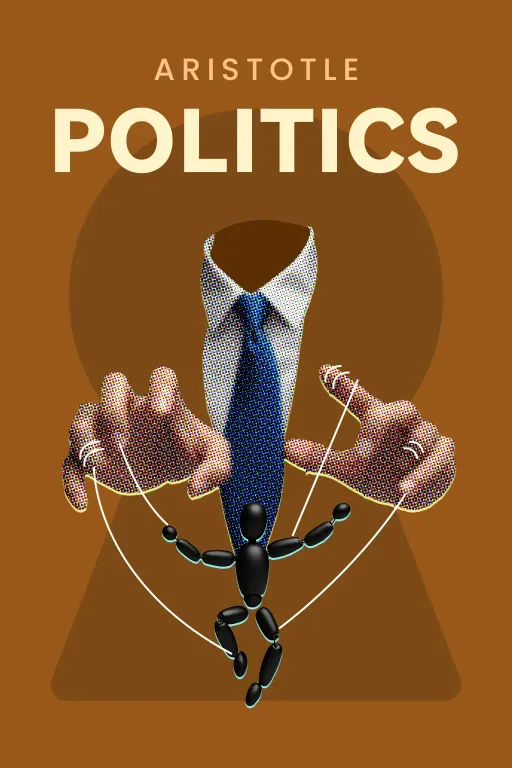
Nova: Which naturally brings us to his most famous student, Aristotle. While Plato soared in the realm of ideals, Aristotle firmly planted his feet on the ground. His work, "Politics," is a systematic analysis of existing forms of government, almost like a political scientist conducting an empirical study.
Atlas: So if Plato was the idealist, Aristotle was the pragmatist. He was less interested in the perfect state and more in what actually works for human communities?
Nova: Exactly. Aristotle collected and analyzed 158 different constitutions from various Greek city-states. He observed, categorized, and sought patterns. He wasn't prescribing a single ideal, but rather understanding the strengths and weaknesses of different systems. He classified governments based on two criteria: who rules and whether they rule in their own interest or the common good.
Atlas: Okay, so give us the rundown. How did he classify them, and how do those ancient categories still resonate today?
Nova: Well, for rule by one, if it's for the common good, it's a. If it's for the ruler's self-interest, it becomes a. For rule by the few, if it's for the common good, it's an. If for their own interest, an.
Atlas: And for rule by the many? That sounds like democracy, but I remember him having a nuanced view there.
Nova: You’re spot on. For the many ruling for the common good, he called it a. This was his preferred practical form, a sort of constitutional republic with a strong middle class. But if the many rule purely in their own self-interest, often by the poor against the rich, that’s what he called – and for him, it was a corrupted form, prone to mob rule and instability.
Atlas: Whoa. So, our modern understanding of democracy, as the ideal, is actually what Aristotle considered a potentially corrupt form of government? That’s a bit like saying the 'good guy' in our story was the 'bad guy' in his. How does that make sense?
Nova: It’s all about the common good versus factional interest. For Aristotle, a true "polity" involved citizens actively participating in governance, but always guided by law and reason, aiming for the collective well-being. A "democracy" in his terms was when the majority, typically the poor, used their power to serve only their own class interests, leading to instability and injustice for others. So yes, modern democracies strive to be polities in Aristotle's sense, balancing diverse interests under the rule of law.
Atlas: That’s a powerful distinction. It highlights the importance of the 'rule of law' which he championed. But how do we achieve that 'common good' in today's highly polarized societies, where every group seems to have its own definition of what's good? Is Aristotle's prescription still viable, or do modern complexities render it obsolete?
Nova: He would argue that the rule of law is paramount. It provides stability and prevents arbitrary power. And for the common good, he emphasized the importance of civic virtue and a robust middle class, which acts as a stabilizing force between the wealthy few and the numerous poor. He believed that extreme wealth or poverty leads to social strife.
Atlas: So, a stable middle class and adherence to law are the ancient keys to preventing political systems from devolving into their corrupted forms. That’s an insight that still feels incredibly relevant when we look at economic inequality and political instability around the globe.
Synthesis & Takeaways
SECTION
Nova: Absolutely. What’s fascinating is how these two giants, Plato with his radical idealism and Aristotle with his grounded pragmatism, both ultimately sought a just and stable society. They just approached the problem from vastly different angles.
Atlas: And that’s where the "deep question" from our original text really hits home: How do these ancient ideals of justice and governance resonate or conflict with the political realities we observe today? It seems like Plato gives us the ultimate aspiration, the guiding star, while Aristotle gives us the practical tools and warnings for navigating the treacherous waters of actual governance.
Nova: Exactly. Overlooking these foundational ideas, as the "blind spot" warns us, leads to a superficial understanding. When we see political systems struggling today, whether with issues of justice, leadership, or stability, we can pull out these ancient lenses. Is it a failure of leadership to grasp a higher truth, as Plato might suggest? Or is it a breakdown of the rule of law, a lack of civic virtue, or an imbalance of classes, as Aristotle might diagnose?
Atlas: That’s a powerful way to frame it. It encourages us, as analysts and strategists, to look beyond the surface, to dissect the systems and their evolution with a deeper, more informed clarity. These ancient thinkers aren't just history; they're our intellectual sparring partners for understanding the present and shaping the future.
Nova: Absolutely. Trust your intellectual curiosity, explore these foundational ideas, and continue to connect them to the geopolitical and comparative systems you're observing. It’s about building a robust framework for understanding.
Atlas: So, next time you're observing a political debate or a global event, ask yourself: What would Plato say about the ideal vision here? And what would Aristotle say about the practical realities and potential pitfalls?
Nova: Use these ancient voices to sharpen your modern insights. It's a journey of continuous learning and application.
Atlas: This is Aibrary. Congratulations on your growth!