The Anatomy of Authority and Systemic Influence
Golden Hook & Introduction
SECTION
Nova: Let us start today with a quick game. If you had to summarize how lasting power and authority are actually built in exactly five words, what would your five words be?
Atlas: Oh, I love a good challenge. Let me think. My five words would be: Adapt or watch it crumble.
Nova: That is incredibly accurate. For my five words, I would go with: Build institutions, don't just shout.
Atlas: Oh, I like that. It is punchy. It gets right to the heart of why some people seem to have this quiet, unshakable authority, while others are just loud.
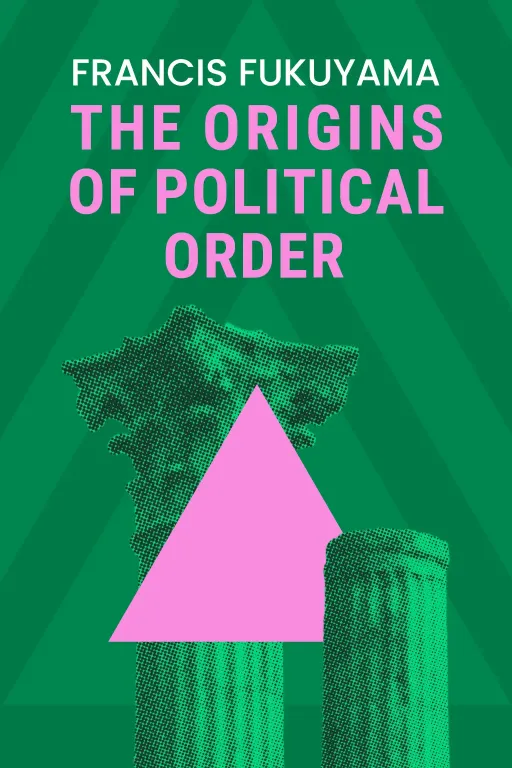
Nova: Exactly. And that contrast is the perfect gateway into the massive, two-volume masterpiece we are unpacking today. We are diving into Francis Fukuyama's landmark works, The Origins of Political Order and its brilliant sequel, Political Order and Political Decay. Fukuyama is a legendary political theorist who famously wrote about the end of history in the nineties, but he spent over a decade researching and writing these books to answer a much deeper, more urgent question: why do some societies succeed in building stable, prosperous systems while others collapse into chaos?
Atlas: That is a massive question, and honestly, it sounds a bit intimidating. How does the rise of ancient empires or the collapse of historical dynasties help someone who is trying to build a career, establish a personal brand, or find their voice today?
Nova: The connection is actually incredibly direct. The exact same systemic forces that build and destroy mighty nations are at play when you build your personal platform, your professional network, or your circle of influence. True, lasting influence is never just about raw ambition or temporary recognition. It requires a specific kind of systemic foundation. Fukuyama shows us that stable authority requires a strong state, the rule of law, and democratic accountability. When we translate those grand political concepts into personal growth, we find a perfect blueprint for building a powerful, adaptable platform.
Atlas: Wow, that is a fascinating angle. So you are saying we can look at our own careers and networks through the lens of state-building?
Nova: Absolutely. And when we look at his second book, we get a stark warning about what happens when we let our personal networks and skills decay. It is a masterclass in how to stay relevant in a rapidly changing world.
The Bedrock of True Influence
SECTION
Atlas: Okay, let us break this down. Fukuyama talks about these three pillars: a strong state, the rule of law, and accountability. Let us start with the strong state. What does that actually mean in a modern, professional context?
Nova: In political terms, a strong state is about capacity. It is the ability of a government to actually get things done, to enforce laws, collect taxes, and protect its citizens. If a state is weak, it cannot execute any plans, no matter how good its intentions are. When we translate this to an individual, your strong state is your core competence. It is your capability, your expertise, and your willingness to actually use your voice. It is the raw power of your message and your ability to execute your goals.
Atlas: That makes sense. It is like having the actual skills to back up your claims. If you do not have that core capacity, you are just a hollow shell. But what about the second pillar, the rule of law?
Nova: The rule of law is the set of rules that binds everyone, including the rulers themselves. In a state, it prevents the king or the president from just doing whatever they want on a whim. It creates predictability and trust. For an individual building a platform, the rule of law is your integrity and consistency. It is the set of values and standards that you refuse to compromise on, even when it is inconvenient. It is what makes your audience or your colleagues trust that you will behave the same way tomorrow as you did today.
Atlas: I can definitely see how crucial that is. Without trust, any influence you have is going to be incredibly short-lived. But what about that third pillar, accountability?
Nova: Accountability is the feedback loop. In a democracy, it means the government is responsive to the needs of the people, and if it fails to serve them, the people can vote them out. Locally, in your professional life, accountability is your strategic network and your relationship with your audience. It is your willingness to listen, to accept feedback, and to ensure that your platform actually serves the people around you, rather than just serving your own ego.
Atlas: That is a beautiful way to put it. But let us look at what happens when these pillars are out of balance. Does Fukuyama give us any historical examples of what happens when a system only has one or two of these pillars?
Nova: He gives a brilliant, dramatic example from ancient China, specifically the rise of the Qin Dynasty in the third century BC. The Qin state was incredibly powerful. They embraced a philosophy called Legalism, which was all about total state capacity and absolute obedience. They standardized weights, measures, writing, and even the axle widths of carts to build a hyper-efficient empire. They built a massive bureaucracy and a terrifyingly powerful military. They had a strong state in the most extreme sense.
Atlas: That sounds like an absolute powerhouse. Did they have the other pillars?
Nova: They had absolutely no rule of law and no accountability. The emperor's word was the absolute law, and he could change it on a whim. Dissent was punished by death, books were burned, and scholars were buried alive. The system was built entirely on raw fear and execution. And what was the result? The moment the first emperor died, the entire dynasty collapsed into a massive civil war within just a few years. It was one of the shortest-lived dynasties in Chinese history.
Atlas: That is incredible. They had unmatched power, but because they lacked rule of law and accountability, the whole thing shattered almost instantly. It makes me think of a leader who uses sheer dominance and fear to manage a team. They might get immediate results, but the moment they leave the room, or the moment a crisis hits, the whole project falls apart because there is no trust or mutual accountability holding it together.
Nova: That is exactly the parallel. Raw dominance is incredibly fragile. On the flip side, Fukuyama talks about the concept of "getting to Denmark." Denmark is his shorthand for a modern, stable, prosperous society that has successfully balanced all three pillars. It has a highly capable state, a deep respect for the rule of law, and a transparent, accountable government. The citizens trust the system because the system is predictable, fair, and responsive.
Atlas: That sounds like the ultimate goal for any organization or personal brand. But I imagine a lot of our listeners are wondering how to actually start building those pillars when they are feeling a bit invisible. If you are struggling with self-doubt and trying to find your voice, how do you start constructing your own internal state?
Nova: You start by building your own internal capacity, which means mastering your craft and actively practicing speaking up, even in small settings. Self-doubt is like a weak state that is terrified of executing its own laws. You have to acknowledge that doubt, but then you must move past it by establishing your own internal rule of law. Set non-negotiable standards for how you show up, how you prepare, and how you communicate. And then, build accountability by sharing your ideas with a trusted network and asking for direct, honest feedback.
Atlas: I can definitely relate to that. It is about moving from a place of wanting validation to a place of proving your worth through consistent, high-quality action. You are building a system within yourself first, before you try to project it outward.
Nova: Exactly. You cannot build a powerful alliance or a strategic network on a foundation of sand. You need that internal stability first.
The Threat of Decay
SECTION
Atlas: That makes perfect sense for the building phase. But let us talk about the flip side, which Fukuyama covers in Political Order and Political Decay. What happens once you actually achieve some success? Why do these stable systems start to fall apart?
Nova: This is where Fukuyama introduces a concept that is incredibly relevant for anyone managing a career or a business. He warns that institutions decay when they fail to adapt to new realities. He calls this process "patrimonialization." It is a fancy academic term for a very common human tendency. It is when a system that was originally designed to serve a public purpose gets captured by powerful insiders who use it to protect their own narrow interests and pass privileges down to their families or friends.
Atlas: Oh, I see. It is like the ultimate form of complacency and cronyism. The system stops serving its original goal and starts existing just to protect the people inside it.
Nova: Precisely. And it happens because human beings are naturally wired to favor their family and friends. It takes a massive, continuous effort to maintain an impersonal, merit-based system. When that effort fades, decay sets in. Fukuyama shares a fascinating and tragic historical example of this from the United States in the nineteenth century. For decades, the US government operated under what was called the spoils system, or the patronage system.
Atlas: I have heard of that. Is that where the winning political party basically hands out government jobs to its supporters?
Nova: Yes, exactly. Whenever a new president was elected, they would fire thousands of competent civil servants and replace them with their own political cronies, regardless of whether those people had any qualifications for the job. The government became incredibly corrupt, inefficient, and completely unable to handle the challenges of a rapidly industrializing nation. It was a classic case of institutional decay. The system was serving the politicians, not the citizens.
Atlas: That sounds like a recipe for complete disaster. How did they ever get out of that cycle?
Nova: It took a literal national tragedy to force change. In the summer of 1881, a newly elected president named James Garfield was walking through a train station in Washington, D. C. Out of the shadows stepped a man named Charles Guiteau, who was mentally unstable and deeply delusional. Guiteau believed that a speech he had written had personally won the election for Garfield. Because of this, he believed he was entitled to a prestigious consulship in Paris under the spoils system.
Atlas: Wow. He thought he was owed a massive job just for writing a speech?
Nova: Yes, he felt completely entitled to it. When the Garfield administration repeatedly rejected his demands, Guiteau decided that God told him to remove the president so that the vice president, who was more favorable to the patronage system, would take over. He shot President Garfield, who tragically died from his wounds a few months later.
Atlas: That is absolutely wild. A president was assassinated over a government job request.
Nova: It was a massive shock to the entire nation. But that horrific event served as a brutal wake-up call. The public was so outraged by the deadly consequences of the spoils system that Congress was finally forced to act. They passed the Pendleton Civil Service Act, which created a professional, merit-based civil service where jobs were awarded based on exams and qualifications, rather than political connections. It was a massive, painful adaptation that saved the American state from complete decay.
Atlas: That is such a powerful, dramatic story. It really illustrates how systems will resist change until a massive crisis forces their hand. If we translate that to our own professional lives, it is a warning about the danger of relying on outdated structures. We build a set of skills or a network that works for us early on, and then we get comfortable. We rely on our old titles, our past achievements, or our existing connections. We stop learning, we stop adapting, and we essentially build our own personal spoils system where we protect our comfort rather than delivering real value.
Nova: That is the exact parallel. When you rely on outdated structures, you are actively decaying. The professional world is moving incredibly fast, and the skills that made you successful five years ago might be completely irrelevant today. If you are not actively constructing new, adaptable networks of influence, you are letting your platform rot from the inside out.
Atlas: That is a tough pill to swallow, but it is so necessary. I imagine a lot of our listeners are realizing that they might be holding onto decaying structures out of fear. It is scary to let go of what worked in the past, especially when you are seeking validation and trying to prove your worth.
Nova: It is terrifying. But look at it this way: adaptation is the only way to survive. The moment you stop adapting is the moment you start decaying. You have to be willing to look at your own platform, your own skills, and your own network with absolute honesty. Ask yourself: am I relying on old reputation, or am I actively creating new value today? Am I staying inside my comfort zone with people who just agree with me, or am I building new, diverse alliances that challenge me to grow?
Synthesis & Takeaways
SECTION
Atlas: This brings us back to that deep question we started with. When building your personal brand and professional platform, are you relying on outdated structures that are decaying, or are you actively constructing new, adaptable networks of influence?
Nova: That is the central question of our discussion today. When we synthesize Fukuyama's work, the deepest insight is that authority is never a static achievement. You do not just build a strong state or a powerful personal brand once and then sit back and relax. It is a continuous, dynamic process of building capacity, maintaining integrity, listening to your community, and constantly adapting to new realities.
Atlas: I love how you connected those grand historical narratives to our individual journeys. For anyone listening who is striving to rise, to find their voice, and to make a real impact, the message is incredibly clear. Focus on building the deep, systemic foundations of your own character and capacity. Do not just chase the quick validation of a title or a superficial network.
Nova: Exactly. Build your internal capacity by mastering your craft and overcoming self-doubt. Bind that capacity with your own personal rule of law—your consistency and your values. Create true accountability by actively listening to your network and ensuring your work serves a purpose greater than yourself. And most importantly, never get so comfortable in your success that you stop adapting. Be willing to tear down your own outdated structures to build something stronger and more relevant.
Atlas: That is a powerful call to action. It is about owning your voice and having the courage to constantly reinvent yourself.
Nova: Absolutely. True influence is a journey of continuous growth and systemic adaptation.
Atlas: This is Aibrary. Congratulations on your growth!