

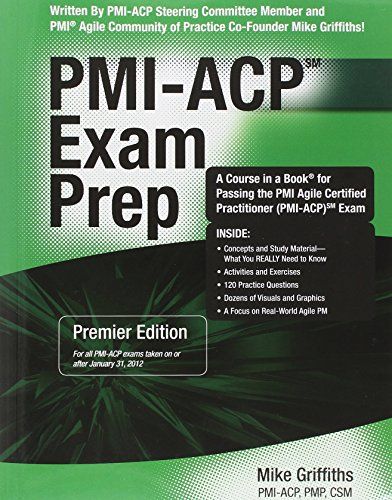
Pmi-acp Exam Prep : Rapid Learning to Pass the Pmi Agile Certified Practitioner Pmi-acp Exam - on Your First Try!
Introduction: Cracking the PMI-ACP Code
Introduction: Cracking the PMI-ACP Code
Nova: Welcome back to the show! Today, we're diving deep into the world of agile certification, specifically targeting the Project Management Institute's Agile Certified Practitioner exam, the PMI-ACP. Now, if you’ve looked at this exam, you know it’s not just about memorizing Scrum terms; it’s about adopting a whole new mindset. And to help us navigate that, we're dissecting one of the most highly recommended study guides out there: Mike Griffiths' "PMI-ACP Exam Prep: Rapid Learning to Pass the PMI Agile Certified Practitioner Exam - on Your First Try!"
Nova: : That title alone sounds like a promise we all want to keep! But Nova, the PMI-ACP is notorious for being broad. It covers everything from Kanban to XP. What makes this particular book, often called the 'big green book,' the go-to resource for so many people trying to pass on that first attempt?
Nova: That's the million-dollar question. The secret sauce, I discovered, isn't just the content, but the author's pedigree. We're not talking about just another trainer here. We're talking about an architect of the certification itself. We'll explore why Griffiths’ insider knowledge makes this book essential, how it manages to be both comprehensive and surprisingly entertaining, and what specific agile concepts you absolutely must master according to his blueprint.
Nova: : So, we're getting the cheat sheet from the person who helped write the test? I'm ready. Let's start with the man himself. Who is Mike Griffiths, and why should we trust his rapid learning approach?
Insider Knowledge and Credibility
The Architect's Blueprint: Mike Griffiths' Authority
Nova: Let's establish credibility right away. Mike Griffiths isn't just an author; he's foundational to the PMI-ACP. Research shows he co-founded the Project Management Institute's Agile Community of Practice. That’s huge. He was actively involved in the creation of the PMI-ACP certification itself.
Nova: : That’s like studying for a history exam using notes written by the historical figures themselves! Did he stop there? Because I also saw mentions of him being involved with the Agile Practice Guide.
Nova: He absolutely did not stop there. He served on the board of the Agile Alliance, and perhaps most significantly for current standards, he was the co-lead on the PMBOK 7th edition and chaired the group that wrote the official PMI Agile Practice Guide. Think about that: the person who wrote the guide that summarizes the agile landscape also wrote this prep book.
Nova: : Wow. So, when he structures the book, he’s not just interpreting the Exam Content Outline, or ECO; he’s essentially translating the intent behind the ECO. That must mean his emphasis on certain topics is intentional.
Nova: Exactly. It means the structure of his book is a direct reflection of what PMI values. One review mentioned that the official PMI Guide is very brief and doesn't cover everything you need. Griffiths' book steps in to fill that necessary depth, ensuring you move from theoretical knowledge to exam-ready application.
Nova: : So, for someone who has been working in a specific agile flavor, say pure Scrum, this book forces them to broaden their perspective to cover the required domains like Lean and XP, which are essential for the exam but maybe not used daily in their current role.
Nova: Precisely. The PMI-ACP is designed to test breadth across multiple agile approaches. Griffiths’ materials are meticulously designed to cover Scrum, Kanban, Lean, XP, Crystal, and other relevant practices. He’s ensuring you’re not just a specialist, but a versatile agile practitioner, which is what the certification aims to validate.
Nova: : That makes the 'Rapid Learning' part of the title feel less like a gimmick and more like an efficient path paved by an expert who knows exactly where the pitfalls are.
Nova: It’s efficiency born from authority. He’s filtering out the noise and focusing the candidate on the high-yield areas that align with the certification's core philosophy. It’s a masterclass in targeted studying.
Making Complex Concepts Accessible
The Style Factor: Enjoyable Learning vs. Dry Textbooks
Nova: Now, let’s talk about the reading experience. We’ve established the content is authoritative, but let’s be honest, exam prep books can be dry as dust. What sets Griffiths’ writing apart?
Nova: : I saw snippets describing the book as 'VERY enjoyable to read.' That’s high praise for a technical study guide. What makes it so engaging?
Nova: The research points to his 'articulate and entertaining writing style.' He manages to convey a firm grasp of the underlying concepts without resorting to dense, academic jargon. It’s conversational, which is crucial when you’re trying to absorb complex material over many hours.
Nova: : I can imagine that helps tremendously with retention. When you’re reading about, say, the differences between various estimation techniques across different frameworks, having a guide that doesn't feel like a chore makes all the difference for long-term memory.
Nova: Absolutely. One review noted that even seasoned agile practitioners learned a lot from the book, suggesting it offers depth even for the experienced. It’s not just for beginners; it’s for anyone needing to map their practical experience onto the PMI-ACP framework.
Nova: : So, if the goal is to pass on the first try, you need to be able to engage with the material deeply enough to handle those situational, scenario-based questions the PMI loves to throw at us.
Nova: That’s where the structure comes in. Beyond the narrative, the book is packed with exercises and sample practice questions. It’s not just passive reading; it forces active learning. One tip I found associated with his materials was to 'actively engage with the material through note-taking, practice questions, and discussions.'
Nova: : That moves it from being a book to being a full study system. It sounds like the 'Rapid Learning' isn't just about speed, but about maximizing the learning return on every page you turn.
Nova: Precisely. It’s about high-density, high-engagement learning. You’re not just reading definitions; you’re being coached by someone who understands the nuances of how PMI frames those definitions for testing purposes. It’s the difference between knowing what Kanban is and knowing how PMI wants you to answer a question about Kanban flow metrics.
Key Takeaways for Exam Success
Mastering the Mindset: Value and Stakeholders
Nova: Let's shift focus from the book itself to the core agile philosophy it champions. What are the major conceptual pillars that Griffiths emphasizes for exam success?
Nova: : I saw a summary mentioning 'Value-Driven Delivery' and 'Stakeholder Engagement as Paramount.' Are these the central themes that differentiate a successful candidate?
Nova: They are the bedrock. The PMI-ACP exam heavily tests your ability to prioritize value. Griffiths’ book reportedly distills this down to the core idea: every decision, every practice, should trace back to maximizing value delivered to the customer quickly.
Nova: : That’s a significant shift from traditional project management where scope adherence is often the primary metric. How does the book help translate that abstract 'value' concept into concrete exam answers?
Nova: It grounds it in practical application. For instance, when discussing backlog refinement or release planning, the focus is always on what delivers the highest business value next, not just what’s easiest to build. Furthermore, the emphasis on empowered teams driving performance is key. You need to show you understand servant leadership and team autonomy.
Nova: : And stakeholder engagement—that’s always tricky because it’s so situational. How does Griffiths tackle the nuances of managing expectations across diverse groups?
Nova: He seems to advocate for continuous, transparent collaboration, moving beyond simple status reports. It’s about embedding stakeholders in the process, making them part of the team’s feedback loop. This directly counters the waterfall tendency to only engage stakeholders at the beginning and the end.
Nova: : So, if a candidate masters the concepts in the book—the mechanics of Scrum, the flow of Kanban, the principles of Lean—but truly internalizes the value-driven mindset and the continuous engagement model, they are set up for success.
Nova: That’s the consensus. The book provides the knowledge base, but the real win is internalizing that agile mindset. It’s about understanding these practices exist, not just to execute them. Griffiths seems to be the perfect guide for that transformation.
Conclusion: Your First-Try Strategy
Conclusion: Your First-Try Strategy
Nova: We’ve covered a lot of ground today, from the author’s incredible pedigree to the book’s engaging style and its focus on core agile values. If we had to boil down the strategy for using Mike Griffiths' "PMI-ACP Exam Prep" book, what’s the takeaway?
Nova: : The takeaway is that this isn't just a review guide; it’s a comprehensive course written by one of the certification's creators. The strategy should be: read actively, engage with the exercises, and use his structure as your roadmap because it mirrors the exam blueprint he helped design.
Nova: And crucially, don't rely solely on the official, brief PMI guides. This book provides the necessary depth and context, especially for navigating the various agile frameworks required by the ECO. It’s the bridge between knowing agile and passing the PMI-ACP.
Nova: : It sounds like the key to passing on your first try isn't just studying harder, but studying smarter, using the resources provided by the people who understand the test's DNA.
Nova: Exactly. It’s about leveraging insider knowledge to achieve mastery. If you’re serious about the PMI-ACP, this book appears to be the essential companion for transforming your knowledge into a passing score.
Nova: : A powerful endorsement for a powerful resource. Thank you, Nova, for breaking down this essential study tool.
Nova: My pleasure. Remember, the goal isn't just the certificate; it's adopting the mindset that drives real value. This book is a fantastic launchpad for that journey. This is Aibrary. Congratulations on your growth!