

Unlocking Strategic Foresight: Building Innovative Frameworks
Golden Hook & Introduction
SECTION
Nova: You know, we often hear about "strategy," but what if I told you most of what passes for strategy isn't strategy at all? It's more like wishful thinking dressed in business jargon.
Atlas: Oh, I like that. "Wishful thinking dressed in business jargon." That’s going to resonate with anyone who’s sat through a quarterly planning meeting feeling like they just heard a list of aspirations, not a battle plan. What do you mean by that, exactly?
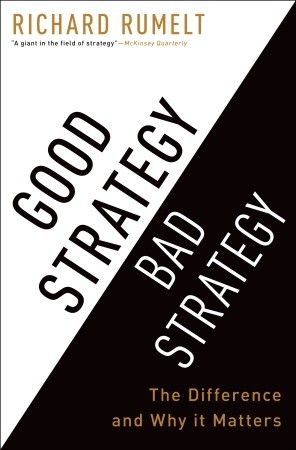
Nova: Well, today, we're diving into some foundational texts that really cut through that fluff. We’re talking about Richard Rumelt's seminal work,, and then we'll layer on insights from A. G. Lafley and Roger L. Martin's. Rumelt, for instance, came from a background rooted in engineering and systems theory, which really informed his rigorous, almost scientific approach to what good strategy entails. He wasn't just observing business; he was deconstructing it.
Atlas: That’s fascinating. I can see how that engineering mindset would strip away the vague corporate speak. So, we're essentially looking at the difference between having a coherent, actionable plan versus just a set of ambitious goals.
Nova: Exactly. Rumelt argues that bad strategy often avoids the hard work of choice and focus, instead opting for generic objectives and buzzwords. It's like trying to win a chess game by just saying "I want to win" without moving any pieces.
Atlas: Right, like announcing you want to be "number one in the market" without identifying a crucial challenge or how you'll actually get there. That sounds like a lot of what I've seen in the wild.
The Core of Strategic Advantage
SECTION
Nova: And that brings us to our first core idea: the absolute necessity of defining a crucial challenge. Rumelt hammers this home. He says good strategy identifies a crucial challenge and then designs a coherent set of actions to overcome it. It’s not about grand visions alone; it’s about solving a specific, high-stakes problem.
Atlas: Okay, so it’s less about painting a pretty picture of the future and more about diagnosing the current ailment. Can you give an example of what a "crucial challenge" looks like, versus, say, a generic problem?
Nova: Absolutely. Think about Apple in the late 90s. Their crucial challenge wasn't just "sell more computers." It was "we have a fragmented product line, declining market share, and a lack of clear strategic direction." Steve Jobs' strategy wasn't just to make 'better' computers; it was to simplify the product line, focus on design, and integrate hardware and software, directly addressing that fragmentation and lack of direction. This wasn't some vague aspiration; it was a targeted response to a clearly diagnosed problem.
Atlas: Wow, that’s a perfect example. It wasn't just "we need to innovate"; it was "we need to fix with." That makes so much more sense. It feels like a doctor diagnosing an illness versus a patient just saying, "I feel unwell."
Nova: Precisely. And this leads us beautifully into Lafley and Martin’s framework from. They introduce the 'Where to Play' and 'How to Win' choices. Once you've diagnosed your crucial challenge, you need to make deliberate choices about your playing field and your winning moves. They really emphasize that strategy is about making integrated choices, not just individual decisions.
Atlas: So, 'Where to Play' is defining the arena, and 'How to Win' is your competitive advantage within that arena?
Nova: Exactly. Lafley, coming from his experience as CEO of P&G, understood the immense pressure to make choices that deliver results. His approach, which he developed with Martin, is rooted in the idea that winning isn't accidental. It comes from intentionally choosing where you will compete and how you will differentiate yourself to succeed there. It's about saying no to a thousand things to say yes to a few powerful ones.
Atlas: That makes me wonder, though, for our listeners in fast-paced tech environments, where everything seems to be moving at lightning speed, isn't there a risk of over-analyzing and missing opportunities if you spend too much time defining the challenge and the 'where to play'?
Nova: That's a really sharp question, Atlas. And it's a common misconception. The rigor isn't about paralysis by analysis. It's about before. In a fast-paced environment, clarity becomes even more crucial because resources are scarce and mistakes are costly. A well-defined challenge and clear 'where to play'/'how to win' choices actually effective action, because everyone knows what they're aiming for and how they're going to get there, rather than wasting energy on misaligned efforts. It's like a special forces unit: they spend immense time planning, not because they're slow, but because precision in a high-stakes environment is paramount.
Crafting Your Strategic Blueprint
SECTION
Nova: So, moving to our second core idea, it's about crafting that strategic blueprint, moving from diagnosis to deliberate design. Rumelt talks about the 'kernel' of strategy: diagnosis, guiding policy, and coherent actions. Lafley and Martin then operationalize this with their cascading choices: what is our winning aspiration, where will we play, how will we win, what capabilities must be in place, and what management systems are needed?
Atlas: Okay, so it’s a holistic approach. It’s not just picking a direction, it’s building the entire mechanism to get there. But what does 'coherent actions' really mean in practice? It sounds a bit abstract.
Nova: It’s crucial. Coherent actions mean that each step you take, each initiative you launch, each dollar you spend, is and your overall strategy. They aren't isolated events. Think about Netflix. Their 'where to play' became streaming, and their 'how to win' was original content and a superior user experience driven by data. Every action, from investing billions in content creation to their recommendation algorithms, was coherent with that strategy. They didn't suddenly decide to open a chain of coffee shops.
Atlas: Right, like that famous story of Blockbuster turning down the chance to buy Netflix. Blockbuster’s strategy, or lack thereof, wasn’t coherent with the emerging digital landscape. They remained rooted in physical stores while Netflix saw the crucial challenge of physical media's decline and designed a coherent response.
Nova: Exactly! That’s a fantastic real-world example of how a lack of coherent strategy can lead to downfall. Blockbuster had a business model, but it wasn't a in Rumelt's sense because it didn't diagnose the crucial challenge of digital disruption and design a coherent response. It was more like a set of operational routines. And that's where the 'Tiny Step' for our listeners comes in: for your next project, clearly articulate the 'crucial challenge' you're addressing and define your 'where to play' and 'how to win' choices you begin execution.
Atlas: That’s powerful. It forces you to think beyond just "doing stuff" and actually define the and of winning. I imagine a lot of our listeners, especially those who seek mastery and develop innovative frameworks, would find this incredibly useful. It's about moving from being busy to being strategically effective.
Nova: Precisely. It’s about building in that rigor upfront. And this leads to our 'Deep Question': How can you apply a more rigorous, problem-solving approach to your current strategic initiatives to avoid 'fluff' and drive real impact? It’s about being intellectually honest with yourself and your team. Are you truly solving a defined problem with coordinated actions, or are you just chasing shiny objects or vague goals?
Atlas: That’s a tough question to ask, because it might reveal that some of our current efforts are, as you said, just "wishful thinking dressed in business jargon." But it’s essential for anyone who wants to make a real impact and not just go through the motions. It's about driving successful transformation.
Synthesis & Takeaways
SECTION
Nova: Absolutely. The core of our podcast today is really an exploration of how true strategic innovation emerges not from aspirations, but from clearly defining the problem and making deliberate, integrated choices. Rumelt and Lafley & Martin, from their different vantage points, converge on this fundamental truth: strategy isn't a nebulous concept; it's a disciplined, analytical process that demands clarity, focus, and coherence.
Atlas: So, it’s about moving beyond the superficial and really digging into the fundamental principles of 'why' we're doing something and 'how' we intend to win. For those of us who are analytical and driven by impact, this isn't just theory; it's a roadmap to better outcomes. It's about becoming recognized experts by mastering the art of thoughtful, impactful strategy.
Nova: Exactly. And the continuous learning journey never stops. Embracing these frameworks means constantly refining your approach, exploring new technologies, and always asking those deep questions about driving real impact. It's about transforming good intentions into great results.
Atlas: Powerful stuff. It shifts the entire perspective from output to outcome, from activity to actual strategic advantage.
Nova: Indeed. This is Aibrary. Congratulations on your growth!