

The Power of Play: Unlocking Creativity and Learning in Every Interaction.
Golden Hook & Introduction
SECTION
Nova: What if I told you that one of the most powerful tools for learning, creativity, and profound human connection isn't some groundbreaking new technology, a hyper-efficient productivity hack, or even the latest mindfulness trend? What if it's something we largely dismiss as trivial, something we often relegate to childhood, almost an afterthought in our serious adult lives?
Atlas: Wait, are you talking about actual playing? Like, building sandcastles or chasing a ball? Because I imagine a lot of our listeners, myself included, think of that as 'recreation' or 'downtime,' not a 'powerful tool.'
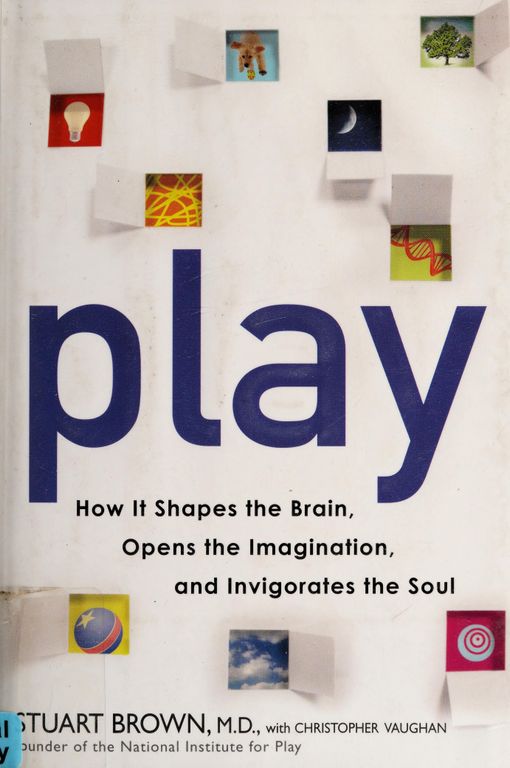
Nova: Precisely, Atlas! That's exactly the blind spot we're here to illuminate today. We're diving deep into 'The Power of Play: Unlocking Creativity and Learning in Every Interaction,' and drawing heavily from the groundbreaking work of Dr. Stuart Brown in his book, "Play: How It Shapes the Brain, Opens the Imagination, and Invigorates the Soul."
Atlas: Dr. Stuart Brown. That name rings a bell. What makes his perspective so unique on something as seemingly simple as play?
Nova: What's fascinating about Brown is his background. He wasn't a child psychologist initially; he was a medical doctor who spent decades studying extreme human deprivation. He investigated cases of mass murderers, serial killers, and individuals with profound social deficits. And what he found, consistently, was a common thread: a profound absence of play in their developmental histories. This led him to a radical conclusion: play isn't frivolous; it's fundamental for healthy human development, as essential as sleep or nutrition.
Atlas: Wow. That's a heavy origin story for a book about play. It immediately elevates it from 'nice-to-have' to 'non-negotiable.'
The Blind Spot: Unmasking Play's Evolutionary Imperative
SECTION
Nova: It truly does. And that's our first core idea today: challenging society's collective blind spot towards play. We live in a culture that often equates seriousness with importance, and productivity with value. Play, in this framework, gets relegated to a 'break' from the real work, a luxury, or something you grow out of. But Brown's work, and indeed evolutionary biology, tells a very different story.
Atlas: But I imagine a lot of our listeners, especially those managing high-pressure teams or navigating the demands of raising children, might be thinking, "Where do I even play into my already packed schedule?" It feels like another thing to add to the to-do list.
Nova: That's a critical point, and it stems from misunderstanding play's true nature. Consider the animal kingdom. Take polar bear cubs, for example. You see them wrestling, tumbling, mock-fighting in the snow. It looks like pure fun, right? But that seemingly frivolous play is actually crucial for their survival. They're developing hunting strategies, practicing escape maneuvers, learning their strengths and weaknesses, and establishing social hierarchies within their group. Without that play, they wouldn't survive as adults.
Atlas: So, it's not just about letting off steam; it's a dress rehearsal for life, a biological imperative. I can see that for animals. But how does that translate to human development beyond mere stress relief? What's the deeper mechanism for us, the species that writes books and builds podcasts?
Nova: What's even more interesting is how play fosters neurological flexibility. When we engage in play, we're experimenting without fear of failure. Our brains are forming new neural pathways, learning to adapt, to innovate, to problem-solve creatively. Think of a child building with blocks: they're not just stacking; they're experimenting with balance, gravity, spatial reasoning, and often, collaborating with others, developing what Brown calls 'social grammar.' For adults, this translates to developing resilience, adaptability, and the ability to approach complex problems with an open, experimental mindset rather than a rigid, fear-based one.
Atlas: That sounds like something we as we get older, not something we cultivate. We get so locked into routines and 'the right way' to do things. It's like our brains become less plastic, less willing to try new things if there's no immediate, tangible 'purpose.'
Nova: You've hit on a crucial insight. Our societal conditioning often stifles that natural impulse. Brown argues that this deprivation of play, even in adults, can lead to rigidity, depression, and a loss of creativity. Play is our biological mechanism for innovation and adapting to a constantly changing world. It's not about being unproductive; it's about being profoundly to new ideas and solutions.
Play as a 'Right-Brain' Superpower: Fueling Creativity, Connection, and Future Success
SECTION
Nova: It's exactly that loss, Atlas, that brings us to our next point, and to another brilliant mind who champions the often-overlooked power of play: Daniel Pink. In his influential book, "A Whole New Mind: Why Right-Brainers Will Rule the Future," Pink argues that as we move beyond the Information Age, the future belongs to those with "right-brain" qualities – things like empathy, storytelling, design, humor, and, crucially, play.
Atlas: Pink, the business guy, saying play is important? That's a surprising turn for someone who used to focus so much on traditional analytical skills. What's his angle on this?
Nova: What's fascinating about Pink is his own intellectual journey. He used to write about the more 'left-brain' aspects of work and motivation. But he recognized a fundamental shift: while analytical, logical skills will always be necessary, they are increasingly being outsourced or automated. What remains uniquely human, and therefore increasingly valuable, are those "high-concept" and "high-touch" abilities. Play, for Pink, is a direct pathway to cultivating these.
Atlas: So it's not just about having "fun" at work, it's about strategic fun? How does someone who's focused on, say, early childhood education, or effective communication, actually this? What does 'playful exploration' look like in daily interactions, especially with children?
Nova: Let's consider a powerful example from the corporate world that Pink would appreciate. Think about a company like Pixar. Their animation studios are famous not just for their incredible films, but for their incredibly playful environment. They have foosball tables, impromptu costume parties, and a culture that encourages experimentation, even failure, as part of the creative process. It's not just about having a good time; it's about fostering an environment where empathy, storytelling, and design can flourish. Their playful approach leads directly to their creative breakthroughs.
Atlas: That's a great illustration. It’s like the play isn't just a break the work, it the work, or at least a critical component of it. So, for our listeners who are actively engaged in nurturing young lives or striving for deeper connections, how can they bring this "right-brain superpower" into their daily interactions?
Nova: It's about shifting your mindset from rigid instruction to playful exploration. For example, instead of just telling a child how something works, turn it into a game or a story. If you're teaching a complex concept, use humor and analogy to make it relatable. In professional interactions, approaching a difficult conversation with a sense of 'let's explore this together' rather than 'I need to fix this' can foster empathy and open new solutions. It's about cultivating curiosity, a willingness to experiment, and a comfort with ambiguity. It’s about being present and responsive, like you would be in a game.
Atlas: It sounds like a shift in mindset, from 'what needs to be done' to 'how can I explore this creatively' – even in serious contexts. And that applies whether you're trying to communicate more effectively with a colleague or guide a child through a new challenge. It’s about finding the 'play' in the 'work.'
Nova: Exactly! It's not about being childish; it's about being childlike in your approach to problem-solving and connection. It’s about leveraging those innate human capacities that Stuart Brown identifies as foundational and Daniel Pink highlights as essential for future success.
Synthesis & Takeaways
SECTION
Nova: So, as we wrap up, what we've really explored today is how play, often dismissed, is a profoundly serious and vital human endeavor. Stuart Brown reveals its deep evolutionary roots and its necessity for healthy development across all ages. Daniel Pink then shows us how cultivating this playful mindset is not just beneficial, but essential for thriving in a world that increasingly values creativity, empathy, and holistic thinking.
Atlas: So, for our listeners who are nurturing guides, inquisitive learners, and purposeful seekers, it's about consciously bringing that spirit of exploration into everything. It's about recognizing that whether you're teaching a child, solving a complex problem at work, or simply trying to connect more deeply with someone, a little playful exploration isn't just permitted, it's profoundly powerful. It's a key to effective communication, social-emotional development, and even leadership.
Nova: Absolutely. It's about recognizing that the opposite of work isn't play; the opposite of play is depression. When we intentionally weave elements of playful exploration into our daily interactions, personally and professionally, we're not just making life more enjoyable; we're unlocking deeper learning, fostering genuine connection, and building a more adaptable, creative self.
Atlas: That's actually really inspiring. It reframes 'playtime' from a luxury to an essential nutrient for a meaningful life. It's like we’ve been given permission to tap into this incredible natural resource we all possess.
Nova: Indeed. And the beautiful thing is, it's always available to us, waiting to be unlocked. It's a reminder that sometimes, the most profound insights come from the simplest, most human activities.
Atlas: So, the challenge for all of us this week: find one small way to intentionally weave playful exploration into your day. Whether that's in a serious conversation, a mundane task, or a joyful interaction with a child. Share your playful discoveries with us!
Nova: Exactly. It’s about rediscovering a fundamental human truth.