

The Power of Play: Cultivating Creativity and Innovation
Golden Hook & Introduction
SECTION
Nova: Atlas, quick fire: "adult play". What's the first thing that springs to mind for you?
Atlas: Oh, man. Uh, napping? Or maybe that weird hobby I tell absolutely no one about? Definitely not "productivity tool."
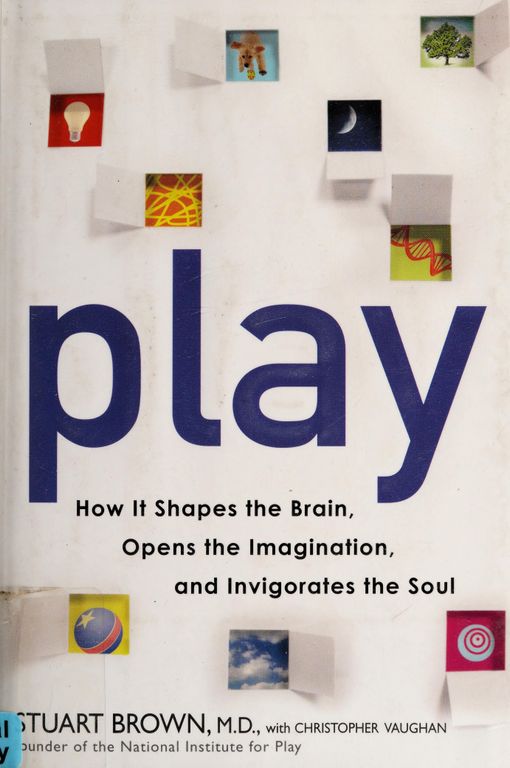
Nova: Oh, I love that. And that’s precisely why we need to talk about by the brilliant psychiatrist, Dr. Stuart Brown. His work, which has been widely acclaimed for fundamentally shifting our perspective on human development, argues that play is far more than just a pastime; it's a biological imperative.
Atlas: Really? A biological imperative? That’s a bold claim for something I usually associate with toddlers and puppies.
Nova: Exactly! And it turns out, that "weird hobby" you just mentioned might actually be the secret ingredient to a more fulfilling, creative life.
The Fundamental Human Need for Play
SECTION
Nova: Dr. Brown, with his deep psychiatric background, makes a compelling case that play isn’t just for children. It’s a critical, often neglected, human need that's essential for brain development, social connection, and overall emotional well-being in adults too.
Atlas: Hold on. For someone who is constantly learning, constantly thinking deeply, always striving for new knowledge, this idea of 'play' feels almost... indulgent. Like, it's just downtime, right? How is it a? What makes it so fundamental?
Nova: That’s a great question, and it gets to the heart of what Brown discovered. He found that play is deeply wired into our biology. Think of it like sleep or nutrition. When you're deprived of play, your brain literally doesn’t function as optimally. He’s studied everything from animals to humans, and the pattern is consistent: play deprivation leads to rigidity, stress, and even aggression.
Atlas: So, the cold hard fact is, if we don't play, we're essentially stunting our own growth, even as adults? That feels a bit dramatic, doesn't it? Like telling me if I don't go to the playground, I'll turn into a grumpy old man.
Nova: Well, maybe not quite that dramatic, but the underlying principle is sound. Brown categorizes different types of play, like body play – think rough-and-tumble or even just dancing – imaginative play, social play, even object play, like building with LEGOs or tinkering. Each type stimulates different parts of the brain and helps us develop crucial skills. He's observed in his research, for example, that individuals who had significant play deprivation in childhood often struggle with adaptability and problem-solving later in life. It’s not just about having fun; it’s about maintaining mental flexibility.
Atlas: That’s fascinating. I can see how, if you miss out on that as a kid, it'd impact you. But what about us adults? We’ve already developed our brains, right? For a curious learner, someone who thrives on intellectual challenges, how does this apply? Are we supposed to go back to kindergarten?
Nova: Not necessarily kindergarten, but we need to understand that the need doesn't magically disappear. Our brains continue to adapt and grow throughout life, and play is a powerful catalyst for that. Consider his work with animals: when animals are deprived of play, they become less adaptable to new situations, more anxious, and less capable of creative problem-solving when faced with novel challenges. The same principles, in more complex ways, apply to us. It’s about keeping those neural pathways open, fresh, and ready for new information and connections. It’s about staying mentally agile.
Play as a Catalyst for Creativity and Innovation
SECTION
Nova: It might sound dramatic, Atlas, but the implications are profound, especially when you look at how play directly fuels our creative engines and problem-solving abilities. This isn't a distraction from innovation; it's a vital strategy.
Atlas: Okay, so how does doodling or building with blocks translate into, say, a breakthrough in a complex technical problem? Give me an example of how this actually works in the adult world, beyond just making us feel good. I’m thinking about people who are constantly trying to innovate, to break new ground.
Nova: Absolutely. Think about it this way: play, at its core, is about exploration without a fixed outcome. It allows for divergent thinking, for making unexpected connections, for hypothesis testing in a low-stakes environment. Brown shares many examples, like engineers who found solutions to complex problems by tinkering with unrelated objects, or scientists who had "aha!" moments during recreational activities. One famous example, though not directly from Brown, is how the chemist August Kekulé discovered the ring structure of benzene after dreaming of a snake biting its own tail. That’s imaginative play working on a subconscious level.
Atlas: Wow, that’s a powerful image. So, it's about giving your mind the freedom to wander, to connect seemingly unrelated dots, in a way that structured work often doesn't allow?
Nova: Precisely. It cultivates what we call 'mental agility.' When you engage in imaginative play, you're essentially exercising your ability to shift perspectives, to see things in new ways. When you engage in social play, you're practicing negotiation, empathy, and collaboration. All of these are critical skills for innovation. Nova's Take, which resonates with Brown's findings, is that embracing play isn't a distraction; it's a vital strategy for maintaining mental agility and generating fresh ideas, directly impacting your daily engagement with creative endeavors.
Atlas: But what about the pressure to always be "on," always productive? It feels almost counter-cultural to just... play. For our listeners who are in high-pressure creative roles, or constantly learning new, demanding fields, how do you overcome that internal resistance that says, "I don't have time for this frivolous stuff"?
Nova: That's the biggest hurdle, isn't it? The societal conditioning that tells us play is unproductive. But what we’re learning from Dr. Brown's work, and from countless innovators, is that the opposite is true. The most productive, most creative individuals often integrate play into their lives. It's not about giving up work; it's about finding those moments for non-productive activity that actually recharge your creative battery. It allows your subconscious to process information, to make those unexpected connections that lead to breakthroughs. It’s a strategic investment in your intellectual capital, not a waste of time.
Synthesis & Takeaways
SECTION
Nova: So, what we’ve uncovered today is that play isn't just a childhood luxury; it's a fundamental human need that, when embraced, becomes a powerful catalyst for adult creativity, innovation, and overall well-being. It’s about maintaining that crucial mental agility.
Atlas: That’s actually really inspiring. For our listeners who are curious learners, always pushing their intellectual boundaries, but maybe feeling that burnout creeping in, what's one tiny, non-intimidating step they can take to reintroduce this vital element into their lives? Something that feels manageable.
Nova: I love that idea, Atlas. Dr. Brown suggests a powerful "tiny step." Tomorrow, dedicate just 15 minutes to a purely non-productive activity you genuinely enjoy. Maybe it’s doodling, building with blocks, or simply daydreaming. The key is that it has no goal, no deliverable.
Atlas: Just 15 minutes? That seems incredibly doable. And the idea is that it shifts your perspective, allowing for new thoughts to emerge without the pressure of a deadline?
Nova: Exactly. It’s about giving your mind the space to breathe, to explore, and to make those unexpected connections that often lead to breakthroughs. It’s a small investment with potentially massive returns for your creativity and your peace of mind.
Atlas: I can definitely see how that could combat some of that intellectual fatigue and foster a more open, innovative mindset. It’s not just about doing something fun; it’s about strategically nurturing your mind.
Nova: What non-productive activity truly brings you joy, and how might dedicating just a few minutes to it tomorrow unlock a new perspective?
Nova: This is Aibrary. Congratulations on your growth!