The Network Effect Trap: Why Your DeFi Strategy Needs an Unseen Advantage
Golden Hook & Introduction
SECTION
Nova: Most new DeFi projects fail not because of groundbreaking code, or even a lack of funding, but because they can't get off the ground. It's that classic chicken-and-egg problem, you know? No users, no value; no value, no users. Sounds like a death spiral, doesn't it?
Atlas: Oh man, it absolutely does. For anyone trying to build something truly innovative in the decentralized space, that "cold start" feels like an impossible barrier. It's like launching a rocket without any fuel, hoping gravity just… forgets about you.
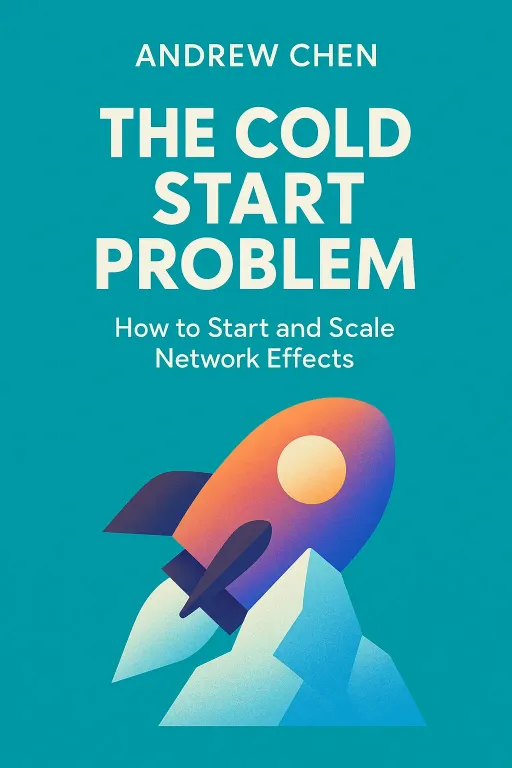
Nova: Exactly! And that's precisely what Andrew Chen tackles head-on in his incredibly insightful book, "The Cold Start Problem." We're also pulling in some wisdom from "Platform Revolution" by Parker, Van Alstyne, and Choudary to round out the picture today.
Atlas: Andrew Chen. He's one of those names synonymous with understanding growth, isn't he?
Nova: Absolutely. What's fascinating about Chen is that he's not just an academic; he was an early executive at Uber, then a venture capitalist. His insights into growth and network effects come from the trenches, from being at the heart of some of the fastest-growing networks in history. His theories are battle-tested, which gives them a rare kind of credibility, especially when we apply them to something as nascent as DeFi.
Atlas: That's a great point. It makes you wonder how those very centralized, rapid growth lessons translate to a world that prides itself on decentralization.
The DeFi Cold Start Problem: Engineering the Atomic Network
SECTION
Nova: Well, that's the core question, isn't it? Chen argues that successful networks don't just happen; they are meticulously engineered. And the absolute first step, the most critical one, is what he calls building the "atomic network."
Atlas: Okay, so "atomic network." What exactly does that mean for a DeFi project? Because in a permissionless environment, you can't exactly pick and choose your first users, can you? It feels so… counter to the decentralized ethos to "engineer" who comes in.
Nova: That's a brilliant distinction, Atlas. It's not about specific users in a centralized way. It's about designing the and the so precisely that it naturally attracts the smallest viable group of users who can create value for each other. Think of it as finding that critical mass, that tiny spark that can ignite a much larger flame.
Atlas: Can you give me an example? Because "smallest viable group" still feels a bit abstract when we're talking about global, open protocols.
Nova: Let's take a hypothetical new decentralized exchange, a DEX, focused on a very niche asset class – say, rare digital collectibles, rather than mainstream cryptocurrencies. Their cold start problem is immense: no liquidity providers, no traders. If they try to attract everyone, they'll attract no one.
Atlas: Right, because there's no depth to the order books, no one wants to trade there.
Nova: Exactly. So, instead of a broad launch, they might identify a specific, highly engaged community of collectors who already trade these assets on less efficient platforms. They could offer unique, time-limited incentives – perhaps super-high yield farming for liquidity providers for these niche assets, or exclusive access to new collectible drops through their platform. The goal is to get a handful of dedicated LPs and a handful of dedicated traders to interact.
Atlas: So it's about finding that hyper-specific, almost tribal initial group, rather than trying to boil the ocean. It's like, don't try to build a city, just get a few families to settle and start trading with each other in a small village.
Nova: Precisely! And the biggest trap at this stage is over-reliance on those initial incentives without genuine, sustainable value. If users are only there for the token rewards, they're mercenary. The moment those rewards decrease, they're gone, and your atomic network collapses.
Atlas: That’s going to resonate with anyone who's seen a DeFi project launch with astronomical APYs that inevitably crash. So the engineering isn't just about getting them in, it's about getting them to because they find inherent value.
Navigating the Five Phases: Tipping Point to Escape Velocity
SECTION
Nova: Which naturally leads us to Chen's next phases. Once you have that atomic network, the real engineering begins. He outlines five critical phases: the 'atomic network,' which we just covered, then the 'tipping point,' 'flameout,' 'escape velocity,' and finally, 'matter.'
Atlas: "Tipping point" implies a sudden surge. In DeFi, does that look like a viral token launch, or something more subtle? And what's "flameout" – is that just projects dying, or something more specific to network effects?
Nova: The tipping point isn't always a viral explosion; it's when the value proposition becomes so clear and compelling that organic growth starts to take over. Think of a lending protocol. It reaches a tipping point when there's enough stablecoin liquidity to consistently meet borrowing demand, and enough borrowing demand to make providing liquidity attractive. Suddenly, more LPs come, which attracts more borrowers, creating a self-reinforcing, virtuous cycle. That's the tipping point.
Atlas: So it's not a light switch, it's more like a flywheel finally gaining momentum.
Nova: Exactly. And "flameout" is indeed specific to network effects. It's when a network fails to achieve self-sustaining growth after its initial spark. This often happens if the atomic network was built on unsustainable incentives, or if the value proposition doesn't scale. The initial users leave, and the network slowly fades into obscurity. It's a harsh reality check.
Atlas: Wow, that’s kind of heartbreaking for projects that poured so much into the initial build. But then comes "escape velocity," which sounds like the dream. How does a DeFi project hit that?
Nova: Escape velocity is when the network grows exponentially without significant external intervention. It's when the user-generated value becomes so compelling that the network attracts new users simply through its utility and the strength of its existing community. This is where the wisdom from "Platform Revolution" truly complements Chen's work.
Atlas: Okay, so how does "Platform Revolution" fit into this? Chen talks about engineering networks, but Parker, Van Alstyne, and Choudary emphasize governance and architecture. How do these two frameworks complement each other for a DeFi project aiming for 'escape velocity'? Because "architecture" in DeFi is often code, and "governance" is often DAO proposals.
Nova: That's the crucial link! "Platform Revolution" provides the architectural blueprint for the network Chen engineers. It highlights that for a platform to achieve and maintain escape velocity, it needs robust governance mechanisms and a well-designed architecture that aligns incentives for participants. For a DeFi platform, this means clear rules for how the protocol operates, how disputes are resolved, and how value is distributed.
Atlas: So it's not just about getting big, but getting big. It's about designing the underlying rules of engagement, especially in a decentralized context where the "platform owners" are often the community itself, making decisions through DAOs. Without that strong foundation, even a network at escape velocity could become chaotic, or worse, subtly re-centralize.
Nova: Precisely. If the governance is weak, or the architecture allows for too much friction, that escape velocity can quickly turn into a nosedive. The "unseen advantage" isn't just about attracting users; it's about building a system so intelligently that it fosters genuine participation and self-governance, ensuring long-term resilience and true decentralization.
Atlas: That's a great way to put it. It’s about building a living, breathing ecosystem, not just a product.
Synthesis & Takeaways
SECTION
Nova: Absolutely. What we've discussed today fundamentally shifts our focus. Building a robust DeFi ecosystem isn't just about writing elegant code; it's a deliberate, multi-phase engineering challenge. It requires understanding both the growth mechanics Andrew Chen outlines and the underlying platform architecture and governance principles from "Platform Revolution."
Atlas: That's a powerful synthesis. The "unseen advantage" in the title really clicks now – it's that strategic foresight, that deep understanding of how networks grow and sustain themselves, which can be the difference between a project that flames out and one that achieves true escape velocity. For anyone looking to build or invest in this space, this framework is invaluable.
Nova: It truly is. And to put this into practice, here's a tiny step you can take: Identify one specific DeFi project you're interested in and map its current user acquisition strategy against Andrew Chen's five phases. What do you think its biggest 'cold start' challenge is right now? Is it struggling to find its atomic network, or perhaps failing to hit a tipping point?
Atlas: That's a fantastic exercise for anyone with a strategic mind. It moves beyond just looking at tokenomics and really forces you to think about the underlying network dynamics. It helps you build those frameworks we talk about.
Nova: Indeed. The future of finance is being built right now, and understanding these foundational principles is how we ensure it's built sustainably and truly decentralized.
Atlas: A truly insightful conversation.
Nova: This is Aibrary. Congratulations on your growth!