The Network Effect: Building Unstoppable Communities and Platforms
Golden Hook & Introduction
SECTION
Nova: Atlas, quick game: I’ll give you a common business challenge, and you tell me the most frustrating part about it. Ready?
Atlas: Oh, I love a good challenge, Nova! Lay it on me.
Nova: Alright, here’s the scenario: You’ve got this brilliant new online marketplace, or a social app, or even a community forum. It’s got amazing features, solves a real problem, but… it’s empty. Crickets. What’s the most soul-crushing part of that situation?
Atlas: Oh, man, that’s a brutal one. The most soul-crushing part? It’s the paradox. You need users to attract users. Like, if you’re building a dating app, you need people to swipe, but no one wants to join if there’s no one to swipe on! It’s this endless, frustrating loop of nothingness. You’ve built this beautiful machine, but it won’t move without fuel it can't get.
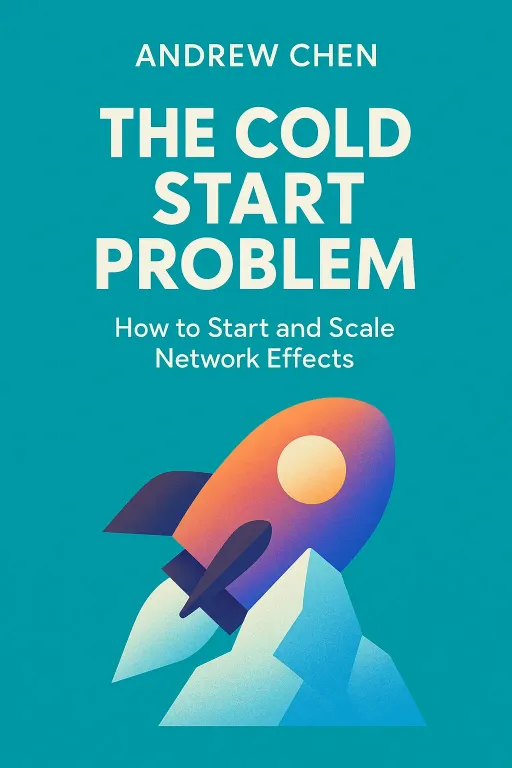
Nova: Exactly! That feeling, that absolute dread of a brilliant idea languishing in isolation because you can't get that initial spark, that's what Andrew Chen, a renowned venture capitalist and writer, calls 'The Cold Start Problem.' And today, we're diving deep into his book of the same name, along with 'Platform Revolution' by Geoffrey Parker, Marshall Van Alstyne, and Sangeet Choudary, to unravel the secrets behind building unstoppable communities and platforms.
Atlas: That makes me wonder, how does someone like Andrew Chen, who's seen so many startups, even begin to tackle something so fundamental?
Nova: Well, Chen’s background at Uber and his deep dive into Silicon Valley’s most successful networks give him this incredible, almost X-ray vision into the mechanics of growth. He's not just theorizing; he’s dissecting real-world case studies to show how these companies literally engineered their way out of the cold start. It’s less about a single 'aha!' moment and more about a methodical, almost scientific approach to network creation.
Atlas: That’s fascinating, because for anyone trying to build something new, that initial hurdle often feels insurmountable. So, how do you actually solve this 'cold start problem'? Where do you even begin when you have zero users on both sides of a platform?
Nova: That’s the million-dollar question, and it's where Chen introduces the concept of the 'atomic network.' Think of it like this: instead of trying to boil the ocean, you find the smallest possible, self-sustaining community where your product provides immediate, undeniable value. It's a tiny, perfect ecosystem that can thrive on its own, even if it's just a handful of people.
Atlas: So like, if you’re building that dating app, you wouldn’t launch it in a mega-city hoping for millions of users. You’d target a specific college campus, or maybe even just a single dorm?
Nova: Precisely! Or take PayPal, for example. When they started, they didn't try to get the whole world to send money online. They focused on a very specific atomic network: eBay power sellers. These were people who desperately needed a better way to send and receive payments for their online auctions. PayPal provided such immense value to this small, tightly-knit group that it rapidly grew from there. The value proposition was so strong, so targeted, that it bypassed the need for a massive initial user base.
Atlas: That’s a great way to put it. It’s like finding the perfect petri dish for your new organism, where it can grow strong before you expose it to the wider world. But how do you identify that 'atomic network'? Is it always about geography, or a specific niche interest?
Nova: It can be any of those. It’s about finding a group of people who have a strong existing connection or a shared, acute need that your platform can uniquely solve. It could be a specific interest group, a local community, or even a professional network. The key is that the value exchange within that small group has to be so compelling that it creates what Chen calls 'density.'
Atlas: Density. I like that. It’s not just about numbers, it’s about activity and engagement within that small group. So, once you have that atomic network humming, how do you scale it without losing that initial magic? Because that’s often where things fall apart, right? You get a small success, then try to go big, and suddenly you’re back to crickets.
Nova: Absolutely. And that’s where the insights from 'Platform Revolution' really come into play, expanding on Chen’s ideas. They talk about the critical shift from what they call 'pipeline thinking' to 'platform thinking.' A pipeline business, like a traditional manufacturer, creates value in a linear fashion: they make a product, then they sell it. It’s a one-way street.
Atlas: Right, like a car company designing and building a car, then pushing it out to dealerships.
Nova: Exactly. But a platform business, like an app store or a social media site, creates value by facilitating interactions external producers and consumers. They don’t necessarily create all the content or products themselves; they create the environment where others can create and exchange value.
Atlas: So, it’s like they build the stage, and then they invite all the performers and the audience to come together.
Nova: That’s a perfect analogy! Think of Airbnb. They don't own any properties, yet they're one of the largest accommodation providers in the world. Their value comes from connecting people who have spare rooms with people who need places to stay. They built the platform for that interaction. Or Google's Android operating system—it's a platform for app developers and phone manufacturers to connect with users.
Atlas: Wow, that’s such a fundamental shift in how you even conceive of a business. It's not just about what you make, it’s about what interactions you enable. So, how does this platform thinking help with scaling that initial atomic network?
Nova: It’s crucial because pipeline thinking tends to focus on acquiring users for a single product, while platform thinking focuses on fostering within an expanding ecosystem. Once your atomic network is dense, a platform mindset encourages you to think about how you can empower to produce value for your network. How can you make it easier for people to contribute, to create, to connect in new ways? This is where network effects truly kick in.
Atlas: Network effects being, the more people who use it, the more valuable it becomes for everyone?
Nova: Precisely. For example, Facebook became more valuable the more friends you had on it. eBay became more valuable the more buyers and sellers were present. The authors of 'Platform Revolution' emphasize that platforms are designed to generate these network effects, shifting the focus from simply selling products to orchestrating an entire ecosystem. They provide frameworks for designing these platforms, managing their growth, and even monetizing them without stifling the very interactions that make them valuable.
Atlas: I imagine a lot of our listeners, who are strategic builders themselves, might be thinking, "Okay, but how do I apply this to my existing product or initiative?" It sounds great in theory, but making that leap from a traditional model to a platform model feels like a huge undertaking.
Nova: It can be, but the tiny step is often to simply reframe your perspective. Instead of asking, "What product can I build?" ask, "What interaction can I enable?" Or, "Who are the two or more sides that would benefit from connecting through something I create?" Once you identify that core interaction, then you can start thinking about your atomic network. Who are the earliest, most passionate users who would immediately benefit from this connection?
Atlas: So, it's about seeing the potential for connection where you might just see a product. Like, if I'm building a new tool for remote teams, instead of just thinking about the features of the tool, I should be thinking about how it facilitates connection and productivity between team members – and then finding that initial team that absolutely that connection.
Nova: Exactly! It’s about shifting from being a provider to being an enabler. These books offer robust frameworks for not just building a product, but for cultivating a thriving ecosystem where every new participant adds more value than they consume, leading to unparalleled growth. It's a fundamental change in how we approach business and community building.
Synthesis & Takeaways
SECTION
Atlas: So, if I'm understanding this right, the core takeaway here is that sustainable growth, the kind that feels unstoppable, isn't just about having a great idea or even a great product. It's about designing for connection, from the very first user.
Nova: That’s it, Atlas. It's about understanding that a network's strength isn't just in its size, but in its density and the quality of interactions it facilitates. The strategic builder, the talent magnet, the data explorer—they all benefit from seeing their endeavors not as isolated projects, but as potential platforms. It's about orchestrating value, not just delivering it. And that, in itself, is a profound shift in mindset that can unlock exponential impact.
Atlas: That’s actually really inspiring. It makes me think about every single interaction I have, every product I use, in a completely different light. It's almost like understanding the hidden architecture of the modern world.
Nova: It truly is. This isn't just about tech giants; it's about any initiative where connection creates value. By understanding the cold start problem and embracing platform thinking, we can move beyond simply building things to cultivating thriving, self-sustaining ecosystems. It's a powerful way to think about impact.
Atlas: I love that. So, for our listeners, what’s one tiny step they can take this week to start applying this kind of thinking?
Nova: Identify one initiative you're working on, and ask yourself: How could I reframe this as a platform or a network? And then, what would be its 'atomic network'? Who are the two sides, however small, that would benefit most from connecting through it right now?
Atlas: That’s a challenging but incredibly practical question. It moves you from just building to building intelligently.
Nova: Exactly. It's about leading with conviction, trusting your vision, and recognizing that sustainable growth often comes from empowering others to connect and create on your stage.
Atlas: Fantastic. This is Aibrary. Congratulations on your growth!