Mastering the Non-Linear Career Path
Golden Hook & Introduction
SECTION
Nova: The career ladder isn't just broken; it was never designed for. We're exploring how to build your own ascent, not climb someone else's.
Atlas: Oh, I love that framing right out of the gate, Nova. It feels like a direct challenge to the very foundation of how we've been taught to think about our professional lives. It’s not about finding the next rung, but engineering the whole staircase.
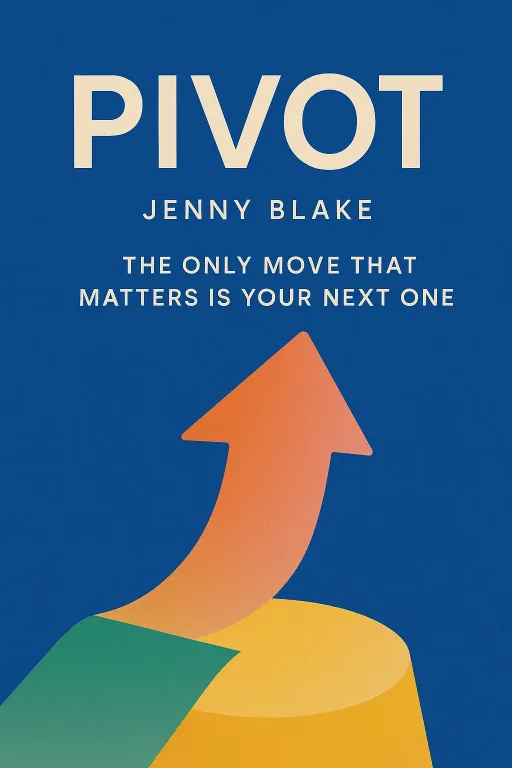
Nova: Exactly! And that’s precisely what we’re diving into today. We’re not just talking about career changes; we're talking about a fundamental shift in mindset and strategy. We’re dissecting insights from Jenny Blake’s "Pivot" and Helen Tupper and Sarah Ellis’s "The Squiggly Career." These aren't just books; they're manifestos for a new era of work, born from a collective realization that the traditional, linear career path is becoming obsolete, especially for those of us who are looking to innovate, build, and lead.
Atlas: So, we’re moving from a rigid blueprint to a more adaptive, almost organic approach to our professional journey. That sounds like it could be both incredibly liberating and, frankly, a little daunting for listeners who value structure and a clear path to mastery. Where do we even begin to unpack this?
Nova: That's the perfect entry point, Atlas. Jenny Blake, in "Pivot," offers us a fantastic framework for precisely that – making those transitions feel less like a terrifying leap and more like a series of calculated, manageable steps.
The Pivot Method: Navigating Transitions with Agility
SECTION
Nova: Blake introduces what she calls the 'Pivot Method,' and it’s essentially a four-stage process designed to minimize risk during career transitions. It’s called Plant, Scan, Pilot, and Launch. The core idea is leveraging what you have – your existing strengths, your knowledge, your network – to explore new territories.
Atlas: Plant, Scan, Pilot, Launch. Okay, that sounds systematic. For someone like me, and I imagine many of our listeners who are pragmatic builders and focused learners, that systematic approach is incredibly appealing. But let's dig into the 'Pilot' phase. When we're talking about, say, mastering a new tech skill, how do you 'Pilot' that without it feeling like you're already committing to a full-blown project or a risky endeavor? How do you ensure this 'Pilot' phase actually builds genuine mastery and doesn't just scratch the surface?
Nova: That’s the brilliant part of the 'Pilot' phase. It’s intentionally low-risk. Think of it as a highly focused, short-term experiment. It’s not about building the entire skyscraper; it’s about testing the foundation of one specific beam. For mastering a new tech skill, this could mean dedicating a weekend to building a small, functional app that uses that skill, or contributing a small feature to an open-source project. It's about applying the skill in a context where failure isn't catastrophic, but rather a learning opportunity. The goal is to gather data – 'Does this skill excite me?' 'Can I actually apply it effectively?' 'What challenges do I encounter?'
Atlas: So, it’s like a sandbox for your career, but a very purpose-driven sandbox. And you mentioned the 'Plant' phase – how do you leverage existing strengths when you're trying to build something entirely new, like a tech skill that feels completely outside your current domain? What if your 'strengths' feel more like foundational building blocks rather than ready-to-deploy tools for a new path?
Nova: Great question. The 'Plant' phase isn't just about identifying your current job title's strengths. It's about looking at your underlying capabilities. Are you a strong problem-solver? Are you excellent at organizing complex information? Are you a natural communicator who can explain technical concepts simply? These are transferable strengths. If you're a project manager, your strength might be orchestrating complex workflows. That skill is invaluable when you're trying to learn a new programming language – you can apply that organizational strength to mapping out your learning path, breaking down the language into manageable modules, and tracking your progress. It’s about seeing your existing capabilities as fertile ground from which new skills can sprout.
Atlas: That makes sense. It’s reframing 'strengths' not just as what you, but you do things. And this idea of piloting new skills, it directly speaks to our listeners who are aspiring leaders and focused learners, wanting to build new tech competencies. It feels like a way to de-risk that pursuit. But what happens when we move beyond just the mechanics of the transition and think about the underlying philosophy of our career? That’s where Tupper and Ellis come in with "The Squiggly Career," right?
The Squiggly Career: Unlocking Your Core Strengths
SECTION
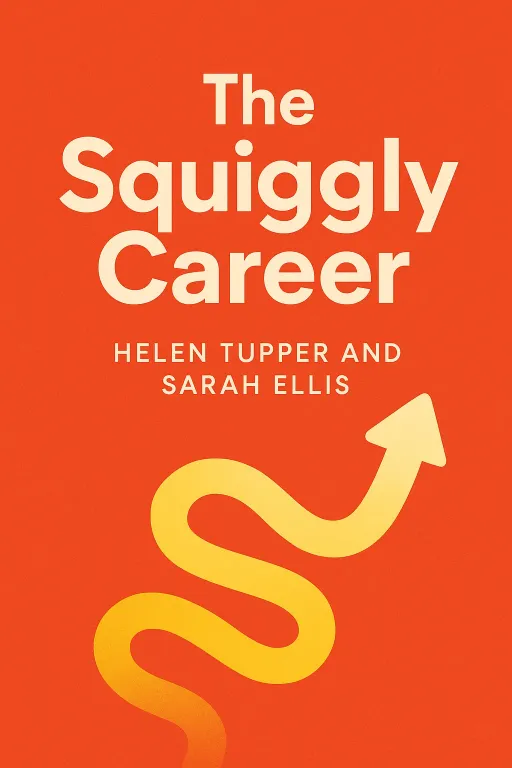
Nova: Absolutely. While Blake gives us the 'how' for navigating transitions, Tupper and Ellis offer the 'why' and the broader philosophical shift. They champion the idea of the 'Squiggly Career,' which is essentially the reality of most modern professional lives – full of twists, turns, and unexpected detours, rather than a straight, upward-climbing ladder. Their central thesis is to identify and leverage your 'Super Strengths' and your core values, rather than chasing a predefined, linear hierarchy.
Atlas: This is where I think many listeners might pause. We’re often conditioned to believe that 'leadership' means climbing a corporate ladder, achieving certain titles, and accumulating specific experience. How does identifying 'Super Strengths' and values translate into developing leadership qualities, especially when our primary focus might be on mastering new tech skills or building a solid foundation? Is 'Mastery' in a squiggly career different from traditional mastery?
Nova: That’s a profound point, Atlas. In a squiggly career, mastery isn't necessarily about reaching the peak of one very narrow, linear path. It's about developing a deep understanding and capability within your core strengths and values, and then applying that mastery flexibly across different contexts. Your 'Super Strengths' are your unique superpowers. They might be your ability to connect disparate ideas, your knack for simplifying complexity, your empathy, or your strategic foresight. These aren't necessarily 'tech skills,' but they are the upon which you can effectively learn and apply new tech skills. For aspiring leaders, these strengths the leadership fundamentals. True leadership isn't about a title; it's about influence, vision, and empowering others, all of which stem from a deep understanding of your unique contribution.
Atlas: So, if I’m a 'Pragmatic Builder' who’s focused on learning Python or AI, my 'Super Strength' might be my analytical mindset, or my ability to meticulously debug code. Tupper and Ellis would say that’s not just a skill, but a core part of my professional identity that I should lean into, even as I learn the technical specifics?
Nova: Exactly! And then you can use Blake's 'Pivot Method' to apply that strength. You 'Plant' by recognizing your analytical prowess. You 'Scan' by looking at different tech domains where analysis is key – data science, AI model interpretation, even complex software architecture. Then you 'Pilot' by taking on a small project, perhaps building a simple data visualization tool or experimenting with a basic machine learning algorithm, using your analytical strength to guide your learning and execution. The 'Launch' would be integrating that new skill into your work, perhaps by offering to analyze some data for a project or contributing to a technical discussion with a data-driven perspective.
Atlas: Wow, seeing them connect is powerful. It’s like the 'Squiggly Career' philosophy gives us the compass and the 'Pivot Method' gives us the map and the vehicle for the journey. But how do we actually these 'Super Strengths' if we're so focused on acquiring the next required tech skill? It feels like we might overlook them because they seem too innate or too general.
Nova: It often requires a conscious effort to step back. Tupper and Ellis suggest reflecting on times when you've felt energized, when you've been in flow, when you've effortlessly solved a problem that others found difficult. It’s also about asking for feedback – what do people consistently praise you for, even when you might dismiss it as easy? For the 'Focused Learner' striving for mastery, this self-reflection is as crucial as any technical study. It builds the foundation for authentic leadership and communication. When you understand your core strengths, you can communicate your value more effectively, you can mentor others from a place of genuine insight, and you can lead with authenticity, which is the bedrock of true influence.
Atlas: I can see how that would make communication much more impactful. If you're not just talking about a skill, but about how your of approaching problems, leveraging your strengths, makes that skill even more potent. It sounds like it’s about building a career who you are, not trying to force yourself into a predefined mold.
Nova: Precisely. It's about agency and intentionality. The traditional ladder often forces you to conform. The squiggly path encourages you to compose. And the Pivot Method gives you the tools to compose with confidence.
Synthesis & Takeaways
SECTION
Nova: So, bringing these two powerful ideas together, we see a clear path forward for anyone feeling stuck or uncertain about their career trajectory. It’s about embracing the non-linear reality of work, understanding your unique value, and then acting on it strategically.
Atlas: And this directly ties into that actionable takeaway you mentioned earlier. The idea of identifying one 'Pilot' project this week where you can apply a new tech skill in a low-risk environment. It’s the perfect, tangible bridge between these philosophies and actual progress. It’s for the 'Pragmatic Builder' who needs to see results, the 'Focused Learner' who wants to deepen their understanding, and the 'Aspiring Leader' who wants to test their capabilities.
Nova: Absolutely. This isn't just about career advice; it's about cultivating a mindset of continuous, intentional growth. For our 'Focused Learner,' this means embracing the journey of learning, understanding that every small 'Pilot' project, every 20 minutes dedicated daily reading or practice, builds momentum towards mastery. For the 'Pragmatic Builder,' it's about de-risking innovation and skill acquisition by testing in low-stakes environments before committing fully. And for the 'Aspiring Leader,' it's about discovering and honing those unique strengths that will form the foundation of their influence and leadership, even as they master new tech skills.
Atlas: It’s about building that solid foundation, as our user profile emphasizes. And it directly addresses our 'Next Destinations' – mastering new tech skills by actively piloting them, developing leadership fundamentals by understanding our core strengths, and enhancing effective communication by articulating our unique value proposition derived from those strengths. It’s all interconnected.
Nova: It truly is. The core insight here is that your career isn't a ladder to be climbed, but a landscape to be navigated and shaped. By understanding your personal compass – your Super Strengths and values – and equipping yourself with the tools for agile exploration – like the Pivot Method's structured experimentation – you gain immense agency. You move from reacting to career changes to proactively designing your professional journey, building resilience, and fostering genuine fulfillment.
Atlas: That’s such a hopeful and empowering perspective. It shifts the focus from external validation and predefined paths to internal discovery and empowered action. So, the challenge for our listeners this week is clear: find that one 'Pilot' project. Apply a new tech skill, even in a small way, and see what you learn. It’s the first step in building your own ascent.
Nova: This is Aibrary. Congratulations on your growth!