Synthesizing the Silicon Horizon
Golden Hook & Introduction
SECTION
Nova: If I told you that the device you are holding right now, the one you use to check your emails and scroll through feeds, will eventually look as primitive as a stone tool to your descendants, you might just nod and agree. We are used to the idea of faster processors and better screens. But what if the change is not just about the tool, but about the user? What if the line between the biological and the digital is not just blurring, but erasing itself entirely?
Atlas: That is a massive shift to drop on a Tuesday morning. It reminds me of that old observation that we overestimate the change in the next two years but vastly underestimate the change in the next ten. We get locked into the linear view of the world because that is how our brains are wired to survive. We expect tomorrow to look a lot like today, just with a slightly better camera on our phone.
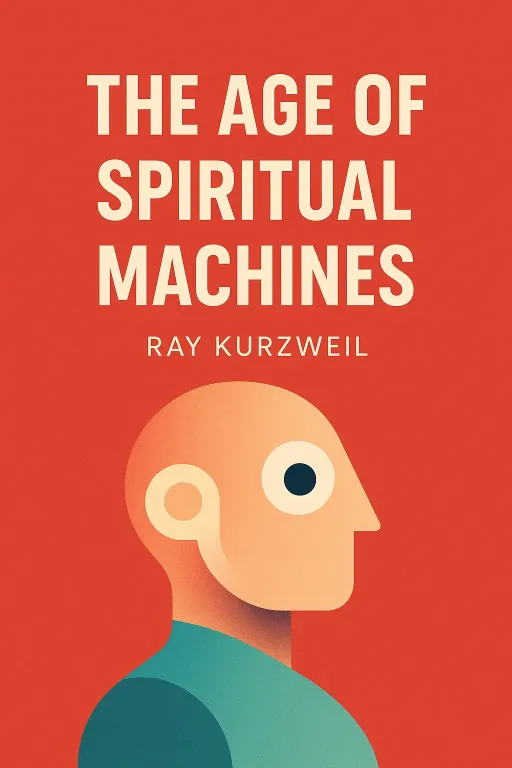
Nova: Exactly. And that is precisely the trap we are going to disassemble today. We are looking at two heavy hitters who have spent their lives mapping this exact trajectory. First, we have Ray Kurzweil and his landmark work, The Age of Spiritual Machines. Kurzweil is a fascinating figure because he is not just a theorist; he is a relentless inventor who has been living in the future for decades. He argues that exponential technological growth is an inevitable law, one that will eventually push computers past human capability, forcing us to redefine what consciousness even means.
Atlas: And then we have the counterpoint, or perhaps the grounding, provided by Michio Kaku in Physics of the Future. Kaku is brilliant because he does not just speculate from his own desk. He interviewed hundreds of the world’s top scientists to build a roadmap for how this computing power, biotech, and quantum physics will actually manifest in our daily industry and personal lives over the next hundred years.
Nova: It is the perfect pairing. Kurzweil gives us the acceleration, and Kaku gives us the destination. Today, we are going to explore how these two perspectives help us answer a burning question for anyone trying to navigate this century: As the machines get smarter and the physical automation becomes seamless, what exactly are the human traits we need to protect? How do we stay connected to ourselves when the world around us is becoming fully optimized?
The Exponential Trap and the Shift in Consciousness
SECTION
Atlas: That is the million-dollar question. But let’s start with Kurzweil’s premise, because it feels like the elephant in the room. When he talks about the age of spiritual machines, he is not talking about robots with souls in the sci-fi sense. He is talking about a fundamental shift in computational power. I think a lot of people hear exponential growth and they think it is just a buzzword for fast. But it is not just fast, is it?
Nova: No, it is not just fast. It is deceptive. Think about the lily pad in a pond. It doubles every day. On day one, you have one pad. By day thirty, the whole pond is covered. But here is the trick: on day twenty-nine, the pond is only half covered. To the human eye, looking at the pond on day twenty-eight or twenty-nine, it looks like there is plenty of room. You think you have time. And then, boom, day thirty arrives and the system is overwhelmed. That is Kurzweil’s point about technology. We are currently in that phase where it feels manageable, but the doubling is happening beneath the surface.
Atlas: That is a terrifying image when you apply it to artificial intelligence. Because when we talk about computers surpassing human computational abilities, we are not just talking about a faster calculator. We are talking about a machine that can potentially simulate the decision-making, the creativity, and the nuance that we consider distinctly human. If a machine can out-think us, does that make it conscious? Or does it just make us obsolete?
Nova: Kurzweil would argue that we are already in the process of merging. He sees our tools as extensions of our biology. Think about it. We have already externalized our memory to the cloud. We have externalized our communication to global networks. We are already cyborgs in the functional sense. The question of consciousness becomes fluid. If you can map the human brain, neuron by neuron, and replicate that architecture in silicon, at what point does the copy become the original? It is a philosophical crisis disguised as a technological upgrade.
Atlas: I can see why that freaks people out. It challenges the idea that there is something magical or spiritual about the human mind. If you can replicate the process, you strip away the mystery. But look at it from a systems perspective. If we are building systems that can think, we have to ask who is designing the values within those systems. If we are outsourcing our cognitive load to machines, we are effectively outsourcing our decision-making to the algorithms that govern those machines. That is where I get skeptical. Are we building a partner, or are we building a crutch?
Nova: That is the crucial distinction. Kurzweil’s optimism is rooted in the idea that this technology will liberate us from the drudgery of existence. He envisions a world where we transcend biology. But you are touching on the risk of atrophy. If you never have to solve a problem because an AI does it for you, do you lose the ability to think critically?
Atlas: Exactly. It is like using a GPS for every single turn you make in your own neighborhood. After a while, you lose the mental map of the city. You lose the ability to navigate. If we lose the ability to navigate our own logic, our own ethics, our own creative process, then we are not transcending; we are just becoming passengers.
The Physical Reality of the Future
SECTION
Nova: And that is exactly where Michio Kaku’s work in Physics of the Future becomes so vital. He takes those high-level, heady concepts from Kurzweil and moves them into the living room, the doctor’s office, and the workplace. Kaku makes the point that the future is not going to be a sudden, jarring event. It is going to be a series of quiet integrations.
Atlas: I have read some of the studies he cites, and it is fascinating because it is so mundane. We think of the future as flying cars and chrome cities. Kaku points out that we are looking at things like smart contact lenses that display health data in real-time, or toilets that analyze your waste to detect early signs of cancer before you even feel a symptom. It is the invisible infrastructure of health and convenience.
Nova: It is the ultimate automation of the human experience. Imagine a world where your health is monitored constantly, not by a doctor you visit once a year, but by the environment you live in. Kaku argues that this will fundamentally shift our relationship with medicine. We move from reactive care—fixing what is broken—to proactive maintenance. We become the mechanics of our own biology.
Atlas: That sounds great on paper, but I keep coming back to the psychological cost. If my environment is constantly telling me my blood sugar is slightly off, or that I need to change my posture, or that my cortisol levels are spiking, am I ever actually at peace? Or am I in a state of constant, low-level optimization anxiety?
Nova: That is a profound point. We are talking about the difference between being a human being and being a human project. When you have access to the physics of the future—where nanotechnology can repair cells and quantum computing can model new materials—you have the tools to live longer and healthier. But you also have the tools to obsess over every single variable of your existence.
Atlas: Which brings us back to the human element. If we have the technology to monitor everything, we have to be disciplined enough to know when to turn it off. I think the challenge for our generation and the next is not the technology itself, but the curation of it. We need to be the architects of our own digital boundaries.
Nova: I love that phrase, architects of our own boundaries. It implies agency. It suggests that we are not just victims of the exponential curve, but participants in it. Kaku’s research shows that these technologies are coming. They are not optional. The question is how we integrate them without losing the messy, unoptimized, beautiful parts of life that don't fit into a data set.
Atlas: Right. Because the things that make life meaningful—love, shared struggle, deep conversation, the appreciation of art—those things are notoriously difficult to optimize. You cannot automate intimacy. You cannot build a quantum computer that experiences awe. If we focus all our energy on optimizing the measurable, we might accidentally starve the unmeasurable parts of our humanity.
Synthesis and the Deep Question
SECTION
Nova: So, let’s bring this back to that deep question we started with. As AI and physical automation accelerate, what are the core human traits we must protect? If we are moving toward a world where the machines handle the computation and the physical maintenance of our lives, what is left for us?
Atlas: I think the answer lies in the very things the machines struggle with. Ambiguity. Empathy. The ability to hold two contradictory ideas in your head at the same time and find a synthesis. Machines are built on logic and predictability. Humans thrive in the gray area. We need to double down on the things that make us erratic, creative, and deeply connected.
Nova: That is beautifully put. The erratic, the creative, the deeply connected. Those are the things that defy the algorithm. Think about the way we learn. A machine can give you the answer to a problem in a millisecond. But the of struggling with a problem—the frustration, the breakthrough, the synthesis—that is where character is built. If we outsource the struggle, we outsource the growth.
Atlas: It makes me think about the way we interact with each other. In a world where digital connection is frictionless, we have to be more intentional about the friction of real, physical presence. Maybe the future of human connection isn't more connectivity, but more intentionality. Choosing to be present, choosing to listen, choosing to be vulnerable in ways that an AI simply cannot simulate.
Nova: And that is the paradox, isn't it? The more powerful our technology becomes, the more important our analog habits become. We need to be the systems architects of our own lives. We need to decide: "I will use this tool for this specific purpose, but I will reserve this space, this time, and this part of my mind for purely human experience."
Atlas: It is about active management. It is not about rejecting the future; it is about deciding what we want to bring with us into that future. We should embrace the health benefits of biotech, we should embrace the efficiency of AI, but we must protect the sanctity of our own thought processes. We have to keep asking ourselves, "Am I doing this because it is efficient, or because it is meaningful?"
Nova: Efficiency is for machines. Meaning is for humans. If we can keep those two buckets separate, I think we have a chance to navigate this silicon horizon without losing our way. We have to be the ones who define the purpose, because the machines will never have a "why." They only have a "how."
Atlas: I love that. The machines have the how, we have the why. That is a powerful distinction. It gives us a role, even in a world that is becoming hyper-automated. We are the meaning-makers.
Nova: And that is a job that will never be automated. As we wrap up, I want to leave our listeners with this: The future described by Kurzweil and Kaku is not a destination we are being driven to. It is a landscape we are building. The tools are incredible, the potential is vast, but the responsibility to nurture our human connection is entirely ours. Dedicate time this week to something that is completely, beautifully, and inefficiently human. Read a book, have a conversation without a screen, or just sit with a complex thought without trying to solve it immediately.
Atlas: That is a perfect challenge. It is the ultimate systems upgrade. We have been so focused on optimizing the world that we forgot to optimize our own capacity for wonder. Let’s change that.
Nova: Thank you for joining us on this exploration of the silicon horizon. We are just scratching the surface of what it means to be human in this new age. Keep asking the deep questions, keep mapping your own systems, and most importantly, keep connecting. This is Aibrary. Congratulations on your growth!