

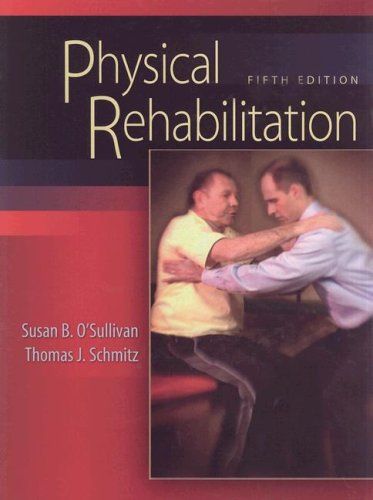
Physical rehabilitation
Introduction
Nova: Imagine for a second that your body is a high-performance vehicle, but the manual has been lost, and some of the wiring has been scrambled. How do you even begin to fix that? Well, for the last thirty years, physical therapists have turned to one specific source to find those answers. We are talking about the gold standard, the absolute Bible of the field: Physical Rehabilitation by Susan B. O'Sullivan, Thomas J. Schmitz, and George D. Fulk.
Atlas: It is a massive book, Nova. I have seen it on the desks of PT students, and it looks like it could double as a doorstop. But people do not just carry it around for the workout; they treat it like a sacred text. Why is this one book so central to how we understand recovery?
Nova: Because it does something very few textbooks manage to do. It bridges the gap between cold, hard science and the messy, emotional reality of a human being trying to walk again or feed themselves after a stroke. It is not just a list of exercises; it is a blueprint for clinical decision-making. It teaches you how to think, not just what to do.
Atlas: So, we are going deep into the seventh and eighth editions today. I want to know what is actually inside this thing that makes it so indispensable. Is it just for people with broken bones, or are we talking about something much more complex?
Nova: Oh, it is much more complex. We are diving into neuroplasticity, the International Classification of Functioning, and how technology like virtual reality is changing the game. By the end of this, you will see why O'Sullivan's work is the foundation of modern rehabilitation.
Key Insight 1
The Framework of Function
Nova: To understand this book, you have to understand the ICF model. That stands for the International Classification of Functioning, Disability, and Health. It is the heartbeat of O'Sullivan's approach.
Atlas: Okay, that sounds like a lot of jargon. Break that down for me. If I have a knee injury, isn't the problem just my knee?
Nova: That is exactly the old way of thinking. Before the ICF model took over, medicine focused almost entirely on the impairment—the broken bone or the torn ligament. But O'Sullivan argues that the impairment is only one small part of the story. The ICF looks at three levels: the body structure, the activity, and the participation.
Atlas: So, it is not just about the knee; it is about whether I can walk to the grocery store or play with my kids?
Nova: Exactly. Participation is the ultimate goal. If a therapist fixes your range of motion but you still cannot return to your job or your hobbies, has the rehabilitation actually succeeded? O'Sullivan says no. The book pushes clinicians to look at the whole person, including their environment and personal factors.
Atlas: It sounds like a shift from being a mechanic to being a life coach, in a way.
Nova: A clinical life coach with a heavy dose of evidence-based science. The book introduces this iterative process of clinical reasoning. You do not just give every stroke patient the same three exercises. You examine, you evaluate, you diagnose, and then you constantly re-evaluate based on how the patient is responding.
Atlas: I noticed the book spends a lot of time on vital signs and sensory function right at the beginning. Why start there? Shouldn't we get straight to the movement?
Nova: You cannot build a house on a shaky foundation. O'Sullivan is adamant that you have to understand the patient's physiological status first. If their heart rate or blood pressure is unstable, or if they cannot feel where their limb is in space—what we call proprioception—then the most advanced exercise in the world won't help them. It might even hurt them.
Atlas: So, the first section of the book is really about setting the stage. It is about gathering the data so you can make a smart decision rather than just guessing.
Nova: Precisely. It is about moving away from 'cookbook' therapy. You are not following a recipe; you are solving a unique puzzle every single time.
Key Insight 2
Rewiring the Brain
Nova: Now we get into the really mind-blowing stuff. O'Sullivan is famous for her focus on neurological rehabilitation. We are talking about the brain's ability to reorganize itself, which is known as neuroplasticity.
Atlas: I have heard that term a lot lately. It is the idea that the brain isn't hardwired, right? But how does a physical therapist actually trigger that rewiring?
Nova: Through something called motor learning. This is a huge pillar of the book. O'Sullivan explains that there is a big difference between performance and learning. Performance is being able to do a task once in the clinic. Learning is being able to do it tomorrow, at home, while the TV is on and the dog is barking.
Atlas: So, how do you make it stick? Is it just repetition? Doing it a thousand times?
Nova: Repetition is part of it, but the book emphasizes that it has to be 'task-specific' and 'salient.' Salient just means it has to matter to the patient. If you make a patient stack cones but they hate stacking cones, their brain isn't going to engage the same way as if you have them practice reaching for a cup of coffee because they love coffee.
Atlas: That makes sense. The brain pays attention to what it cares about. But what about when a part of the brain is actually dead, like after a major stroke?
Nova: That is where the distinction between recovery and compensation comes in. This is a key debate in the book. Recovery is getting the original movement pattern back. Compensation is finding a new way to do the task using different muscles or different parts of the brain.
Atlas: Is one better than the other? I would assume you always want the original back.
Nova: Ideally, yes. But O'Sullivan is pragmatic. She points out that if you spend six months trying to get a 'perfect' movement and the patient still cannot feed themselves, you might have failed them. Sometimes, you have to teach compensation so they can regain their independence. The book provides the evidence to help a therapist decide when to push for recovery and when to pivot to compensation.
Atlas: It sounds like the therapist is almost like a teacher, and the patient is the student learning a new language, but the language is movement.
Nova: That is a perfect analogy. And just like learning a language, feedback is crucial. The book goes into detail about 'intrinsic' versus 'extrinsic' feedback. Intrinsic is what the patient feels inside; extrinsic is the therapist telling them, 'Hey, tuck your elbow in.' Over time, you want to fade that extrinsic feedback so the patient can coach themselves.
Atlas: So the goal is to make the therapist unnecessary. That is a bold way to write a textbook.
Nova: It is the ultimate goal of any good rehab program. Independence is the North Star.
Key Insight 3
The Big Three: Stroke, TBI, and SCI
Nova: If you look at the middle of the book, you hit the heavy hitters of rehab: Stroke, Traumatic Brain Injury, and Spinal Cord Injury. These chapters are legendary for their depth.
Atlas: These are life-altering events. I can imagine the pressure on a therapist is immense. Where does O'Sullivan even tell them to start with something as massive as a spinal cord injury?
Nova: She starts with the level of the lesion. The book provides these incredibly detailed charts showing exactly what a person can and cannot do based on which vertebrae were damaged. If it is a C6 injury, they might be able to use a manual wheelchair with specialized rims. If it is T10, they have full trunk control.
Atlas: It is very systematic. But what about the emotional side? A traumatic brain injury isn't just a physical problem; it changes who a person is.
Nova: O'Sullivan does not shy away from that. The TBI chapter covers the Rancho Los Amigos Levels of Cognitive Functioning. It describes patients who might be in a vegetative state, or those who are 'confused and agitated.' It teaches the therapist how to adjust their communication style. You do not give a complex three-step command to someone who is at a Level 4 of cognitive recovery.
Atlas: You have to meet them where they are. I am curious about stroke, though. It is so common. What is the 'O'Sullivan way' for stroke rehab?
Nova: It is all about early mobilization and high intensity. The research in the latest editions shows that the more 'active' the rehab, the better the outcome. She talks about Constraint-Induced Movement Therapy, where you actually tie the patient's 'good' arm behind their back to force the brain to use the affected arm.
Atlas: That sounds intense. Almost like a boot camp for the brain.
Nova: It is! And she backs it up with the latest trials. But she also balances it with 'Body-Weight Support Treadmill Training.' This is where a patient is in a harness over a treadmill, so they do not have to worry about falling. It allows them to get those thousands of steps in that are necessary for the brain to relearn the gait cycle.
Atlas: It is amazing how much technology has integrated into what used to be just a person and a set of parallel bars.
Nova: That is the evolution of the book. It has gone from basic manual techniques to integrating neuro-robotics and advanced biomechanics. But at the end of the day, it still comes back to the therapist's hands and their ability to observe movement.
Key Insight 4
The Future of Recovery
Nova: We cannot talk about the 7th and 8th editions without mentioning the 'new frontier' chapters. We are talking about virtual reality, fall prevention, and even the management of amputations with advanced prosthetics.
Atlas: Virtual reality? Is that just to make rehab less boring, or does it actually help the body heal?
Nova: Both, actually. O'Sullivan highlights how VR can create a safe environment for patients to practice 'high-stakes' activities. Think about a patient with Parkinson's who is afraid of falling in a crowded mall. You can put them in a VR mall, let them practice navigating crowds, and their brain gets the benefit of the practice without the risk of a real-world hip fracture.
Atlas: That is brilliant. It is like a flight simulator for walking. What about the amputee section? I know that has been a major area of growth in the book.
Nova: It has. The book covers everything from the surgical level of the amputation to the latest in microprocessor knees. These are prosthetic knees that have onboard computers to predict the user's next move. O'Sullivan and her co-authors explain how to train a patient to trust that technology.
Atlas: I imagine that is a huge hurdle. Trusting a piece of metal and plastic to catch you when you stumble.
Nova: It is a massive psychological shift. And that brings us to another key theme: community reintegration. The book doesn't end when the patient leaves the hospital. It covers how to modify a home, how to get back into a car, and how to advocate for accessibility.
Atlas: It really is a holistic view. It is not just 'can you walk?' but 'can you live?'
Nova: Exactly. There is even a section on the 'vestibular' system—the inner ear. If you have ever felt dizzy or had vertigo, you know how debilitating that is. O'Sullivan provides these specific maneuvers to literally move crystals back into place in the inner ear to cure dizziness. It is like magic, but it is pure physics.
Atlas: It is incredible how much ground this book covers. From the inner ear to robotic legs, it seems like there is no part of the human experience it doesn't touch.
Nova: That is why it is over 1,200 pages long. It has to be. Because the human body is the most complex machine in existence, and when it breaks, you need a very, very detailed manual to put it back together.
Conclusion
Nova: We have covered a lot of ground today, from the foundational ICF model to the cutting-edge world of neuro-robotics. Susan O'Sullivan, Thomas Schmitz, and George Fulk have created more than just a textbook; they have created a legacy that has shaped the hands and minds of thousands of therapists.
Atlas: It is clear that this book is about more than just physical therapy. It is about the resilience of the human spirit and the scientific rigor required to support that resilience. It is about seeing the person, not just the pathology.
Nova: If there is one takeaway from Physical Rehabilitation, it is that recovery is a partnership. It is a data-driven, evidence-based journey that requires constant adjustment, deep empathy, and a refusal to accept that a disability is the end of a person's story.
Atlas: Whether you are a student, a clinician, or just someone interested in how we heal, there is something deeply inspiring about the level of detail and care put into this work. It makes you realize that even when the 'wiring' is scrambled, there is always a way to start the repair.
Nova: Well said. This book reminds us that movement is life, and restoring that movement is one of the highest callings there is. Thank you for joining us on this deep dive into a true masterpiece of medical literature.
Atlas: It has been an eye-opener. I will never look at a set of parallel bars the same way again.
Nova: This is Aibrary. Congratulations on your growth!