

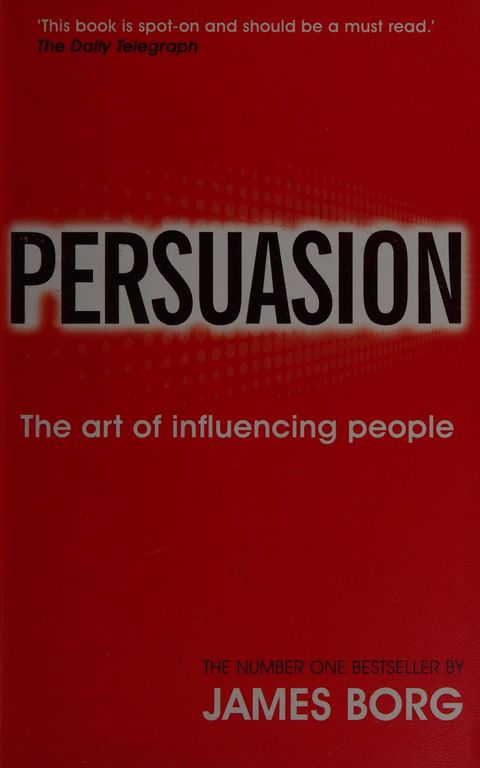
Persuasion
The Art of Influencing People
Introduction: The Learnable Magic Formula of Influence
Introduction: The Learnable Magic Formula of Influence
Nova: Welcome back to The Insight Engine, the podcast where we dissect the ideas that shape success. Today, we’re diving deep into a concept we all use daily, often without realizing its true structure: Persuasion. We’re looking at James Borg’s seminal work, 'Persuasion: The Art of Influencing People.'
Nova: Exactly. He frames it as the 'ultimate competitive advantage.' But here’s the hook that grabbed me: Borg references Aristotle’s definition, stating persuasion is the art of encouraging people to do things they would never normally do if you didn't ask them. That sounds powerful, but also potentially dangerous.
Nova: That’s precisely what we’ll unpack. We’re going beyond simple sales tactics to look at the foundational mindset Borg insists must be in place before you even open your mouth. We’ll cover the core pillars: Empathy, Listening, and how to present your thoughts so convincingly that people to agree with you. Get ready to rewire how you communicate.
Key Insight 1
The Ethical Core: Empathy and Sincerity as Prerequisites
Nova: Let’s tackle the ethical elephant in the room first. Borg makes it crystal clear that true, lasting persuasion is built on sincerity and empathy. He positions these not as optional extras, but as the absolute prerequisites for winning hearts and minds.
Nova: Precisely. Borg defines it as the ability to identify and understand the other person's feelings, ideas, and situation. It’s listening with your heart as well as your head. If you can genuinely step into their shoes, you stop trying to your agenda and start trying to an action that benefits both parties.
Nova: Exactly. And this is where Borg draws the sharpest line: Persuasion versus Manipulation. Manipulation, he implies, uses deception or coercion to get what you want, regardless of the other person’s well-being. It’s a short-term win followed by long-term distrust.
Nova: He emphasizes that people want to be persuaded, but they hate being manipulated. They want to feel good about the decision they make, even if you guided them there. If you are sincere, they feel respected. If you are empathetic, they feel understood.
Nova: He often stresses that your non-verbal communication must align perfectly with your verbal message. If you say you are sincere but your body language is closed off or defensive, the listener’s subconscious immediately flags the insincerity. The message becomes: 'My words say one thing, but my entire being says another.'
Nova: It is. And this foundation is so critical that Borg dedicates significant space to it before even getting into the mechanics. He suggests that without sincerity, all the clever techniques in the world will eventually fall flat. Think about the most trusted leaders you know; their influence rarely comes from slickness, but from perceived integrity.
Nova: Borg is essentially saying: build the character first. Empathy and sincerity are the twin engines that power the entire persuasive machine. If one stalls, the whole process grinds to a halt. It’s about creating a positive disposition toward you before you even present your core argument.
Nova: You read my mind. The next essential skill Borg champions is the absolute mastery of listening. It’s not just hearing; it’s active, deep reception. That’s where we head next.
Key Insight 2
The Art of Receiving: Mastering Active Listening
Nova: It’s a huge point. He differentiates between hearing, which is passive, and active listening, which is a conscious, demanding skill. He notes that many people are so busy formulating their next brilliant response that they miss the crucial details being offered right in front of them.
Nova: It goes beyond just nodding. Active listening involves total focus—removing distractions, both external and internal. Internally, that means silencing your own internal monologue that’s planning your comeback. Externally, it means giving the speaker your undivided attention, which is a massive sign of respect.
Nova: Absolutely. Borg links listening directly back to empathy. You cannot be empathetic if you are not listening deeply enough to understand their underlying emotional state or their true need. He says active listening is critical to success because it allows you to 'read' the person more effectively.
Nova: Yes. Mirroring and summarizing are key. Mirroring involves subtly reflecting back some of their language or posture, which signals alignment. Summarizing, however, is the real test: 'So, if I understand correctly, your primary concern isn't the cost, but the implementation timeline. Is that right?'
Nova: And it gives them a chance to correct you if you misunderstood. This iterative feedback loop is what builds trust. Think about it: how often do you feel truly heard in a typical conversation? Maybe 10% of the time?
Nova: He even touches on the importance of silence. Allowing a pause after someone finishes speaking gives them space to elaborate or to feel that their point has landed fully, rather than immediately jumping in to fill the void. That silence is often more persuasive than any clever phrase.
Nova: It is discipline, but it’s discipline that pays dividends. Because once you’ve absorbed all that rich data through sincere, empathetic listening, you are now perfectly positioned for the next stage: delivering your message effectively. You know exactly what language, what concerns, and what values to appeal to.
Key Insight 3
The Output: Presenting Your Convincing Self
Nova: We’ve built the foundation with sincerity and gathered the intelligence through active listening. Now, we have to present our thoughts convincingly. This is where Borg moves into the mechanics of delivery—how you package your message.
Nova: He emphasizes that you must present yourself and your thoughts convincingly. This involves mastering non-verbal communication, which he sees as the primary channel for establishing rapport and trust. We’re talking about posture, eye contact, and mirroring.
Nova: It’s about connection, not staring. It’s about holding contact long enough to convey sincerity and engagement, then naturally breaking it, perhaps looking slightly to the side as if considering a point, before re-engaging. It’s fluid, not fixed. It needs to feel natural because you are genuinely engaged, not performing a technique.
Nova: You tailor the appeal. If your listening revealed that the person values security above all else, your presentation must frame your proposal in terms of risk mitigation and stability, even if the proposal is inherently about growth. You use their language and prioritize their values.
Nova: Exactly. You are using the data as your evidence, but you are wrapping it in the context of primary motivator. Furthermore, Borg discusses the importance of memory in persuasion. Not just remembering names, but remembering key details from past conversations.
Nova: It’s the ultimate proof of concept for your empathy. It shows you value them enough to retain information about them. It’s about making the other person feel like the most important person in the room, even if you are trying to influence a major decision.
Nova: It is a holistic approach. Borg essentially argues that if you master the input and the delivery, the output—the persuasion—becomes almost inevitable, because you’ve removed all the friction points that typically cause resistance. You’ve made agreement the path of least resistance for them.
Conclusion: Integrating Influence into Everyday Life
Conclusion: Integrating Influence into Everyday Life
Nova: We’ve covered a lot of ground today, Alex, moving from the philosophical underpinnings of James Borg’s 'Persuasion' to the practical mechanics of delivery.
Nova: Second, is your primary intelligence-gathering tool. Stop planning your response and start absorbing their reality. That deep reception is what allows you to tailor your message authentically.
Nova: Borg promises that mastering these skills leads to success in work and life. It’s about moving from being someone who to convince people, to someone who naturally agreement because they are perceived as trustworthy and deeply understanding.
Nova: Indeed. The power of persuasion, when wielded correctly, is the power to collaborate effectively and move forward together. It’s less about winning and more about aligning.
Nova: This has been The Insight Engine. Thank you for joining us on this exploration of James Borg's 'Persuasion.' This is Aibrary. Congratulations on your growth!