

Ethical Compass in the Digital Age: Navigating Marketing Responsibly
Golden Hook & Introduction
SECTION
Nova: Atlas, I want you to imagine something. You walk into a store, pick up an item, and before you even reach the checkout, a sales associate knows your last five purchases, your favorite color, and your shoe size, all without you ever explicitly telling them.
Atlas: Oh, I love that. So, I’m being perfectly profiled, but it feels a little… creepy, doesn’t it? Like, how did they know all that? Did I sign something I didn't read?
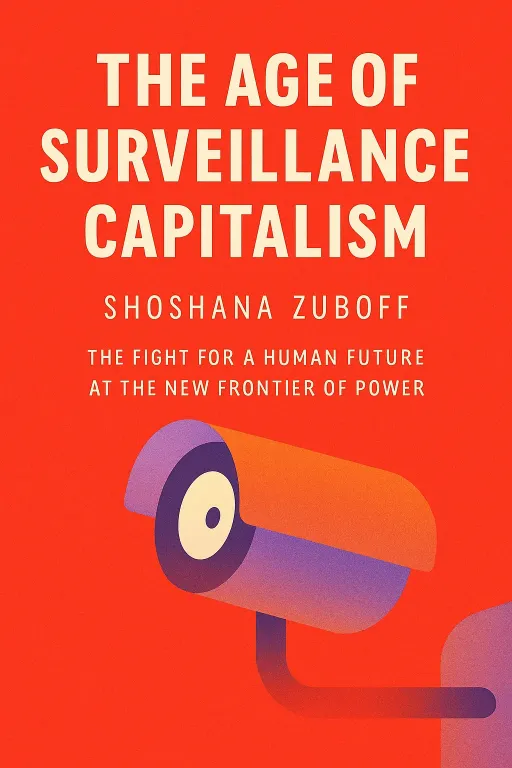
Nova: Exactly! That unsettling feeling is at the heart of what we're unraveling today. We're diving into the fascinating and frankly, sometimes terrifying, world of 'Ethical Compass in the Digital Age: Navigating Marketing Responsibly,' drawing heavily from foundational works like Shoshana Zuboff’s groundbreaking book, "The Age of Surveillance Capitalism," and Seth Godin’s influential "Permission Marketing." Zuboff, a Harvard professor and scholar, really pulled back the curtain on how a new economic order emerged, one where our most personal data became the raw material for profit.
Atlas: That makes me wonder, how did we even get here? It feels like we just woke up one day, and suddenly every click, every scroll, every single interaction online is being analyzed. What’s the big picture that Zuboff is exposing?
The Hidden Economy of Surveillance Capitalism
SECTION
Nova: Well, Zuboff’s central thesis is that we've entered an entirely new economic order she terms "surveillance capitalism." It's not just about companies collecting data to improve services. It's about a fundamental shift where tech giants, like Google and Facebook in their early days, realized they could our behavioral data. They predict and even modify human behavior for profit, often without our explicit knowledge or consent.
Atlas: Hold on, so it’s not just about targeted ads? That sounds a bit out there. Are you saying they’re actively trying to how we behave, not just respond to it?
Nova: Absolutely. Think about it this way: your online searches, your location data, your interactions, your likes—these aren't just isolated pieces of information. They're "behavioral surplus" that's fed into complex algorithms. These algorithms then create "prediction products" that forecast what you'll do next. And then, they sell access to these predictions, or even the ability to intervene and nudge your behavior, to advertisers and other businesses. It’s a market based on future human behavior.
Atlas: Wow, that’s kind of heartbreaking. So, we're not just users; we're essentially the raw material for an invisible industrial process. What does that mean for our sense of privacy, or even our free will?
Nova: It raises profound ethical questions about both. Zuboff argues that this system erodes privacy, but more fundamentally, it jeopardizes democracy and individual autonomy. When companies can predict and influence your choices, are those choices truly your own? It's a power imbalance where knowledge about us is unilaterally taken, not exchanged. She's been widely acclaimed for her meticulous research and for coining a term that has become central to discussions about digital ethics. Many critics praise her for articulating a complex phenomenon with such clarity, though some debate the extent of its inevitability.
Atlas: Okay, so if I'm understanding this right, the core problem is a lack of consent. We're giving away our data, but we're not truly understanding the full implications of what's being done with it. It’s like we’re signing a blank check for our digital selves.
Nova: Exactly. And that's where the tension between data-driven insights and user autonomy truly defines modern ethical marketing. We want the convenience, the personalization, the innovation—but at what cost to our individual rights and our sense of self?
Atlas: So, for our listeners who are navigating this complex landscape, trying to drive impact and innovate ethically, how do we even begin to balance this? Is there a way out of this "surveillance" paradigm?
Reclaiming Autonomy through Permission Marketing
SECTION
Nova: That’s a brilliant segue, Atlas, because it brings us directly to the counterpoint: Seth Godin’s "Permission Marketing." Godin, a legendary marketer and author, recognized this problem decades ago and advocated for a radically different approach. His core idea is simple: instead of interrupting strangers with unwanted messages, marketers should earn the privilege to market to people who to hear from them.
Atlas: Oh, I like that. So, instead of feeling like I'm constantly being spied on, it's about building a relationship where I actually the marketing in. That feels empowering.
Nova: Precisely. Godin argues that traditional "interruption marketing" – think TV commercials, pop-up ads, spam emails – is increasingly ineffective and resented. Permission marketing, by contrast, is about fostering trust and long-term relationships. It’s about creating anticipation for your messages because the consumer has explicitly opted in, valuing what you have to offer.
Atlas: That makes me wonder, what does 'explicitly give permission' actually look like in practice today? Is it just checking a box for an email list? Or is there something deeper we should be aiming for, especially with all the data tracking going on?
Nova: It’s definitely more than just a checkbox, although that’s a starting point. It's about a mindset shift. It means being transparent about what data you collecting, you're collecting it, and you're going to use it to provide value. It's about offering clear choices and respecting those choices. Think about a company whose newsletters you genuinely look forward to, or an app whose notifications you actually find helpful. That's permission marketing in action: valuable, anticipated, and personal.
Atlas: I can see how that would be a game-changer for businesses driven by meaningful impact. Instead of chasing fleeting attention, they're building a loyal community. But how does this integrate with the rise of AI? What does 'ethical AI' truly mean in consumer interactions, especially when AI is so good at predicting?
Nova: That’s the deep question, isn't it? Ethical AI in consumer interactions means ensuring that AI is used to user well-being and privacy, not compromise it. It means designing AI systems that respect user consent, provide transparency about their operations, and offer avenues for recourse if something goes wrong. It's about using predictive power to the customer better, within clearly defined boundaries, rather than to manipulate them. It's about using AI to build bridges of trust, not walls of data that obscure our intentions.
Atlas: So, for businesses, it’s about genuinely prioritizing user well-being and privacy while still achieving growth objectives. It’s not an either/or; it’s a strategic choice to grow trust.
Nova: Exactly. It requires a commitment to transparency, clear value propositions, and a genuine respect for the individual. It’s about understanding that in the long run, trust is the most valuable asset any brand can build.
Synthesis & Takeaways
SECTION
Nova: So, as we wrap up, what we've really explored today is this critical divergence: the invisible, often coercive power of surveillance capitalism versus the empowering, relationship-driven philosophy of permission marketing. It’s a choice businesses and consumers are making every day.
Atlas: Absolutely. For anyone listening, whether you're building a brand or just navigating your own digital life, it’s about being intentional. It’s about asking: does this interaction feel like an intrusion, or does it feel like an invitation? The future of ethical innovation truly hinges on that distinction.
Nova: And that's the profound insight: the digital age doesn't have to be a zero-sum game where convenience trumps privacy. We can, and must, demand models that prioritize user well-being and genuine consent. It's about remembering that behind every data point is a person, and respecting their autonomy is the ultimate ethical compass.
Atlas: That’s actually really inspiring. It gives me chills to think about the positive change that could come from widespread adoption of these ideas. It really drives home that we, as consumers, also have a role to play in demanding better.
Nova: We absolutely do. And for our listeners, we want to hear from you: what companies do you admire for their ethical marketing? How do you practice permission in your own digital life? Share your thoughts and insights with us.
Atlas: This is Aibrary. Congratulations on your growth!