

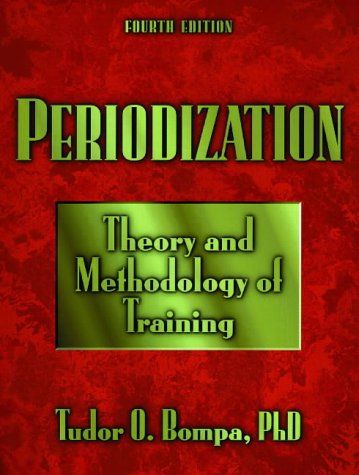
Periodization
theory and methodology of training
Introduction
Nova: Imagine it is the 1960s. The Olympic Games are the ultimate stage for national pride, and suddenly, athletes from the Eastern Bloc start dominating in ways the world has never seen. They are faster, stronger, and they seem to peak with almost supernatural precision. For a long time, the West thought it was just a secret supplement or some hidden training facility. But the real secret was actually a system of timing. It was a revolutionary way of organizing work and rest called Periodization.
Nova: It is so much more than that, Leo. Tudor Bompa is often called the Father of Modern Periodization. Before him, most athletes just trained as hard as they could, all the time, until they either won or broke. Bompa brought a scientific, almost architectural approach to the human body. He realized that you cannot stay at your peak year-round. If you try to be at one hundred percent in January, you will be a broken shell by the time the Olympics roll around in July.
Nova: Exactly, but applied to every single physiological system in your body. Today, we are diving deep into Bompa's masterwork. We are going to look at how he broke time down into cycles, his controversial laws of strength, and why your current workout might be failing because you are missing the very first step he recommends. This is the blueprint for human performance.
Key Insight 1
The Architect of Performance
Nova: To understand Bompa, you have to understand the state of sports science when he started. In the mid-twentieth century, the prevailing wisdom was simply more is better. If you want to be a better runner, run more. If you want to be stronger, lift more. But Bompa, drawing on his background in Romania, saw that the body does not respond linearly to stress. It responds in waves.
Nova: It was revolutionary. He popularized the concept of Supercompensation. Think of it like this: when you train, you are actually damaging your body. You are creating micro-tears, depleting energy, and stressing your nervous system. Your performance actually goes down immediately after a workout. If you train again too soon, it goes down further. But if you wait for the right window, the body does not just return to its original level. It overcompensates. It builds back slightly stronger than before to handle that stress next time.
Nova: Precisely! But the trick is the timing. If you wait too long, that supercompensation effect fades away. Bompa's book is essentially a massive, data-driven guide on how to stack those waves of supercompensation so that they all crest at the exact moment of your most important competition.
Nova: Yes, he identified five primary biomotor abilities: strength, speed, endurance, flexibility, and coordination. His big insight was that these are not independent. They are like a family. If you want to improve your speed, you often have to improve your strength first. But you cannot maximize both at the exact same time. You have to periodize them. You build the foundation of strength in one phase so that you can convert it into explosive power in the next.
Nova: That is the perfect analogy. And Bompa was the one who gave us the blueprints for that sequence. He moved us away from the idea of a workout and toward the idea of a training process. It is the difference between a random pile of bricks and a skyscraper.
Key Insight 2
The Russian Doll of Time
Nova: It is actually quite elegant once you see the hierarchy. Think of it like a set of Russian nesting dolls. The biggest doll is the Macrocycle. This is usually your entire year of training, or for an Olympic athlete, it could be a four-year Quadrennial cycle. It represents the big picture goal, like winning a gold medal or hitting a specific weightlifting total.
Nova: Exactly. Mesocycles usually last about two to six weeks. Each one has a specific theme. For example, one mesocycle might focus entirely on building muscle size, while the next one focuses on turning that muscle into raw strength. You are focusing your body's resources on one specific adaptation at a time so you do not confuse the system.
Nova: That is the classic mistake! Bompa calls that the lack of specificity. By using mesocycles, you give your body a clear signal of what it needs to do. And then, inside the mesocycle, you have the smallest doll: the Microcycle. This is typically your training week. It is the actual schedule of Monday through Sunday.
Nova: Not necessarily. Bompa uses a step-loading pattern. You might increase the intensity for three weeks—that is three microcycles—and then on the fourth week, you actually drop the intensity significantly. This is called a deload. It allows all that accumulated fatigue to clear out so the supercompensation we talked about can actually happen.
Nova: It is the hardest part for many high-achievers. But Bompa's data showed that without those deloads, you hit a plateau or, worse, you get injured. He proved that the most successful athletes are not the ones who work the hardest every single day, but the ones who manage their energy the most intelligently over the course of a year.
Key Insight 3
The Five Laws of Strength
Nova: You are talking about the laws that focus on the foundation. Law number one: Develop joint flexibility. Law number two: Develop tendon strength before muscle strength. Most people skip straight to law five, which is training muscles, but Bompa says that is a recipe for disaster.
Nova: Because muscles adapt to stress much faster than tendons and ligaments do. If you use a bunch of fancy supplements and high-intensity techniques to blow up your muscle size in six weeks, your tendons might not be strong enough to anchor that new power. It is like putting a Ferrari engine into a car with a cardboard chassis. Something is going to snap.
Nova: It is the very first phase of his periodization model. It usually involves higher repetitions, lower weights, and a lot of variety. The goal is not to get huge or set a personal record. The goal is to strengthen the attachments, balance the left and right sides of the body, and prepare the core. He says you should spend several weeks here at the start of every macrocycle.
Nova: Yes! Law number three. He argues that a strong core is the platform for all limb movement. If your trunk is weak, you cannot effectively transfer force from your legs to your arms. Think of a person trying to push a heavy car while standing on ice. No matter how strong their legs are, they have no stability, so they cannot move the car. Your core is the dry pavement that gives you the grip to use your strength.
Nova: It really was. Bompa was adamant that in sports, muscles never work in isolation. He wanted athletes to train the specific patterns they would use in their game. If you are a shot putter, doing a seated bicep curl is almost useless compared to a movement that integrates the whole kinetic chain. He was all about efficiency. Every drop of sweat had to contribute to the final goal.
Key Insight 4
The Art of the Peak
Nova: This is where the conversion phase comes in. This is one of the most brilliant parts of his methodology. He takes that raw strength you built and converts it into what the sport actually requires. If you are a sprinter, you convert strength into power. If you are a rower, you convert it into muscular endurance.
Nova: Exactly. And as you get closer to the big event, you enter the Taper. This is a very specific type of microcycle where you keep the intensity high—meaning you still lift heavy or run fast—but you slash the volume. You do way fewer sets and reps.
Nova: If you drop the intensity, your nervous system goes to sleep. You lose that sharpness, that pop. By keeping the intensity high but the volume low, you keep the nervous system primed while allowing your muscles to fully recover and your glycogen stores to top off. It is a delicate balance. If you do it right, you experience a surge in performance that Bompa calls the peak.
Nova: Usually no more than two weeks. It is a physiological state that is incredibly taxing to maintain. This is why you see some teams look unbeatable in the playoffs and then suddenly fall apart. They either peaked too early or tried to hold it too long. Bompa's book provides the mathematical formulas to time this perfectly.
Nova: That is the main criticism of his original linear model. It can be very rigid. In the decades since the first edition, many coaches have moved toward non-linear or undulating periodization, where you change the focus more frequently to stay flexible. But even those modern systems are still standing on the shoulders of Bompa's giants. They are all using his language of cycles and phases. He gave us the grammar; we are just writing different sentences now.
Conclusion
Nova: We have covered a lot of ground today, from the secret of the Eastern Bloc's success to the intricate dance of the macrocycles. Tudor Bompa's Periodization is not just a book for Olympic coaches; it is a philosophy of long-term growth. It teaches us that progress is not a straight line—it is a series of planned waves.
Nova: That is the biggest takeaway. Whether you are training for a triathlon, trying to get stronger, or even working on a long-term professional project, the principles of periodization apply. Build a foundation, focus your efforts in phases, and respect the need for recovery. If you do that, you are not just working hard; you are working with the grain of human biology.
Nova: Precisely. Bompa showed us that greatness is not an accident; it is a scheduled event. If you want to dive deeper, the sixth edition of Periodization: Theory and Methodology of Training is the gold standard. It is a dense read, but it is the literal textbook of champions.
Nova: Your joints will thank you! Thank you for joining us on this deep dive into the science of timing and performance. This is Aibrary. Congratulations on your growth!