Mastering the Mental Marathon: Strategies for Sustained Focus
Golden Hook & Introduction
SECTION
Nova: Tell me, Atlas, if you had to sum up the secret to sustained high performance in just five words, what would they be? No pressure, just… five words.
Atlas: Oh, I like that! Five words. Hmm. "Think slow, then sprint hard."
Nova: That’s good! That’s really good. And surprisingly insightful, especially considering what we’re diving into today. Because it hints at this deep understanding of how our brains actually function.
Atlas: Right? I mean, who hasn't tried to sprint hard all the time and just… crashed? It feels like we're constantly trying to outrun our own biology.
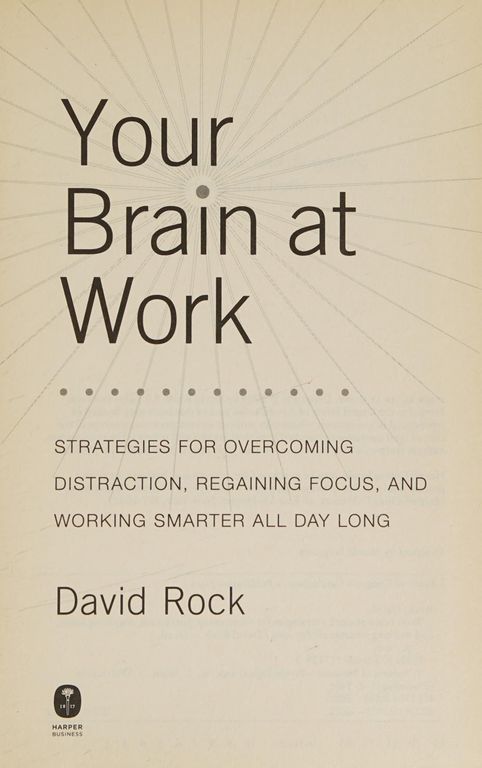
Nova: Exactly! And that’s why today, we’re unpacking a fascinating concept: mastering the mental marathon. It’s all about strategies for sustained focus. We're drawing insights from brilliant minds like David Rock, author of Your Brain at Work, and the dynamic duo Brad Stulberg and Steve Magness, who gave us Peak Performance.
Atlas: Your Brain at Work, I remember hearing about that one. David Rock, if I’m not mistaken, he’s a neuroscientist and co-founder of the NeuroLeadership Institute, right? His work really tries to bridge the gap between hard science and practical application in the workplace. It’s not just theory; it’s about making neuroscience accessible for everyday leaders and professionals.
Nova: Absolutely. And that’s precisely why these books resonate so deeply. They’re not just academic exercises. They’re practical guides to understanding our internal operating system so we can design our lives for maximum clarity and sustained high performance. It’s about not just working, but working with our brains, not against them.
Atlas: That makes perfect sense. For anyone in high-stakes environments, where every decision carries weight, understanding that 'operating system' sounds like a strategic advantage. Like, instead of just pushing harder, we learn how to optimize the engine itself.
The Brain's Operating System & Cognitive Optimization
SECTION
Nova: And that brings us to our first core idea: the cognitive edge. Rock, in Your Brain at Work, dives deep into how our brain processes information. He explains that our brains are fundamentally energy-saving devices. They prefer System 1 thinking – fast, intuitive, almost unconscious. But truly complex tasks, the ones that demand sustained focus and critical decision-making, require System 2 thinking.
Atlas: So you're saying our brains are constantly trying to take the easy way out? That sounds a bit out there, but I can see it. Like, if I'm driving a familiar route, I'm not really 'thinking,' I'm just doing. But if I'm navigating a new city, every turn is a conscious effort.
Nova: Exactly! And the problem is, in our modern world, we're constantly bombarded with demands that like System 1 tasks but secretly require System 2. Checking email, switching between projects, even just deciding what to have for lunch if you're already cognitively fatigued. Every decision, no matter how small, consumes mental energy.
Atlas: Oh, I know that feeling! Sometimes by noon, I feel like my brain is just… sputtering. But how does this translate into a practical strategy for, say, someone trying to distill vast amounts of information or make critical strategic decisions?
Nova: That's the core insight. Rock introduces the idea of 'minimizing threats and maximizing rewards' in our cognitive environment. When our brain perceives a threat – be it a looming deadline, an ambiguous task, or even just too much noise – it diverts resources to the amygdala, the fear center. This leaves less prefrontal cortex activity for focused, System 2 thinking.
Atlas: Hold on, so even something as simple as a messy inbox or an unclear instruction can literally diminish my capacity to think clearly? That’s kind of heartbreaking, actually.
Nova: It's powerful, isn't it? He gives a brilliant example of a manager, Sarah, who felt constantly overwhelmed. She was trying to juggle multiple projects, respond to emails instantly, and jump into impromptu meetings. Her brain was in a perpetual state of 'threat' due to the constant context switching and lack of clarity.
Atlas: Like her brain was constantly on high alert, scanning for the next thing to react to, instead of focusing on what was truly important.
Nova: Precisely. Rock advised her to structure her day to minimize these perceived threats. She started by dedicating the first two hours of her day to her most cognitively demanding task, with no email, no notifications, and a clear outcome in mind. She also learned to delegate decisions that weren't critical, reducing her daily decision load. The result? She reported feeling calmer, more focused, and making significantly better decisions on her key projects. It wasn't about working more hours; it was about protecting her System 2 resources.
Atlas: That makes me wonder, how much of our daily 'busy-ness' is just self-imposed cognitive load? For our listeners who are managing high-pressure teams, this concept might feel impossible to implement. How do you carve out that deep work time when the demands are relentless?
Nova: That's where the 'tiny step' comes in. Rock suggests starting small. Identify one recurring decision you make daily – choosing what to wear, planning your commute, responding to a specific type of email. For one week, consciously apply System 2 thinking to it. Don't just react; analyze, optimize, and make a deliberate choice. It's about building the muscle.
Atlas: So basically, you’re saying we can train our brains to be more efficient, even in small ways, to gradually reclaim that clarity and focus. It’s not about an overnight revolution, but a refinement.
Strategic Rest, Stress Management, and Deliberate Practice for Peak Performance
SECTION
Nova: And that naturally leads us to the second key idea, which often acts as a counterpoint to the 'always on' mentality: the science of sustained success, as explored by Brad Stulberg and Steve Magness in Peak Performance. They challenge the notion that peak performance comes from endless grinding. Instead, they argue it's a delicate balance of stress and rest.
Atlas: Ah, the anti-hustle. I imagine a lot of our listeners, especially those driven by mastery and optimized outcomes, probably struggle with the idea of 'strategic rest.' It almost feels counterintuitive to relentless pursuit.
Nova: It really does. Stulberg and Magness, who come from backgrounds in elite athletics and coaching, uncovered that the world’s best performers – from athletes to artists to entrepreneurs – don't just work hard; they prioritize recovery and intelligent stress management. They introduce the 'stress + rest = growth' equation. You need adequate stress to stimulate adaptation, but without sufficient recovery, that stress leads to breakdown, not breakthrough.
Atlas: So, it's like weightlifting. You lift heavy to break down muscle fibers, but the muscle only grows stronger during the rest and repair phase. You don't just keep lifting heavy forever without a break.
Nova: Exactly! They share the story of a renowned concert violinist, Sarah. For years, she pushed herself, practicing 8-10 hours a day, convinced that more hours equaled more mastery. She hit a plateau, felt constantly fatigued, and her performances became mechanical. Her technical skill was there, but the passion and nuance were gone.
Atlas: That’s actually really inspiring. It sounds like she was burning out, even though she was doing what she loved.
Nova: She was. Her mentor introduced her to the concept of deliberate practice, but crucially, paired with strategic rest. Instead of ten unfocused hours, she started practicing in highly concentrated 90-minute blocks, followed by complete breaks—a walk, a nap, anything unrelated to music. During these breaks, her brain consolidated learning and recovered. She also incorporated mindfulness practices to manage performance anxiety, viewing stress as information, not a threat.
Atlas: Wow. So, it wasn't just about 'taking a break,' it was about breaks. And managing the stress itself. How did that play out for her?
Nova: Her technical proficiency improved, but more importantly, her musicality returned. She found new joy in her playing, and her performances became more expressive and powerful. The quality of her practice, combined with the quality of her rest, far outweighed the sheer quantity of her previous efforts. This wasn't just about avoiding burnout; it was about unlocking a higher level of performance.
Atlas: That gives me chills. That sounds like something that would resonate with anyone who struggles with sustaining peak performance amidst high demands. It's not just about surviving; it's about thriving. So, how does one apply this? What’s the practical takeaway for, say, a strategic integrator who needs to maintain sharp analytical acumen without constantly feeling depleted?
Nova: Their advice is clear: schedule dedicated blocks for 'deep work' integration, just like Sarah did with her practice. But equally important is to protect that time for rest. This isn’t passive rest, like scrolling on your phone. It’s active recovery: exercise, meditation, spending time in nature, or engaging in hobbies that genuinely recharge you. It sounds simple, but it’s a radical shift from the 'always on' culture.
Atlas: So, the journey of integration is about refinement, not just revolution. It’s about building in those strategic moments of recovery to make the intense periods of focus even more effective.
Synthesis & Takeaways
SECTION
Nova: When we put these two ideas together—David Rock's cognitive edge and Stulberg and Magness's peak performance principles—a powerful picture emerges. It's about respecting our brain's biology, understanding its limitations, and then designing our lives and work to optimize for both intense focus and profound recovery. The real magic happens not in endless exertion, but in the intelligent oscillation between stress and sophisticated rest.
Atlas: That really shifts the paradigm, doesn't it? It’s not about burning the candle at both ends; it’s about understanding the specific mechanics of the candle and how to make it burn brighter, and longer, without melting down. It’s about not just surviving the demands, but using them to actually grow stronger.
Nova: Exactly. And the most compelling aspect is that these aren't just abstract theories. They are actionable strategies. The tiny step of applying System 2 thinking to one recurring decision, or consciously scheduling and protecting deep work and recovery blocks, can fundamentally change your relationship with focus and performance. It's about embracing this journey of integration, refining how we engage with our mental resources.
Atlas: So, for our listeners who are wrestling with AI ethics or trying to manage cognitive load, or even just enhance clarity under pressure through mindfulness, this isn't just about reading a book. It’s about applying these fundamental principles to build a more resilient, more effective, and ultimately, more fulfilling way of working and living. It's about finding that sweet spot where sustained effort meets sustainable well-being.
Nova: Precisely. It’s about realizing that true mastery isn't just about what you do, but how you recover from it. It’s about building a life that allows for both intense output and profound restoration. So, I challenge our listeners to identify one small area today where they can consciously inject either more System 2 thinking or more strategic rest. What's one thing you can do to honor your brain's operating system?
Atlas: That’s a fantastic challenge. It's about looking at your daily routine not just as a to-do list, but as an opportunity to optimize your most valuable asset: your mind.
Nova: Absolutely. This is Aibrary. Congratulations on your growth!