

The Invisible Architect: How Everyday Spaces Shape Our Minds and Societies
Golden Hook & Introduction
SECTION
Nova: Atlas, quick question: you're walking through a city, and you see two public squares. One is bustling, people laughing, chatting, eating; the other is empty, silent, maybe a little windswept. You instinctively know which one you prefer. But can you break down? What makes one a magnet for humanity and the other a ghost town?
Atlas: Oh, I love this kind of puzzle, Nova! My first thought is always the obvious stuff: is there a coffee shop? Is it clean? Maybe some trees? But you're hinting at something deeper, aren't you? Something beyond just the surface-level amenities. Is it about the benches? The way the light hits? The invisible forces that nudge us to either linger or flee?
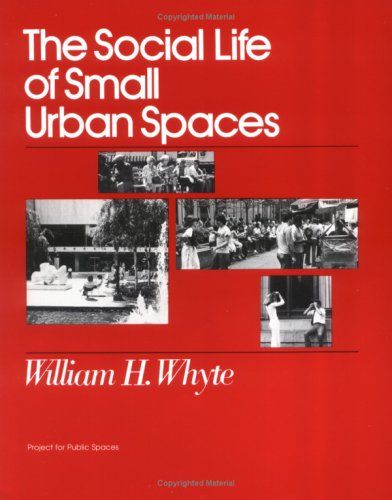
Nova: Exactly! It’s the invisible architect at work. And today, we're pulling back the curtain on those unseen forces, primarily through the lens of a truly foundational text: by William H. Whyte. It’s a book that, despite being decades old, continues to shape how we understand and design our cities, largely because Whyte's meticulous, almost anthropological observations were so groundbreaking. He spent years with a notepad and camera, just watching people in public spaces, revealing patterns that designers had completely missed.
Atlas: Wow, so he wasn't just theorizing from an ivory tower, he was literally out there, watching how people behaved. I can see why that would be so influential. It's like the urban planning equivalent of a hidden camera documentary, revealing the truths people don't even realize about themselves.
Nova: Precisely. And we're not stopping there. We’ll also layer in insights from Eric Klinenberg’s, which expands on this idea by arguing that places like libraries and parks are vital 'social infrastructure.' It's not just about aesthetics; it’s about functional human ecology, how these spaces are the very glue of a healthy society.
Atlas: Palaces for the People – that’s such a powerful phrase. It immediately makes me think about how critical these places are, especially for anyone who cares about building strong communities and tackling inequality. It goes beyond just having a nice park; it’s about what that park for us collectively.
The Silent Language of Public Spaces
SECTION
Nova: Absolutely. And that leads us right into our first core idea: the silent language of public spaces. Whyte's work is a masterclass in this. He observed that people gravitate toward specific things, not just open space. He found that people prefer sitting on movable chairs, not fixed benches. They like ledges, steps, and walls. Why? Because they offer choice, a sense of control. You can adjust your seat, face what you want, move into or out of the sun. It’s a subtle invitation to stay.
Atlas: Oh, I’ve noticed that! Like, when you're at a plaza, and there’s a big open area, but everyone's huddled around the one little ledge or the steps of a monument. It feels so obvious once you point it out. But what about something like food? I always feel more comfortable lingering if there’s a coffee cart or a hot dog stand nearby.
Nova: You’ve hit on another key element, actually. Whyte found that food vendors, even just casual ones, are incredibly important. They provide a reason to pause, to gather. It’s not just about the sustenance; it’s about the permission to occupy the space for a longer period. And the smell of coffee, the sight of someone eating – it somehow makes the space feel safer, more welcoming. It lowers the barrier to entry for social interaction.
Atlas: That makes perfect sense. It's like an unspoken signal that this is a place where people things, where activity happens. It’s not just a pass-through. So, it's not just about what's the space, but what activities are or within it.
Nova: Exactly. Think about his observations on sun and shade. People actively seek out sunny spots in cool weather and shaded areas in hot weather. If a plaza is designed with only one or the other, it limits its usability for large parts of the day or year. It sounds incredibly basic, but so many urban designs completely ignore these fundamental human preferences. He also noted the importance of 'triangulation.'
Atlas: Triangulation? That sounds a bit like geometry, or maybe a detective novel. What does that mean in a public space context?
Nova: It’s fascinating. Triangulation is when an external stimulus—a street performer, a piece of art, even a water feature—draws people together and gives them a shared point of focus, often sparking conversation among strangers. It provides a neutral topic, a reason to engage. Without it, people might just sit silently next to each other. With it, they might strike up a conversation about the juggler or the sculpture. It's a catalyst for spontaneous social connection.
Atlas: That’s brilliant! So it's not just about putting people in proximity, but giving them a common experience or a shared point of interest to break the ice. For listeners who are leading teams or trying to foster collaboration, that’s such a tangible insight. It's about designing for those casual, unplanned interactions that often lead to deeper connections. It’s not forced; it’s facilitated.
Nova: And it makes you wonder, doesn't it, how many seemingly minor design decisions in our public spaces—or even our offices, our schools—are inadvertently shutting down opportunities for connection, simply because we haven't paid attention to these subtle cues? Whyte’s work is a powerful reminder that the 'invisible' elements are often the most impactful.
Atlas: It’s true. It makes me think about those sterile, uninviting office lobbies or even some public parks that feel more like empty fields than gathering places. They might have grass and benches, but they lack that 'triangulation,' that food vendor, that flexible seating. It's like they're designed for people to pass through, not to.
Nova: And that’s the core of it. He wasn't just observing; he was showing us how to design spaces that genuinely serve human needs, not just architectural ideals. His insights, born from simply watching and listening, are still incredibly relevant for urban planners and community builders today. It’s a classic for a reason.
Social Infrastructure as a Foundation for Society
SECTION
Nova: And that naturally leads us to the second key idea, which often acts as a counterpoint or, rather, a profound expansion of Whyte’s observations: the concept of 'social infrastructure' as championed by Eric Klinenberg. He argues that things like libraries, parks, schools, and even local diners aren't just convenient amenities; they are vital, foundational elements that foster community, reduce isolation, and build social capital.
Atlas: Palaces for the People. I love that title. It immediately elevates these everyday places beyond just functional buildings. It suggests they have a much grander purpose, which resonates with anyone trying to make a difference in their community. But how exactly do these 'palaces' fight inequality or polarization? It sounds like a big claim.
Nova: It is a big claim, but Klinenberg backs it up with compelling evidence. Think about a public library. It’s a place where anyone, regardless of income, background, or social status, can access information, use computers, attend workshops, or simply find a quiet, safe space. It’s a de facto community center, a de-escalation zone, and a hub for learning and connection. During extreme weather events, libraries often become cooling or warming centers, literally saving lives.
Atlas: That’s a powerful example. I've always thought of libraries as places with books, but you're right; they're so much more. They're one of the few truly democratic spaces left, where everyone is welcome without expectation of purchase or membership. I can see how that directly combats inequality by providing universal access to resources. But what about polarization? How does a park or a public pool address that?
Nova: Well, when people from different backgrounds—different social classes, different political leanings, different ethnic groups—share a common space, engaged in a common activity, it breaks down barriers. At a public pool, everyone is just another swimmer. In a park, parents from all walks of life are watching their kids play together. These shared experiences, these moments of 'forced' proximity and common purpose, humanize the 'other.' They build empathy and understanding, even if it's just through a shared glance or a brief conversation.
Atlas: So, it’s about creating opportunities for what you might call 'weak ties' or 'bridging capital.' Those little interactions with people outside your immediate bubble that remind you of your shared humanity. That’s incredibly important in our increasingly fragmented world, where it often feels like we're just shouting past each other online.
Nova: Exactly! Klinenberg observed that communities with robust social infrastructure are more resilient. After disasters, for instance, neighborhoods with strong social ties—forged in places like community centers, parks, or even local barbershops—recover faster and have lower mortality rates. People know their neighbors, they look out for each other. This isn't just about charity; it's about a built-in network of mutual support.
Atlas: That makes me wonder about our modern tendency to privatize everything, or to rely solely on digital connections. Are we inadvertently eroding this vital social infrastructure? Because if these spaces are truly palaces for the people, then their decline must have profound societal consequences.
Nova: He argues precisely that. The decline of civic life, the rise in loneliness, the increasing polarization—these are all exacerbated when social infrastructure is neglected or allowed to decay. It's not just about individual choices; it's about the erosion of the physical spaces that facilitate connection. It’s a call to arms for investment in these seemingly mundane places, recognizing their immense power to shape our collective future.
Atlas: It’s such a practical, grounded perspective. For anyone who’s ever tried to organize a community event or bring people together, you realize how much the physical environment matters. You can have the best intentions, but if the space itself doesn’t invite interaction, it’s an uphill battle. This is about designing for social flourishing.
Nova: And that's why understanding both Whyte's micro-observations about how people spaces and Klinenberg's macro-argument about the of social infrastructure is so crucial. They give us a complete picture: from the movable chair to the public library, every element plays a role in fostering a connected, resilient society.
Synthesis & Takeaways
SECTION
Nova: So, whether we're talking about a perfectly placed bench or a thriving public library, the message is clear: the spaces we inhabit are not neutral. They are active participants in shaping our minds and our societies. They are constantly whispering to us, telling us where to sit, whom to talk to, and whether to stay or go.
Atlas: It’s almost like the built environment has its own personality, or its own set of rules, and we’re just responding to them, often unconsciously. It’s a powerful reminder that design is never just about how something looks; it's about how it in the human experience. For anyone trying to build a better team, a stronger family, or a more vibrant community, paying attention to these physical spaces is a non-negotiable.
Nova: Absolutely. It moves beyond mere aesthetics to a deep understanding of functional human ecology. The challenge for us, as individuals and as communities, is to become more aware of this invisible architecture and demand spaces that truly foster connection, well-being, and resilience. It's about recognizing that a vibrant public square or a well-funded library isn’t just a nice-to-have; it's a fundamental investment in our collective future.
Atlas: So, the next time I walk into a public space, I'm going to be looking for those movable chairs, those food vendors, that 'triangulation.' I'm going to be asking, 'Is this a palace for the people, or just another empty lot?' It's a whole new way of seeing the world.
Nova: And once you start seeing it, you can't unsee it. It changes how you interact with your environment, and hopefully, how you advocate for better ones. It’s about making the invisible visible, and then acting on that knowledge.
Atlas: That’s a truly profound insight, Nova. Thank you for making these complex ideas so accessible and engaging.
Nova: My pleasure, Atlas. This is Aibrary. Congratulations on your growth!