The Physiology of Presence: Outsmarting Burnout in High-Stakes Environments
Golden Hook & Introduction
SECTION
Dr. Celeste Vega: Picture this. It is late at night in a dark, deserted park. You are an undercover police officer, and you are supposed to be buying narcotics from a single suspect. But when you arrive, four men are waiting for you. During the tense negotiation, one of them looks closely at your face, points a finger, and says, I know you. You are a cop. He threatens to kill you and your family right then and there. Your sympathetic nervous system floods your body with adrenaline, your heart rate skyrockets, and your vision tunnels. In that split second, how do you keep your brain from completely freezing?
James Mwangi Rukenya: That is the ultimate test of cognitive control, Celeste. In medicine, we call that a acute crisis state, where the amygdala completely hijacks the prefrontal cortex. If you cannot regulate that physiological spike, your capacity for rational decision-making drops to zero.
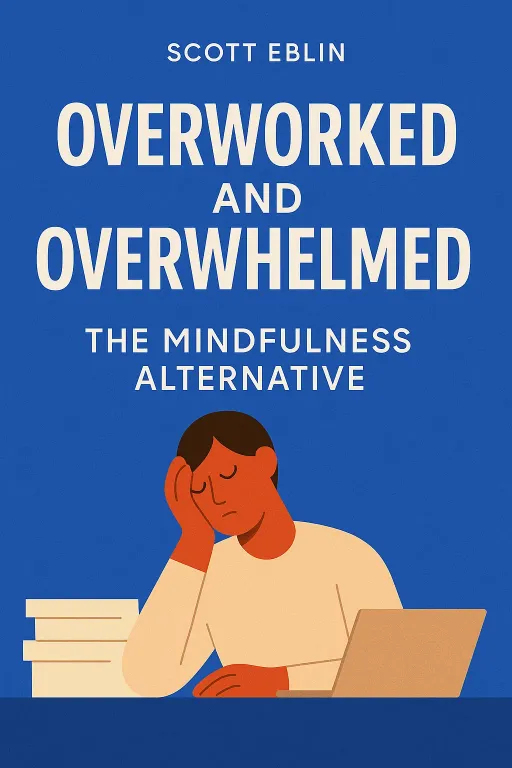
Dr. Celeste Vega: Exactly, James. And that officer, Henry Lescault, survived that night by doing something incredibly simple but scientifically profound. He controlled his breathing. He intentionally activated his parasympathetic nervous system to override the panic, allowing him to speak calmly, de-escalate the situation, and get out alive. Welcome to our podcast, where we dissect the science of performance and well-being. Today, we are diving into Scott Eblin's transformative book,.
James Mwangi Rukenya: I am really excited to unpack this, Celeste. As someone working in healthcare, the title of this book hits incredibly close to home. We live in a culture of constant connectivity and high-stakes decision-making, where being overworked is almost worn as a badge of honor. But as Eblin points out, this lifestyle is physically and mentally unsustainable.
Dr. Celeste Vega: It really is. Today, we are going to tackle this book from three distinct angles. First, we will explore the biological battleground of stress and why mindful breathing is actually a physiological killer app. Second, we will break down Eblin's Life GPS framework, showing how you can design highly personalized routines to show up at your best. And finally, we will discuss practical strategies for setting cognitive guardrails to protect your mental bandwidth from the digital onslaught. Let us jump right in.
Deep Dive into Core Topic 1 - The Physiology of Stress and the Power of the Breath
SECTION
Dr. Celeste Vega: James, let us start with the biology. Eblin talks about our mind-body operating system, specifically the autonomic nervous system, or ANS. He compares it to a car with two pedals. You have the sympathetic nervous system, which is the gas pedal, triggering our fight-or-flight response. And then you have the parasympathetic nervous system, the brake pedal, which governs our rest-and-digest functions.
James Mwangi Rukenya: It is a perfect analogy, Celeste. The problem in modern professional life, especially in high-pressure fields like healthcare, is that we are driving with our foot slammed on the gas pedal twenty-four hours a day, seven days a week. When you are in a state of chronic sympathetic dominance, your body is constantly flooded with cortisol and adrenaline. Over time, this allostatic load literally erodes your health. It impairs your immune system, disrupts sleep, and actually shrinks the prefrontal cortex, which is the seat of executive function, working memory, and emotional regulation.
Dr. Celeste Vega: That is a terrifying thought, isn't it? We think we are working harder by staying constantly connected, but we are actually making ourselves cognitively slower. Eblin cites a fascinating study from the University of California at Irvine showing that the average office worker is interrupted once every eleven minutes. And get this, it takes an average of twenty-five minutes to regain deep focus on the original task after an interruption.
James Mwangi Rukenya: That is a massive cognitive deficit. If you are being interrupted every eleven minutes, and it takes twenty-five minutes to recover, you are essentially operating in a state of perpetual cognitive fragmentation. You are never actually reaching deep, analytical focus. You are just reacting to stimuli. It is like trying to perform surgery in a room where the lights keep flickering.
Dr. Celeste Vega: Yes, and the primary culprit behind this flickering light is the smartphone. Eblin references research from the Center for Creative Leadership showing that professionals who carry smartphones interact with work an average of seventy-two hours a week. That is forty-three percent of the total hours in a week. We are never truly off-duty.
James Mwangi Rukenya: And that constant anticipation of an alert keeps the sympathetic nervous system on low-grade alert. It is a slow drip of adrenaline. This is why Eblin argues that mindfulness is not some mystical, esoteric practice. It is a highly practical, biological intervention. He defines mindfulness as the intersection of two things: awareness and intention.
Dr. Celeste Vega: I love that definition because it strips away the fluff. Awareness is simply noticing what is happening inside and around you in the present moment. Intention is choosing how you want to respond, rather than just reacting. And the fastest way to bridge that gap between stimulus and response is the breath. Eblin calls deep, rhythmic breathing the killer app for mental clarity. Why is that, from a physiological standpoint, James?
James Mwangi Rukenya: It comes down to the vagus nerve, Celeste. When you take deep, slow breaths, specifically extending your exhalations, you stimulate the vagus nerve. This nerve acts as the primary highway for the parasympathetic nervous system. It sends a physical signal to your heart to slow down, lowers your blood pressure, and halts the production of stress hormones. You are literally hacking your own physiology. You are forcing the car to brake.
Dr. Celeste Vega: The scientific data backing this up is incredible. Eblin highlights a study on pranayama breathing where participants practiced deep breathing for thirty-five minutes, three times a week. After twelve weeks, they showed a massive reduction in perceived stress and a significant increase in cognitive functions like focused attention and memory retention.
James Mwangi Rukenya: And there is even more profound cellular research. Eblin mentions a study involving Nobel laureate Elizabeth Blackburn, which found that just twelve minutes a day of meditative breathing can increase telomerase activity by forty-three percent. Telomerase is the enzyme that maintains our telomeres, which protect our DNA. Essentially, deep breathing at a cellular level slows down the aging process caused by chronic stress.
Dr. Celeste Vega: That is mind-blowing. Twelve minutes of breathing can literally protect your DNA from the wear and tear of a demanding career. It makes you realize that taking a break is not a luxury or a sign of weakness. It is basic biological maintenance.
James Mwangi Rukenya: Absolutely. But the challenge is that most busy professionals feel they do not even have twelve minutes to spare. They are trapped in what Eblin calls the tyranny of the present, constantly putting out fires and responding to immediate demands. We need a structured way to build these pauses into our daily lives.
Deep Dive into Core Topic 2 - The Life GPS and Designing Sustainable Routines
SECTION
Dr. Celeste Vega: And that brings us to Eblin's core framework: the Life GPS. He designed this personal planning model to help people navigate their lives with clear intention. It is built around three fundamental questions. First, how are you when you are at your best? Second, what are the routines that would enable you to show up at your best? And third, what difference would showing up at your best make in your three big arenas of life: home, work, and community?
James Mwangi Rukenya: What I appreciate about this framework is its systemic approach. It recognizes that you cannot separate your professional performance from your physical, mental, and relational well-being. It is all interconnected. If you are a wreck at home, you are not going to be a visionary leader at work.
Dr. Celeste Vega: Exactly. Let us look at the first question: How are you when you are at your best? Eblin notes that when he asks executives this, they do not list technical skills. They use words like calm, focused, present, supportive, and energetic. It is about your state of being, not just your state of doing.
James Mwangi Rukenya: Right, it is about identifying your peak performance state. But the real magic of the Life GPS lies in the second question: the routines. Eblin argues that excellence is not an act, but a habit, quoting Aristotle. You have to design specific, daily routines across four domains: physical, mental, relational, and spiritual, to sustain that peak state.
Dr. Celeste Vega: Yes, and he shares some wonderful stories of people who did just that. Take Elaine, for example. She was a highly successful but incredibly stressed and overweight professional. During Eblin's leadership program, she reflected on when she was happiest and most productive in her life. She realized it was when she swam competitively in college.
James Mwangi Rukenya: That is a classic example of reconnecting with a past passion to solve a present crisis. But how did she find the time to swim with her packed schedule?
Dr. Celeste Vega: She made a radical boundary choice, James. She decided to stop checking her email for the first hour and a half of every single morning. Instead, she went to the pool and swam.
James Mwangi Rukenya: Wow. For a high-level professional, giving up email first thing in the morning must have felt like jumping out of an airplane without a parachute.
Dr. Celeste Vega: Oh, she was terrified. But the outcome was incredible. Not only did she lose weight and gain massive amounts of energy, but she also discovered that ninety-five percent of the emails she was obsessing over did not actually require an immediate response. By the time she sat down at her desk, she was focused, calm, and far more strategic. She actually became more productive by working less.
James Mwangi Rukenya: That is the power of what Eblin calls scaling back to create leverage. It is about choosing high-yield routines. In healthcare, we talk about leverage points in systems, where a small intervention yields a massive systemic change. Elaine's swimming routine was a leverage point. It cleared her mental clutter, which improved her decision-making, which ultimately saved her time.
Dr. Celeste Vega: Yes, and Eblin emphasizes that these routines do not have to be massive undertakings. He advocates for taking baby steps and choosing routines that are easy to do and likely to make a difference. It is about consistency over intensity.
James Mwangi Rukenya: That is a crucial point. People often fail at building routines because they try to go from zero to sixty. They decide to meditate for an hour a day and run five miles every morning. Within a week, they are exhausted and give up. Eblin suggests starting where you are. If you only have five minutes, do five minutes of deep breathing. The reps matter more than the duration initially, because you are building the neural pathways of the habit.
Dr. Celeste Vega: Absolutely. He uses the cue, routine, and reward cycle from Charles Duhigg's work to explain this. You need a clear trigger to start your routine. For example, Eblin shares the story of Patricia, a busy executive who wanted to be fully present with her family in the evenings. Her routine was simple: the moment she walked through her front door, she placed her smartphone on top of the washing machine in the laundry room and left it there until her kids went to bed.
James Mwangi Rukenya: That is brilliant in its simplicity. The cue is walking through the door. The routine is putting the phone on the washing machine. The reward is two to three hours of uninterrupted, high-quality connection with her husband and children. She physically removed the temptation, which drastically reduced the cognitive load of trying to resist checking her email.
Dr. Celeste Vega: It is all about designing your environment to support your intentions. Another great example of this is Alanson Van Fleet, a financial services executive. He kept a few small, meaningful items on his desk: a small Buddha statue, a Canadian coin, a bronze creature. Every hour, he would take just one minute to look at one of those items and reflect. It was a visual speed bump that forced him to pause, breathe, and step out of the frantic pace of his day.
James Mwangi Rukenya: I love that idea of visual speed bumps. It is a way to interrupt the automatic, reactive state we often find ourselves in. It reminds me of Admiral Thad Allen, the former Commandant of the Coast Guard, who led the federal response to Hurricane Katrina. He had a favorite axiom: You have to be careful about what rents space in your head.
Dr. Celeste Vega: Yes, Admiral Allen's leadership during Katrina is a masterclass in mindful presence. He was stepping into absolute chaos, with communication systems destroyed and thousands of lives on the line. He realized that to make effective decisions, he had to minimize what he called the ante of the poker game, the endless stream of minor demands and distractions, so he could focus on the critical strategic issues.
James Mwangi Rukenya: He was actively managing his cognitive bandwidth. He knew that if his mind was cluttered with the noise, he could not hear the signal. And that is really what the Life GPS is about. It is a tool to help you filter out the noise so you can focus on the signal, both at work and in your personal life.
Synthesis & Takeaways
SECTION
Dr. Celeste Vega: As we wrap up our conversation today, James, let us synthesize the core takeaways from Scott Eblin's. If you had to distill the essence of the mindfulness alternative for our listeners, what would it be?
James Mwangi Rukenya: I think the most important realization is that mindfulness is not about clearing your mind or escaping your responsibilities. It is about building the physiological and mental capacity to meet those responsibilities with clarity, calm, and intention. It is a biological necessity for high performance, not an optional self-care trend.
Dr. Celeste Vega: Beautifully said, James. And the way we build that capacity is through small, consistent, daily routines. We need to identify how we are at our best, schedule our big rocks first, and use simple tools like the breath to activate our body's natural recovery systems.
James Mwangi Rukenya: Exactly. And when we do slip up, because we inevitably will, we have to adopt the mindset of the Seattle Seahawks' sports psychologist, Michael Gervais, whom Eblin mentions. We have to quickly forget the blown play and focus entirely on the next play. It is about practice, not perfection.
Dr. Celeste Vega: Yes, festina lente, as the Romans said: make haste slowly. Consistent, incremental improvements lead to sudden, massive breakthroughs over time. I want to leave our listeners with a simple, actionable challenge today. Try the STOP technique next time you feel overwhelmed. Stop what you are doing. Take a few deep, diaphragmatic breaths. Observe your physical and mental state without judgment. And then, proceed with clear intention.
James Mwangi Rukenya: It is a five-second intervention that can completely change the trajectory of your day. Thank you, Celeste, for this incredibly rich discussion. It has given me a lot of analytical food for thought and some very practical tools to implement in my own clinical practice.
Dr. Celeste Vega: Thank you, James, for bringing your wonderful analytical perspective to this conversation. And thank you to our listeners. Remember, you do not have to live your life overworked and overwhelmed. There is a mindful alternative. Until next time, breathe deeply, live intentionally, and take care of your mind-body operating system.