The Mind's Operating System: A Blueprint for Overcoming Overwhelm
Golden Hook & Introduction
SECTION
Albert Einstein: Imagine for a moment that your mind and body run on an operating system. A brilliant, ancient OS. But lately, it feels like you have too many apps running. Your CPU is maxed out, the fan is whirring, and you're stuck in a state of chronic 'fight or flight.' You're overworked, overwhelmed, and you can't find the 'force quit' button. What if there was a user manual for this system? A way to debug the code that keeps you stressed and install a new program for clarity and focus?
Cohecharon: That’s a powerful way to frame it. It’s not a moral failing; it’s a system malfunction.
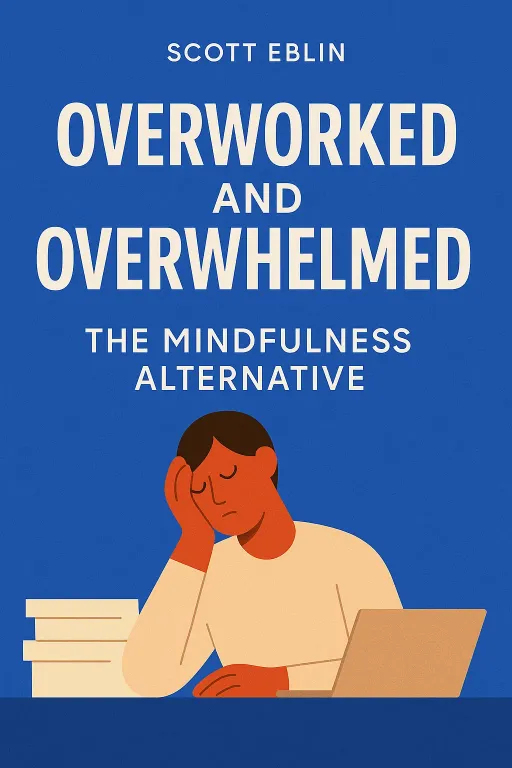
Albert Einstein: Precisely! And that's exactly what we're exploring today, through Scott Eblin's book,. We have the pleasure of thinking through this with Cohecharon, a fellow explorer of systems and ideas.
Cohecharon: A pleasure to be here, Albert. I love the idea of a user manual for the mind.
Albert Einstein: Wonderful. We'll tackle this from two angles. First, we'll diagnose the biological glitch that keeps us trapped in a state of chronic stress, using the story of an undercover cop in a life-or-death situation.
Cohecharon: Understanding the problem at its root. I like it.
Albert Einstein: Then, we'll unpack a practical blueprint—a 'Life GPS'—for reprogramming ourselves to operate at our best, even when facing a crisis.
Deep Dive into Core Topic 1: The Glitch in the System
SECTION
Albert Einstein: So, Cohecharon, let's start with the diagnosis. The book argues we're not just 'busy'; we're in a state of chronic fight or flight. It's a biological switch that's stuck in the 'on' position. What does that mean, really?
Cohecharon: It means the hardware that was designed to save us from a saber-toothed tiger is now being triggered by a late-night email or back-to-back Zoom calls. That's a fundamental mismatch in the system's design parameters. The threat is perceived as existential, even when it's just digital.
Albert Einstein: A design mismatch! Yes! And the body pays the price. The book tells a story that shows this system in its most extreme form. It’s about an undercover specialist named Henry Lescault. He was about to leave his local police department for a big new job at NCIS. His bosses begged him to do one last job in his hometown, something he had a rule against.
Cohecharon: A rule he broke. That already sets a tense stage.
Albert Einstein: It does. The case involved a drug ring selling narcotics to schoolkids. So he agrees. The plan is to meet a suspect in a park, late at night, to make a buy. But when he gets there, it’s not one dealer. It’s four. And things go from bad to worse. One of the dealers looks at him closely and says, "I know you. We went to high school together. You're a cop."
Cohecharon: The absolute worst-case scenario. His cover is blown.
Albert Einstein: Completely. And then the threat comes. The dealer says, "I'm going to kill you and your family." Now, imagine the biological explosion inside him. The book calls it the sympathetic nervous system, the SNS, screaming "FIGHT OR FLIGHT!" His heart is pounding, adrenaline is flooding his system. The default program is pure panic.
Cohecharon: Which, in that situation, would be a death sentence. Panic leads to a mistake.
Albert Einstein: But Lescault does something remarkable. He had trained for this. Instead of letting the panic take over, he focuses on one thing: his breath. He consciously slows his breathing down, taking deep, deliberate breaths from his belly. This action is a direct command to his body to activate the system—the parasympathetic nervous system, or PNS. The 'rest and digest' response.
Cohecharon: He's essentially running a counter-program. He's using a conscious input—breathing—to override the automatic, and in this case, fatal, output of panic.
Albert Einstein: That's it exactly! This simple act of breathing allows his prefrontal cortex, the thinking part of his brain, to come back online. He can think clearly again. He calmly talks his way through the negotiation, completes the drug buy, and walks away safely. He then reports their location, and they're all arrested. His ability to manage his internal operating system saved his life.
Cohecharon: That's a perfect illustration of the system overriding its own catastrophic failure mode. He didn't just to be calm; he to become calm. It's the difference between being a passenger in your own biology and being the pilot.
Albert Einstein: Exactly! The pilot. And the book argues most of us are just passengers in our day-to-day lives. We let the constant pings and demands trigger that same, low-grade fight-or-flight response all day long. The data from Aetna that Eblin cites is staggering—this chronic stress costs the most stressed employees an extra $2,000 per person in medical bills annually. It's not just a feeling; it's a physical tax on the body.
Cohecharon: So the system is literally degrading its own hardware because of a software loop. That's an unsustainable design. It begs the question: how do you install a better program?
Deep Dive into Core Topic 2: Installing New Software
SECTION
Albert Einstein: And that is the perfect question, which brings us to our second idea: installing new software. If chronic stress is the bug, the book's 'Life GPS' is the patch. It's a simple, elegant framework for defining how you want to operate.
Cohecharon: A GPS for your life. It implies a destination and a path. It's an analytical approach.
Albert Einstein: It is. It’s built on three questions. First: How are you when you're at your best? What are those characteristics? Second: What are the routines—physical, mental, relational—that enable you to show up that way? And third: What difference, what outcome, do you want to create at home, at work, and in your community?
Cohecharon: So it’s about defining your optimal state, reverse-engineering the conditions to create it, and then aiming it at a purpose. That’s a very clear logic chain.
Albert Einstein: It is. And to see it in action, let's look at another high-stakes story. This one is about John Wetzel, who was the warden of a county jail in Pennsylvania. He's at his daughter's school concert one evening when his phone buzzes with a text: hostage situation at the jail. An inmate is holding another inmate hostage with a shank.
Cohecharon: Another moment where the default programming would be chaos and tactical force.
Albert Einstein: Right. The SWAT team is ready to go. But Wetzel had already done the work of his 'Life GPS'. He had reflected on that first question and knew exactly how he was at his best. His answer was: "a little bit of swagger, honesty, transparency, and a sense of humor."
Cohecharon: That’s a very specific and unusual set of characteristics for a prison warden in a crisis.
Albert Einstein: Isn't it? But it was his authentic code. So he gets to the jail, assesses the situation, and instead of sending in the tactical team, he decides to talk to the hostage-taker himself. He walks up and, using that pre-defined code, he is honest, transparent, and respectful. He doesn't command; he connects. He addresses the inmate's need for respect. And within minutes, the inmate peacefully releases the hostage.
Cohecharon: This is fascinating because it's proactive, not reactive. Wetzel wasn't just being a 'good person.' He was deploying a specific, pre-meditated leadership style he had identified as his optimal state. It's an algorithm: IF crisis, THEN execute 'swagger, honesty, transparency.' It's less about a vague virtue and more about a functional operating parameter.
Albert Einstein: A functional operating parameter! I love that. And it connects back to our first story so beautifully. Lescault, the cop, used a routine—breathing—to manage his internal in the moment. Wetzel used a pre-defined —his 'at his best' self—to guide his external. Both are forms of programming.
Cohecharon: Right. One is a micro-routine for state management, the other is a macro-routine for strategic action. You need both. You need the ability to reboot the system in a crisis, and you need a clear program to run once it's stable. That's a complete model for performance.
Synthesis & Takeaways
SECTION
Albert Einstein: So, we've seen two powerful ideas today. First, that feeling of being overwhelmed is a real, biological 'glitch'—our fight-or-flight system stuck on a loop. It’s a hardware problem triggered by modern life's software.
Cohecharon: And it has a real, measurable cost to our health and effectiveness. We can't just ignore the warning lights.
Albert Einstein: And second, we can proactively program a better response. We can use a framework like the 'Life GPS' to define our best self and the routines that support it, so we're ready the crisis hits.
Cohecharon: It really boils down to this: you can either let your default programming run you, or you can become the programmer. The book gives you the language and the tools to do that. It’s empowering.
Albert Einstein: It truly is. It moves the conversation from "I'm so stressed" to "What system can I build to manage my response?"
Cohecharon: Exactly. So, the question for everyone listening isn't just 'how do I feel less stressed?' but rather, 'What's the first line of code you'll write for your own Life GPS? What is just one characteristic of you, at your absolute best, that you can define today?'
Albert Einstein: A wonderful thought to leave on. Thank you, Cohecharon, for helping us deconstruct this system.
Cohecharon: The pleasure was all mine, Albert.