Sustaining Peak Performance Without Burnout
Golden Hook & Introduction
SECTION
Nova: You know, Atlas, for so many of us, especially those driven by a deep desire to build something lasting, the default setting is always 'more.' More hours, more effort, more pushing. But what if the secret to sustained peak performance isn't about doing more, but about strategically doing? What if the key to unlocking your greatest impact is actually found in the pauses, not the sprints?
Atlas: Oh man, that's a provocative thought, Nova. Because for a lot of our listeners, the very idea of "doing less" feels almost antithetical to "strategic visionary" or "legacy builder." It sounds like an excuse, or a luxury. So, you're telling me that pushing harder might actually be pushing us further from our goals? That feels... counterintuitive.
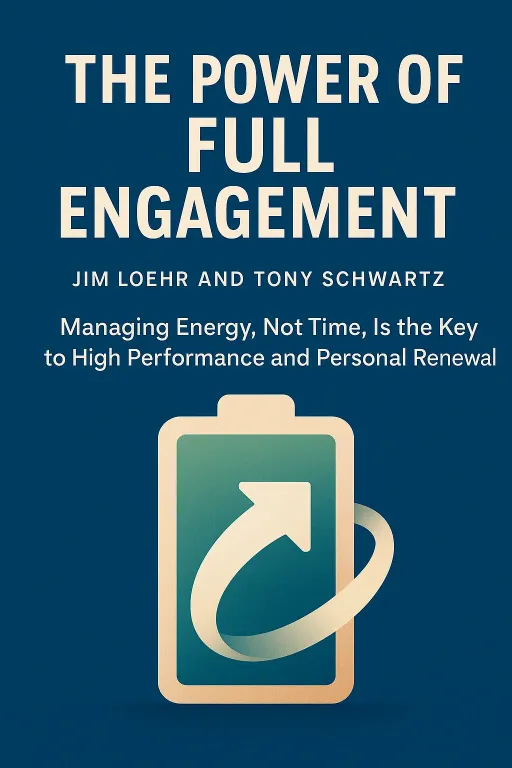
Nova: Exactly! And that’s why we have to talk about two groundbreaking books today. First, by Jim Loehr and Tony Schwartz. These aren't just academics; they famously worked with elite athletes and top executives, fundamentally shifting the conversation from mere time management to energy management. They showed how the world’s highest performers weren't just working smarter, they were smarter.
Atlas: Okay, so it’s not just about scheduling your calendar, it's about scheduling your. That's a powerful reframing for anyone feeling constantly drained. And the second book?
Nova: The second, which offers the practical roadmap to actually this, is Scott Eblin's. Eblin takes those big-picture insights and gives high-achieving professionals the actionable strategies to regain control, improve focus, and dramatically reduce stress. It's about clear intention and disciplined action in a world that constantly demands your attention. So, Atlas, let's unpack how these books together can redefine what it means to truly thrive without burning out.
Energy, Not Just Time: The Four Dimensions of Renewal
SECTION
Nova: At the heart of Loehr and Schwartz's work is this profound realization: our most precious resource isn't time; it's energy. And not just physical energy, but energy across four interconnected dimensions: physical, emotional, mental, and spiritual. Think of it like a high-performance engine that has multiple fluid levels – if one runs low, the whole system sputters.
Atlas: So if one of these dimensions is depleted, it's not just a small leak, it's impacting the whole system, right? That makes sense. But wait, isn't this just more fluffy self-care advice repackaged? How does this actually help someone with back-to-back meetings, who's constantly making high-stakes decisions, and whose time is already stretched impossibly thin?
Nova: That’s a critical question, and it's where their framework shines. It’s not about self-care, it’s about self-care, or rather, strategic. Let's break down the dimensions. Physically, it’s about proper nutrition, sleep, and exercise. Sounds basic, but they emphasize within the day. Short, intense bursts of activity followed by deliberate rest. So, instead of powering through 8 hours straight, an executive might schedule a 15-minute intense focus block, then take a 5-minute walk, or do some stretches. It’s about oscillating between expenditure and renewal.
Atlas: I can see how that's different. It's not just "hit the gym for an hour at the end of the day," it's about micro-recovery throughout the day. So, what about emotional energy? Because that's often the first thing to get zapped when you're dealing with demanding clients or difficult team dynamics.
Nova: Absolutely. Emotional energy comes from feeling connected, appreciated, and having a sense of purpose. Depletion here looks like irritability, impatience, or a lack of empathy. Renewal means engaging in activities that bring joy, connection, and a sense of gratitude. This could be a genuine, deep conversation with a colleague, spending time with loved ones, or even just taking a moment to appreciate something small. The key is to consciously shift from negative, draining emotions to positive, uplifting ones. It’s about cultivating emotional fitness.
Atlas: That resonates deeply, especially for someone who values building a strong team and a positive culture. If you're constantly drained emotionally, it's impossible to lead with empathy or inspire confidence. What about mental energy? That's where a lot of strategic visionaries live.
Nova: Precisely. Mental energy is about focus, creativity, and strategic thinking. Depletion manifests as short attention spans, difficulty concentrating, or feeling overwhelmed by information. Renewal involves activities that allow your mind to disengage from constant problem-solving. This could be reading for pleasure, learning something new unrelated to work, or even just daydreaming. They advocate for creating "mental boundaries" – like not checking emails right before bed – to allow your mind to truly rest and process.
Atlas: Oh, I know that feeling of mental exhaustion, where you're just staring at the screen and nothing is clicking. But then there's the spiritual dimension. That often feels the most abstract in a professional context.
Nova: It can, but Loehr and Schwartz define spiritual energy as the connection to your deepest values and sense of purpose. It's what fuels your passion and gives meaning to your work. Depletion here is feeling hollow, cynical, or disconnected from you started. Renewal involves activities that reinforce your values: spending time on causes you believe in, engaging in deep reflection, or simply aligning your daily actions with your core beliefs. It’s about asking, "Does my work truly matter to me?" and finding ways to connect to that "why."
Atlas: That's actually really inspiring. It's not just about avoiding burnout, it's about fueling your purpose. So, we're talking about a holistic approach where if you neglect one, you're essentially sabotaging the others. It’s about building a sustainable foundation for long-term impact, not just short-term gains.
From Overwhelmed to Intentional: Practical Strategies for High-Achievers
SECTION
Nova: Exactly, Atlas. Understanding energy matters is one thing, but do you actually implement it when you're already feeling 'overworked and overwhelmed'? This is where Scott Eblin's work becomes incredibly valuable. He essentially provides the toolkit for the executive who wants to apply Loehr and Schwartz's principles.
Atlas: Oh, I like that! Because for a lot of our listeners who are trying to build something significant, the idea of "more recovery" or "more reflection" sounds like another thing on an already impossible to-do list. It can feel like just adding more weight to the plate. So, what's his entry point? How do you even begin to integrate this when your calendar is already a battlefield?
Nova: Eblin's core message is about reclaiming control through clear intention and disciplined action. He argues that overwhelm isn't just about having too much to do; it's about lacking clarity on what truly matters and the discipline to protect it. One of his key strategies is what he calls "The 20-Minute Rule."
Atlas: The 20-Minute Rule? Tell me more. That sounds like a manageable chunk of time for anyone.
Nova: It is. Eblin suggests that even the busiest professionals can find 20 minutes a day to dedicate to one of these four dimensions of renewal. The power comes from the and. So, instead of waiting for a break to magically appear, you that 20 minutes. Treat it like a non-negotiable meeting with your own energy. It could be 20 minutes of focused deep work on your most important strategic project, 20 minutes of uninterrupted exercise, 20 minutes calling a loved one, or 20 minutes of quiet reflection.
Atlas: I’m curious, how does that really make a difference? Because 20 minutes feels like a drop in the bucket against a week of intense demands.
Nova: Ah, but that's the magic. It's not about the quantity of time, it's about the and the. Eblin illustrates this with examples of leaders who transformed their stress levels and productivity by consistently protecting these small blocks. For instance, a CEO who used her 20 minutes each morning for a brisk walk, or a project manager who used his to read industry research. It's about creating a psychological boundary and a habit that signals to your brain: "I am in control of my energy, not just a victim of my schedule." It builds momentum, as you mentioned earlier, Atlas, which is crucial for long-term growth.
Atlas: That's a great way to put it – "I am in control of my energy." Because I imagine a lot of our listeners feel like their energy is constantly being dictated by external demands. So, beyond the 20-minute rule, what other practical steps does Eblin offer to shift from being overwhelmed to being intentional?
Nova: He emphasizes the power of saying no. Not just saying no to new tasks, but strategically saying no to distractions, to non-essential meetings, and even to the urge to constantly check your phone. He also talks about creating "default settings" for your day. For example, scheduling your most important, high-cognitive tasks for when your mental energy is highest, and protecting that time fiercely. It’s about designing your day proactively, rather than reactively responding to whatever comes your way. It’s about being the architect of your day, not just the occupant.
Atlas: That’s a powerful metaphor: being the architect of your day. It completely shifts the mindset from passive recipient to active creator. It’s about building in those moments of renewal, not just hoping they appear.
Synthesis & Takeaways
SECTION
Nova: Precisely. When you combine Loehr and Schwartz's comprehensive framework for energy management across the four dimensions with Eblin's practical, disciplined strategies, you get a powerful playbook. It’s not just about avoiding burnout; it’s about designing a life where peak performance is sustainable, where you have the energy to not only achieve your goals but also to truly enjoy the journey and build that lasting legacy.
Atlas: That’s exactly it. It’s not just about surviving; it’s about thriving and building that lasting legacy, right? So, going back to the deep question: How can you proactively integrate periods of renewal into your demanding professional life to prevent exhaustion and sustain peak performance? It sounds like the answer is to treat renewal as a non-negotiable part of your strategic plan, not an afterthought.
Nova: Absolutely. And if there’s one tiny step you can take after listening today, it’s this: identify one area—physical, emotional, mental, or spiritual—where your energy is most depleted. Then, schedule a 20-minute restorative activity for tomorrow. Just 20 minutes. Make it non-negotiable.
Atlas: I love that. Start small, build momentum. Because that 20 minutes isn't just a break; it's an investment in your capacity, in your clarity, and ultimately, in your ability to make the impact you're truly striving for. It’s about balancing wealth with peace, as our listeners seek.
Nova: It is. It’s about understanding that your performance isn't a straight line upwards; it's a series of sprints and strategic recoveries. And mastering that rhythm is the ultimate competitive advantage.
Atlas: Wonderful. Thank you, Nova, for shedding light on these crucial insights.
Nova: My pleasure, Atlas.
Nova: This is Aibrary. Congratulations on your growth!