Strategies for Overcoming Burnout & Overwhelm
Golden Hook & Introduction
SECTION
Nova: If your to-do list feels less like a guide and more like a hydra, cutting one head only grows two more, then this episode found you. We're challenging the idea that simply 'doing less' is the answer to the relentless squeeze of overwhelm.
Atlas: Oh, I like that. The hydra metaphor hits a little too close to home for anyone trying to maximize their impact. It’s like you’re constantly battling an invisible enemy, and just resting feels like surrender.
Nova: Exactly! And that feeling of 'surrender' is precisely what we want to dissect today. We're diving into two brilliant minds who offer not just temporary fixes, but strategic blueprints for navigating the modern professional landscape without losing your sanity or your drive.
Atlas: So, this isn't just about taking a bubble bath, right? Because for our listeners who are pragmatic learners and focused strategists, they need wisdom that’s actionable, not just anecdotal.
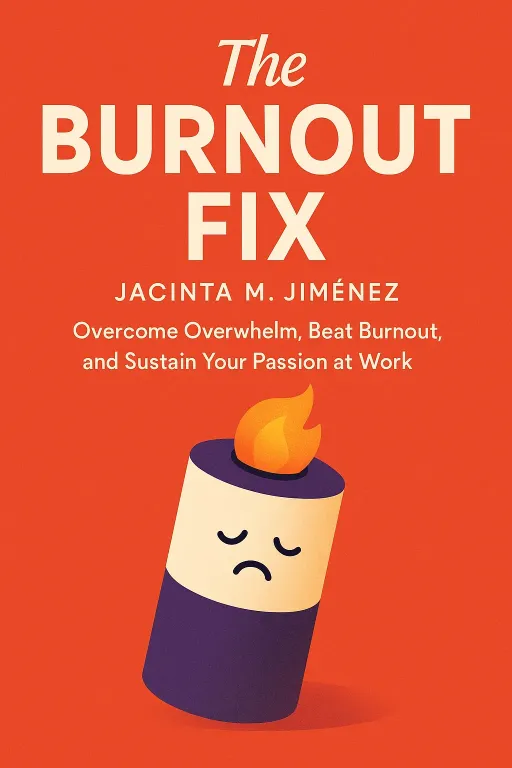
Nova: Absolutely not. We’re talking about frameworks and practical strategies. First up, we have Jacinta M. Jiménez, an organizational psychologist and former Google executive, with her powerful book, "The Burnout Fix." What's fascinating about Jacinta is how she blends rigorous academic understanding with real-world, high-stakes experience. Her work really resonated because it reframed burnout, not as an individual failing, but as a systemic issue requiring a strategic, psychological approach.
Atlas: Oh, I see. So, this isn't just feel-good advice; it's backed by someone who knows the high-pressure environment firsthand. That’s crucial for anyone who feels that internal pressure to constantly optimize their efforts.
Nova: Precisely. And then, complementing that, we have Scott Eblin, a renowned leadership coach, and his book, "Overworked and Overwhelmed." Scott’s insights are particularly valued by professionals because he himself experienced and overcame significant burnout, which led him to develop practical, actionable steps for leaders. His work often highlights that many high-achievers get stuck because they mistake busyness for productivity.
Atlas: Okay, so we've got the psychological depth from Jiménez and the practical roadmap from Eblin. Perfect for anyone who's trying to build security and freedom, but feels trapped by constant demands. Where do we begin unpacking all this?
Nova: We begin by understanding burnout not as a destination, but as a signal. Jiménez gives us a powerful framework, what she calls the '3 Rs': Recognize, Reframe, and Respond.
Deep Dive into Core Topic 1: The 3 Rs of Burnout (Jiménez)
SECTION
Nova: So, let's break down Jiménez's '3 Rs' framework from "The Burnout Fix." The first R is 'Recognize.' This goes beyond simply feeling tired. It's about understanding the subtle, insidious signs of burnout. It's not just physical exhaustion; it’s emotional depletion, cynicism, and a reduced sense of personal accomplishment. Imagine Sarah, a senior project manager, who used to love her work. Lately, she finds herself dreading Mondays, snapping at her team, and feeling like her contributions are meaningless, even when projects succeed. She's physically present, but mentally, she’s checked out. That’s recognition in action.
Atlas: That’s a great way to put it. I imagine a lot of our listeners, especially those who are empathetic builders, might dismiss these feelings as just "a bad week" or "being tough." But how do you truly 'recognize' it when you're so deep in the trenches, driven by maximizing impact? It’s hard to see the forest for the trees.
Nova: That’s the core challenge. Jiménez argues it requires a deliberate pause. It's about tuning into those subtle shifts: a loss of passion, increased irritability, or a persistent feeling of being overwhelmed even by small tasks. It's the internal alarm bells ringing that we often silence. Once Sarah recognized these patterns, she moved to the second R: 'Reframe.'
Atlas: Reframe. That sounds like a mindset shift. But for someone who's constantly optimizing their efforts, isn't 'reframe' just another thing to put on the to-do list? How do we reframe it when the pressure is relentless?
Nova: It’s not about adding; it’s about shifting perspective. Jiménez suggests reframing burnout not as a personal failure or weakness, but as a signal. It’s your system telling you something needs to change. For Sarah, reframing meant understanding that her exhaustion wasn't a sign she was bad at her job, but that her current work environment or approach was unsustainable. It moved her from self-blame to problem-solving. This is where psychological flexibility comes in—the ability to adapt to changing situational demands, shift your mindset, and persist in pursuit of your values.
Atlas: Psychological flexibility. That sounds incredibly powerful. It’s like instead of fighting the signal, you learn to interpret it. So, if the signal is "you're overwhelmed," the flexible response isn't "work harder," but "what needs to adapt here?"
Nova: Exactly! And that leads us to the third R: 'Respond.' This is where you take proactive steps based on your recognition and reframing. For Sarah, recognizing her depleted state and reframing it as a call for change meant she could then respond by setting firmer boundaries with her team, delegating more, and even negotiating for a clearer scope on her next project. It wasn’t about quitting; it was about strategically adjusting her approach to energy management and commitments.
Atlas: So, it’s a systematic way to take back control, starting with what's happening internally. That’s insightful, because often we just try to attack the symptoms with more caffeine or later nights.
Deep Dive into Core Topic 2: Strategic Overwhelm Management (Eblin)
SECTION
Nova: That’s a perfect segue, because once we've recognized and reframed, the next step is responding with strategy, and that's precisely where Scott Eblin's "Overworked and Overwhelmed" comes in. Eblin focuses on practical, external strategies for professionals feeling trapped by constant demands. He emphasizes improving focus, managing energy, and prioritizing what truly matters.
Atlas: Okay, 'prioritizing what truly matters' sounds great on paper. But for our listeners who are empathetic builders, how do you say 'no' without feeling like you're letting your team or family down? And how do you 'improve focus' when new demands are constantly hitting you from every angle?
Nova: Eblin tackles that head-on. He argues that often, our biggest obstacle isn't a lack of time, but a lack of clarity and intention. Take Mark, a small business owner who felt constantly pulled in a dozen directions. He knew he was busy, but felt like he was just treading water. Eblin would suggest Mark start with a radical self-audit, not just of his time, but of his energy. Mark realized he was spending 80% of his day on tasks that drained him and contributed only 20% to his core goals.
Atlas: That makes me wonder, what does an "energy audit" even look like? We usually track time, but not what fuels or drains us.
Nova: It’s about being mindful. Eblin suggests categorizing tasks not just by urgency, but by their impact on your physical, emotional, mental, and even spiritual energy. Mark discovered that client calls, while necessary, were emotionally taxing, while strategic planning sessions, though mentally demanding, were invigorating. This insight allowed him to 'respond' strategically. He started batching client calls and scheduling his strategic work for his peak energy times.
Atlas: That’s a really pragmatic approach. It’s not about eliminating tasks, but intelligently allocating them based on personal energy cycles. So, it's like a focused strategist's approach to self-care, instead of just pushing through.
Nova: Exactly. And Eblin also emphasizes the power of 'prioritizing what truly matters.' For Mark, this meant realizing that growing his team was a higher priority than personally handling every single customer service inquiry. This led him to invest in training a new hire for customer service, freeing up his time for higher-impact strategic work. It felt counterintuitive at first – spending time training someone else – but it ultimately amplified his impact.
Atlas: But for someone driven by maximizing impact, isn't delegating sometimes feel like a loss of control, or even a sign of weakness? We’re taught to be indispensable.
Nova: That's a common misconception, and Eblin addresses it by reframing delegation not as offloading, but as empowerment and leverage. It's a strategic move for the focused strategist. When Mark delegated, he wasn't just giving away tasks; he was building capacity within his team, allowing him to focus on the truly unique contributions only he could make. It’s about leveraging your strengths, not diluting them. It’s about leading with greater impact by focusing on what truly matters, which is the core of Eblin's message.
Synthesis & Takeaways
SECTION
Nova: What both Jiménez and Eblin ultimately show us is that feeling overwhelmed isn’t a sign of weakness; it’s a powerful invitation. It’s a signal to pause, reflect, and strategically re-evaluate our commitments and self-care practices. It's about giving yourself permission to step back and make a strategic move.
Atlas: So, it's about being strategic with our self-care, not just adding it to the burnout pile. For pragmatic learners and focused strategists who value their time, what's one someone can take this week to begin this process?
Nova: Here’s the wisdom worth your limited time: this week, give yourself permission to pause and reflect on one area where you can either delegate a task or set a clear boundary. Just one. It could be as simple as saying 'no' to an optional meeting, or asking a team member to handle a routine report you typically do.
Atlas: That’s powerful. It’s not about a complete overhaul, but about that small, consistent step that starts to reclaim agency. It’s about making every moment count, even the moments you choose to fill.
Nova: Precisely. That single act of delegation or boundary-setting isn't just about freeing up time; it's about reclaiming your mental space, reaffirming your priorities, and modeling sustainable behavior for others. It’s how high-achievers truly build security and freedom, not just chase it.
Atlas: Wow, that’s actually really inspiring. It frames it as a strategic move, not a personal failing.
Nova: Absolutely. It’s about making intentional choices that serve your long-term vision, rather than reacting to every immediate demand.
Atlas: And that, for our listeners, is true wisdom. Thank you, Nova.
Nova: My pleasure, Atlas.
Atlas: This is Aibrary. Congratulations on your growth!