Resilience Systems for the Digital Age
Golden Hook & Introduction
SECTION
Nova: You think you need a vacation to recover from burnout. You're wrong. That mid-afternoon crash isn't just about needing another coffee; it's your brain signaling a critical system failure, and we're ignoring the real fix.
Atlas: Whoa. Okay, that’s a bold statement right out of the gate, Nova. "Critical system failure" sounds pretty intense. Are you saying my usual strategy of just powering through until Friday is, shall we say, suboptimal?
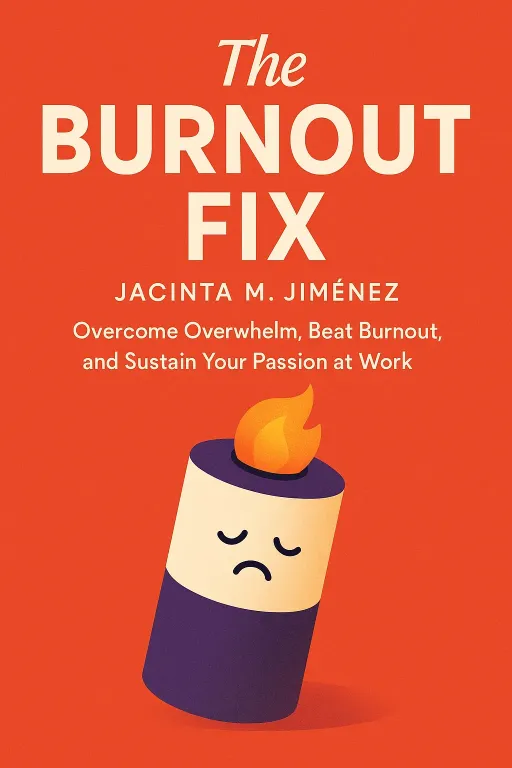
Nova: Suboptimal is an understatement, Atlas. It's like trying to fix a leaky faucet with a bucket instead of turning off the tap. Today, we're diving into a revolutionary approach to resilience, drawing insights from two incredible minds: Jacinta M. Jiménez's "The Burnout Fix" and Scott Eblin's "Overworked and Overwhelmed." What’s fascinating about Jiménez, in particular, is her background as both a clinical psychologist a tech executive. That blend gives her this unique, deeply practical lens on how to combat burnout in precisely the high-pressure environments many of our listeners navigate every day. Her work is celebrated for its actionable frameworks, not just theoretical musings.
Atlas: Right, and Eblin, if I recall, is known for his work with top executives, boiling down complex wellness into digestible, practical steps. So, we’re talking about real-world, no-nonsense solutions here, not just fluffy concepts.
Nova: Exactly. And the core of our podcast today is really an exploration of how to build sustainable resilience in our hyper-connected, high-demand digital lives, not by escaping, but by strategically re-engaging. Today we'll dive deep into this from two perspectives. First, we'll explore the hidden costs of our always-on culture and why traditional recovery methods aren't enough. Then, we'll discuss practical, bite-sized strategies that can dramatically shift your daily energy and focus.
Atlas: Sounds like exactly what a lot of our focused achievers need to hear. Let's get into it.
The Silent Drain: Cognitive Load and Executive Fatigue
SECTION
Nova: So, let’s start with the problem, which is often invisible until it’s too late. We live in an "always-on" culture. Our phones are glued to our hands, emails ping constantly, and meetings stack up back-to-back. This creates what Jiménez calls an overwhelming "cognitive load." Think of your brain not just as a processor, but as a muscle. Every decision, every context switch, every piece of information you process, it all drains your mental energy.
Atlas: Yeah, I can definitely relate. It feels like my brain’s constantly running a dozen programs in the background, even when I’m trying to focus on just one. But I always thought that was just... being busy. The price of admission for a demanding role.
Nova: That's the insidious part, Atlas. We normalize it. We call it "being productive" or "grinding." But what’s happening is a phenomenon called "executive fatigue." Your prefrontal cortex, the part of your brain responsible for planning, decision-making, and self-control, is getting utterly exhausted. It’s why by 3 PM, even simple decisions feel monumental, or why you snap at a colleague over something trivial. It’s not a character flaw; it’s a biological energy depletion.
Atlas: So you're saying my brain isn’t just getting tired, it’s actually resources, like a battery running out of juice. And that mid-afternoon wall isn’t just a slump; it’s my brain screaming for a charge. But wait, how is this different from just needing a good night's sleep or a weekend off? Doesn't that recover us?
Nova: That’s a great question, and it’s where traditional wisdom falls short. Imagine you’re driving a car, and the engine light comes on. You wouldn’t just keep driving for another 500 miles and hope a full tank of gas at the destination fixes it, right? You’d pull over, check the engine. Our current approach to burnout is often to push through until we hit the "vacation pit stop," hoping a week on a beach will magically erase months of chronic mental strain. But the damage, the cumulative cognitive load, has already been done. It's a reactive, not a proactive, strategy.
Atlas: That makes sense. For our listeners in high-pressure tech roles, where projects are relentless and deadlines are tight, this probably sounds all too familiar. You can't just take a week off every time you feel a bit fried. But if vacations aren't the answer to this constant drain, what is? How do we actually turn off that leaky faucet?
Nova: Precisely. And that naturally leads us to the second key idea we need to talk about, which challenges the very notion of how we should recover: the power of micro-recoveries.
The Micro-Recovery Revolution: PULSE and Mindful Moments
SECTION
Nova: The antidote, as both Jiménez and Eblin brilliantly explain, isn't necessarily more time off, but smarter, shorter, more frequent periods of recovery. They call them "micro-recoveries." Instead of waiting for the big reset, you integrate tiny, intentional pauses throughout your day to maintain your cognitive baseline and prevent executive fatigue from ever fully setting in.
Atlas: Okay, so two minutes. That sounds almost too simple. I mean, my coffee break takes longer than that. How does "mindful moments" from Scott Eblin fit into this, and what does it look like in practice for someone with zero free time, juggling a packed calendar?
Nova: That’s the beauty of it, Atlas. It's about intention, not duration. Jiménez introduces her PULSE framework – Presence, Understanding, Letting go, Shifting, and Empathy/Energy. Let's zoom in on 'Presence' and 'Shifting' because they directly lead to these micro-recoveries. 'Presence' is about bringing your attention to the here and now, even for a moment. This is where Eblin's "mindful moments" come into play. He champions these super-short, nervous system resets.
Atlas: Can you give an example? Like how would a tech lead, fresh off a grueling meeting, actually do this?
Nova: Absolutely. Imagine that tech lead. They just finished back-to-back, high-stakes meetings. Instead of immediately diving into their inbox, triggering another cascade of cognitive demands, they might take 60 seconds. They could stand up, walk to the window, and simply look outside, noticing the sky, the trees, the movement. Or they might do a 30-second deep breathing exercise, focusing purely on the sensation of their breath. That’s it. No checking social media, no new information input. Just a deliberate pause.
Atlas: Honestly, that sounds like a game-changer for anyone who feels glued to their desk. It's like a mini-reboot for your internal operating system. But why is two minutes, or even 30 seconds, enough? My brain feels like it needs a full system defrag, not just a quick refresh.
Nova: That’s a common misconception. The goal isn't to fully recover from deep exhaustion in two minutes. The goal is to deep exhaustion by regularly breaking the stress cycle. When you’re constantly "on," your sympathetic nervous system is engaged – fight or flight. These micro-recoveries activate your parasympathetic nervous system – rest and digest. Even a brief activation can lower your heart rate, calm your mind, and give your executive function a tiny, crucial break. It’s like regularly topping off your phone battery throughout the day instead of letting it die completely and then trying to fully charge it in a single, long session. You maintain a higher baseline.
Atlas: I see. So it’s not about finding extra time; it’s about strategically using the tiny pockets of time that already exist between tasks, between meetings, even while waiting for an app to load. It's about being intentional with those moments.
Nova: Exactly. It's about reclaiming those interstitial moments that usually get swallowed by distraction or more work, and using them to proactively manage your mental energy. It’s about building resilience not through grand gestures, but through consistent, tiny acts of self-care. It’s a powerful shift from reactive burnout management to proactive energy maintenance.
Synthesis & Takeaways
SECTION
Nova: So, the big picture here is that our digital age demands a new kind of resilience. We can't keep operating as if our brains have unlimited energy. Jiménez and Eblin provide the roadmap for integrating these "resilience systems" into our daily lives. It’s about recognizing the silent drain of cognitive load and implementing these micro-recoveries – those 30-second breathing exercises, two-minute stretches, or simply looking out the window – to prevent executive fatigue.
Atlas: So, the big takeaway is, stop waiting for the big fix. Start with the micro-fix. It's about embracing imperfection, as we often say, and taking those small steps forward. For our pragmatic innovators who value efficiency and impact, this isn't about adding more to an already overwhelming to-do list. It's about optimizing the time you already have.
Nova: Right. It’s not about adding more to your plate, but about strategically recalibrating the plate you already have. It’s about resetting your nervous system, preventing that executive fatigue from ever fully setting in, and reclaiming your focus, clarity, and well-being, one tiny moment at a time. The cumulative effect of these small, consistent actions is what truly builds sustainable resilience.
Atlas: And it addresses that deep-seated need for efficiency and impact, allowing you to find calm amidst the digital noise. What small, two-minute recovery will you schedule into your day tomorrow?
Nova: This is Aibrary. Congratulations on your growth!