Recovery Protocols
Golden Hook & Introduction
SECTION
Nova: Alright, Atlas, quick question for you. If your brain right now was a computer, would it be running a thousand open tabs, all blinking and demanding attention, or would it be a clean, organized desktop ready for action?
Atlas: Oh, Nova, definitely a thousand open tabs. Multiple browsers open, probably one of them frozen, and the fan whirring like it’s trying to take off. My desktop is more of a digital graveyard for forgotten tasks.
Nova: I think many of our listeners can relate to that feeling of being perpetually stuck in the digital equivalent of a traffic jam. Today, we're diving deep into how to not just clear those tabs, but to actually reboot the system and regain control.
Atlas: That sounds like a dream scenario! So, how are we doing this magical digital decluttering?
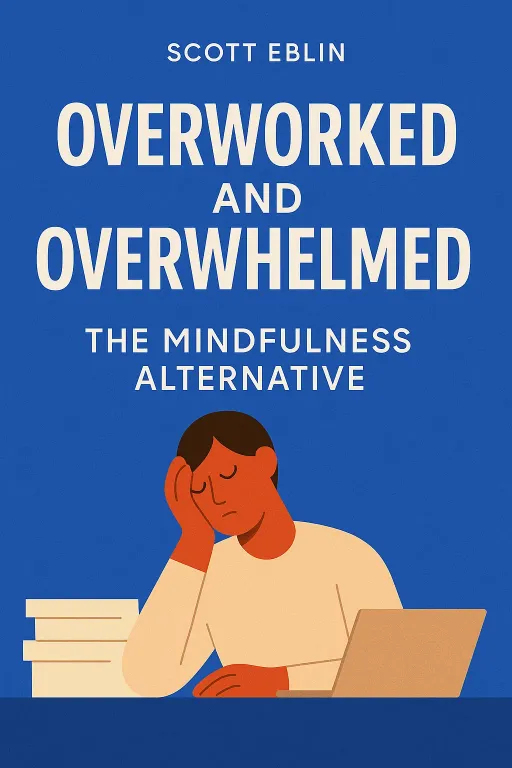
Nova: We’re doing it by exploring two fantastic books that offer complementary paths to navigating the modern deluge of demands. We’re looking at Scott Eblin’s, which gives us the blueprint for intentional living, and Jennifer L. Taitz’s, which offers the emergency toolkit for those moments when the system crash.
Atlas: So, we’ve got the architect and the emergency responder. I like this combination already. Let’s get into it.
Mindful Presence vs. Frantic Doing
SECTION
Nova: Absolutely. Let's start with Scott Eblin and. Eblin’s core framework is this brilliant dichotomy between 'mindful presence' and 'frantic doing'. He argues that to maintain our executive function – that’s our ability to plan, focus, remember instructions, and juggle multiple tasks – we need to actively cultivate mindful presence.
Atlas: And 'frantic doing' is, I’m guessing, the default mode for most of us? It feels like the hustle culture mantra: just keep moving, keep doing, don't stop.
Nova: Exactly. Eblin points out that 'frantic doing' is actually the enemy of effective executive function. When we’re constantly rushing, reacting, and just without conscious awareness, our brains go into a state of high alert, but not necessarily high effectiveness. It’s like being a pilot in the cockpit who’s constantly fiddling with every dial and switch because they’re terrified of crashing, rather than calmly and deliberately navigating.
Atlas: That’s such a potent analogy. So, the frantic doer is the pilot who’s panicking, not the one who’s in control of the aircraft. But how does this 'mindful presence' actually help executive function? Is it just about being calm, or is there something more active happening?
Nova: It’s far more active than just being calm, Atlas. Mindful presence, in Eblin’s view, is about intentional, focused attention. It's about being fully present with the task at hand, aware of your thoughts and feelings without letting them hijack your attention, and making deliberate choices about your actions. When you’re in a state of mindful presence, your prefrontal cortex – the seat of executive function – is more accessible and functions optimally. You can think more clearly, make better decisions, and manage your tasks with a sense of agency, not just as a passenger being buffeted by the winds of urgency.
Atlas: I can see how that would be crucial for anyone trying to build a personal philosophy or even just manage a complex study schedule. It’s about having that clear mental space to actually and, rather than just reacting to the next email or deadline. But Nova, for someone like our 'Curious Scholar' listener, or even a 'Reflective Leader', how do you cultivate that calm pilot when the plane feels like it’s perpetually in turbulence? The world seems designed to pull us into 'frantic doing'.
Nova: You’ve hit on the core challenge. Eblin’s practical advice here is to establish clear boundaries for your weekly schedule. This isn't about rigid, inflexible schedules, but about intentionally carving out protected time for focused work, for strategic thinking, and crucially, for genuine rest and recovery. It’s about designing your week with intention, rather than letting it happen you. For example, he might suggest blocking out time specifically for deep work, time for responding to emails, and non-negotiable time for stepping away. It’s about creating structure that supports presence, rather than structure that demands frantic activity.
Atlas: That sounds incredibly sensible, and yet, I can already hear the listener’s thought: "But Nova, Atlas, my environment doesn't for those boundaries! My boss expects me to be available 24/7, my studies demand late nights, and life just keeps throwing curveballs!" How do you set a boundary when the forces pushing against it feel overwhelming? It sounds like trying to build a beautiful, serene garden in the middle of a hurricane.
Nova: That’s precisely where Jennifer L. Taitz’s work comes in, and it’s why these two books are such a powerful duo. Eblin gives us the architecture for a more resilient structure, the weekly plan. But what happens when the hurricane hits our best boundaries? What happens when you’re facing that high-pressure exam, that crucial presentation, or that difficult conversation where your executive function feels like it’s completely offline? That’s where Taitz’s 'stress resets' become absolutely indispensable.
The Power of Instant Nervous System Resets
SECTION
Nova: Jennifer L. Taitz, in, focuses on evidence-based, rapid interventions that can instantly reset your nervous system. She’s not talking about long-term therapy or extensive meditation retreats here, though those are valuable. She’s talking about practical, almost physiological hacks that can pull you out of that fight-or-flight response in real-time.
Atlas: Okay, 'instant reset' sounds like magic, Nova. And I’m all for magic when I’m drowning in those open tabs. But how does that actually work? Paced breathing, for example – it sounds so simple, almost too simple. Does it cut through that wave of panic or overwhelm that hits you like a ton of bricks?
Nova: It does, and the science behind it is fascinating. When we experience stress, our sympathetic nervous system kicks into high gear – our heart rate increases, our breathing becomes shallow, our muscles tense up. Paced breathing, for instance, directly engages the parasympathetic nervous system, which is our body’s natural brake. By consciously slowing down our exhale, we send a signal to our brain that the threat has passed, even if it hasn’t. This can lower heart rate, reduce blood pressure, and calm the mental chatter. It’s a direct physiological intervention.
Atlas: So, it’s not just a mental trick; it’s a physical recalibration. It’s like hitting the Ctrl+Alt+Delete on your nervous system when it’s frozen. And you mentioned 'rapid interventions' – what else falls into this category besides breathing?
Nova: Taitz highlights several techniques. Paced breathing is a primary one, often focusing on extending the exhale. Other rapid resets can include things like a brief, focused body scan to release tension, a quick grounding exercise using your senses – what do you see, hear, smell right now? – or even a short, intentional movement to break the physical stress response. The key is that these are designed to be deployed in moments of acute pressure, like right before you walk into a high-stakes meeting or during a challenging exam question.
Atlas: That makes so much sense for the 'Curious Scholar' or the 'Reflective Leader' who might be facing intense moments of scrutiny or pressure. It’s the emergency brake. But my question, Nova, is – is this just a band-aid? Does this help you truly perform better in those high-pressure moments, or does it just help you survive them by suppressing the symptoms?
Nova: That’s a critical question, and Taitz’s work suggests it’s more than just a band-aid. By instantly resetting your nervous system, you’re not suppressing symptoms; you’re actually restoring your capacity for clear thinking and effective action. When your body is screaming 'danger!', your higher brain functions are severely impaired. By de-escalating that physiological alarm, you immediately regain access to your executive functions. So, that presentation where you might have stumbled over words due to nerves? A quick reset beforehand can allow you to deliver it with clarity and confidence. That complex math problem on an exam? A moment of paced breathing can help you access the solution you already know. It’s about regaining your equilibrium so your skills and knowledge can shine through. It’s not about ignoring the pressure, but about managing your internal response to it so the external pressure doesn’t dictate your performance.
Strategic Integration: Boundaries & Resets for Balanced Living
SECTION
Nova: And that synergy between Eblin’s proactive boundary setting and Taitz’s reactive stress resets is precisely where the magic happens for achieving a more integrated and sovereign life. Eblin’s approach is about building a robust, well-designed structure for your week, like an architect carefully planning a building to withstand potential storms.
Atlas: Right, so Eblin’s mindful presence and boundary-setting are about creating the strong foundation and the solid walls that prevent the worst of the storm from getting inside in the first place. It’s about designing your life to minimize the for constant emergency interventions.
Nova: Exactly. It’s about carving out dedicated time for focused work, for strategic thinking, and crucially, for genuine rest and recovery. This intentional structuring helps you maintain your executive function throughout the week, reducing the likelihood of feeling overwhelmed and 'frantic doing.' It’s proactive self-management.
Atlas: But as we’ve discussed, life isn't always predictable, and even the best-designed buildings can face unexpected challenges. That’s where Taitz’s 'stress resets' come in, right? They’re the emergency exits, the fire extinguishers, the reinforced safety features for when the unexpected happens.
Nova: Precisely. Taitz’s rapid interventions are your agile response system. They are the tools you keep in your pocket, ready to deploy the moment you feel that wave of panic, that surge of anxiety before a critical event, or that debilitating overwhelm from an unexpected crisis. They don’t replace the need for Eblin’s structural boundaries, but they make those boundaries far more effective because you know you have immediate recourse if the system gets overloaded.
Atlas: This is where it really clicks for me, Nova, and I think for our listeners who are striving for that balance between their studies and personal peace, or trying to integrate their learning with their busy lives. It’s not an either/or situation. It’s about building a resilient framework and having immediate escape hatches. Eblin helps you manage your time and energy proactively, preventing the constant burnout. Taitz gives you the power to recover instantly when pressure spikes, so those spikes don't derail your entire week or your long-term goals.
Nova: And this combination directly supports your journey toward building a stronger personal philosophy and developing more effective communication skills. When you can manage your internal state with mindful presence and rapid resets, you’re better equipped to think clearly, articulate your ideas persuasively, and connect authentically with others. You move from being a reactive individual, tossed about by external pressures, to someone who exercises greater sovereignty over their own mental and emotional landscape.
Atlas: Sovereignty – that’s a powerful word. It means moving from survival mode, just trying to get through the day, to a state where you are actively in command of your focus, your energy, and your responses. It’s about integrating these strategies so that your time management becomes more effective not just in terms of scheduling, but in terms of of attention and.
Nova: Absolutely. Eblin’s boundary-setting provides the structure for your week, ensuring you have dedicated time for deep work and recovery, which is fundamental for time management. Taitz’s resets offer immediate relief and clarity, ensuring that when unexpected demands arise, you can regain your composure and effectively communicate your needs or respond to the situation without crumbling. It’s the ultimate integration for both productivity and peace.
Synthesis & Takeaways
SECTION
Nova: So, to wrap this up, we’ve explored two incredibly powerful, yet complementary, approaches. Scott Eblin’s gives us the blueprint for building intentional structure with mindful presence and clear weekly boundaries. This is about proactively designing a life that supports your executive function and prevents chronic overwhelm.
Atlas: And Jennifer L. Taitz’s offers us the agile, evidence-based tools – like paced breathing – to instantly recalibrate our nervous system when those inevitable high-pressure moments hit. These are your pocket-sized survival kits for acute stress.
Nova: The real insight here, the deep takeaway, is that true resilience and effective living come from integrating these two strategies. It’s not about choosing between planning and reacting; it’s about mastering both. You build the robust ship with Eblin’s design, and you keep Taitz’s emergency raft readily accessible. This dual approach is what allows us to move from a state of mere survival, constantly feeling overwhelmed, to one of genuine sovereignty – where we are in command of our attention, our stress responses, and our overall well-being.
Atlas: And for anyone listening who’s juggling studies and personal peace, or striving to build their own personal philosophy and effective communication skills, this integration is key. Schedule those boundaries, even if they’re small. And practice those quick resets, so they’re second nature when you need them most. What's one small boundary you can commit to setting this week for better focus, and what's one reset technique you'll practice so it's ready when you need it?
Nova: That’s a fantastic challenge, Atlas. Embracing this journey of integrating structure and agility is how we truly grow.
Atlas: This is Aibrary. Congratulations on your growth!