Breaking the Cycle of High Pressure Productivity
Golden Hook & Introduction
SECTION
Nova: You know, Atlas, we’re constantly told to 'lean in,' 'grind harder,' 'hustle.' It's the mantra of our modern, high-pressure world. But what if the secret to truly isn't about pushing harder, but about mastering the art of the strategic pause?
Atlas: Whoa, Nova, that sounds almost heretical in our always-on world. My inbox just felt a shiver of anxiety thinking about it. For so many of us, the idea of slowing down feels like falling behind.
Nova: Exactly! It’s a complete paradigm shift, isn't it? And it’s precisely what we're diving into today, exploring how to break the cycle of high-pressure productivity. We're going to unpack some profound insights from two brilliant minds who challenge this 'more is more' mentality.
Atlas: I'm intrigued. Because if there’s one thing I hear consistently from listeners, it’s that they're searching for that sweet spot: high achievement without the constant state of overwhelm. They want to integrate well-being, not just manage tasks, but infuse their work with a sense of inner harmony.
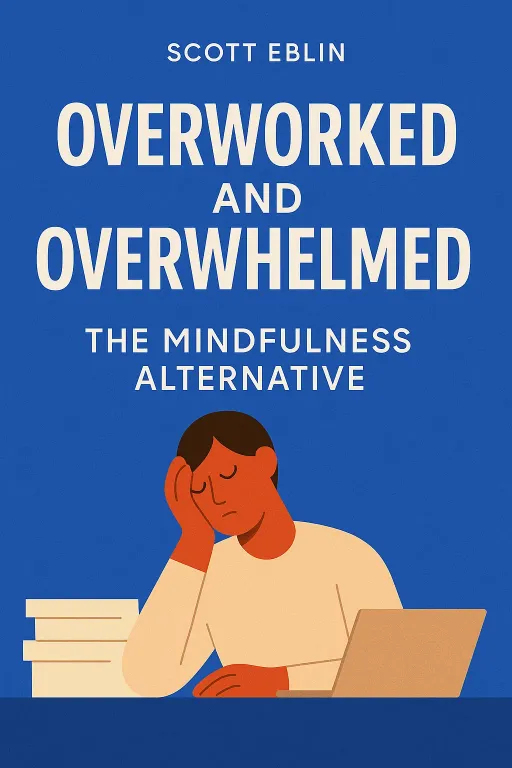
Nova: Absolutely. And that's where authors like Scott Eblin, in his insightful book "Overworked and Overwhelmed," and Emily Fletcher, with her transformative work "Stress Less, Accomplish More," come in. Eblin zeroes in on the subtle biological triggers that dictate our internal states, while Fletcher offers a holistic, three-part technique specifically designed for high-performers to not just cope, but to thrive. It’s about intelligent design for your daily rhythm, a blueprint for balance.
Atlas: So, we're not just talking about fluffy self-care, but a strategic approach to performance that integrates inner harmony into the very fabric of our work. That resonates deeply with anyone trying to navigate life's pressures while maintaining a sharp intellect and pursuing personal growth.
Nova: Precisely. We're talking about hacking your internal operating system. And the first step, as Eblin reveals, is understanding the invisible battle happening inside us every single day.
The Invisible Battle: Hacking Your Nervous System with Eblin
SECTION
Nova: So, Scott Eblin introduces this incredibly useful framework: 'Life-Go' versus 'Life-Stop' triggers. Think of it like the accelerator and brake pedal of your nervous system. Our bodies are constantly reacting to stimuli, pushing us into either an activated, 'go' state, or a more centered, 'stop' state.
Atlas: That makes perfect sense. I mean, we all feel it. That sudden jolt of adrenaline when an urgent email comes in, or the quiet sigh of relief when you finally close a big project. But how do you even begin to identify these triggers when you're just trying to keep your head above water, constantly in 'go' mode? For our listeners in demanding roles, it often feels like there's no off-switch.
Nova: That's the key, Atlas. Most of us are unconsciously driven by these triggers. A 'Life-Go' trigger could be a looming deadline, a demanding client call, even just the sheer volume of tasks on your to-do list. Your body ramps up, preparing for action. Your heart rate might quicken, your focus narrows, you might even hold your breath subtly. It’s our primal fight-or-flight response, optimized for modern stressors.
Atlas: Yeah, I know that feeling. It's like your entire system is on high alert, ready to tackle whatever comes next. It’s the mode many of us feel we to be in to get things done, to stay competitive.
Nova: And it’s essential for performance in bursts. The problem arises when we get stuck there. A 'Life-Stop' trigger, on the other hand, is anything that signals safety and allows your nervous system to downshift. This could be a deep, intentional breath, stepping away from your screen for a moment, listening to calming music, or even just shifting your posture. It’s a deliberate act of sending a different message to your brain.
Atlas: Oh, I see. So it’s not about eliminating stress entirely, because some stress is motivating. It’s about consciously modulating our internal state. But for someone in a truly high-stakes, non-stop environment, how do you practically weave in these 'Life-Stop' moments without feeling like you’re losing momentum or, worse, falling behind? That feels like a real challenge for a sharp intellect that's always optimizing for efficiency.
Nova: That's the brilliant part of Eblin's work. It starts with awareness. You can't manage what you don't acknowledge. He emphasizes recognizing the physical cues. When you feel that tightness in your shoulders, that shallow breath, that racing thought – those are signals you're in 'Life-Go.' The moment you notice, you have the opportunity to intentionally introduce a 'Life-Stop' trigger. It could be as simple as taking three slow, deep breaths. That's a powerful signal to your nervous system to shift gears, even in the middle of a chaotic day.
Atlas: So, it’s almost like a micro-intervention. You’re not trying to escape the pressure cooker, but rather, you’re learning to regulate the heat inside it. It’s about creating moments of conscious recovery, even if they’re brief. It's about being an architect of your own well-being, rather than just a victim of circumstance.
Nova: Exactly. It’s like a race car driver who knows when to pit stop to optimize performance, rather than just driving full-throttle until the engine seizes. The constant 'Life-Go' state, without intentional 'Life-Stop' moments, leads directly to burnout, exhaustion, and ultimately, diminished productivity. Your body is screaming for regulation, and ignoring it comes at a significant cost.
Atlas: That makes so much sense. It’s not just about managing tasks; it’s about integrating well-being into the very act of performing. It’s a recognition that sustainable high performance comes from intelligent self-management.
Nova: And it’s a fundamental principle. If you don't regulate your nervous system, it will regulate you, often through exhaustion or illness. But understanding these triggers is just one piece of the puzzle. What if we could actively cultivate a state that that chronic overwhelm and actually amplifies our capacity?
Amplified Performance: The Ziva Technique for High-Achievers
SECTION
Atlas: That’s a fantastic transition, Nova. Because for many, simply 'stopping' feels like falling behind, or it feels like a band-aid solution. How do we shift from just managing stress to actually calm for higher output? That’s where the "accomplish more" part comes into play, I imagine, for those who truly seek balance and growth.
Nova: Precisely. And this is where Emily Fletcher and her Ziva Technique really shine. She developed this system specifically for high-performers, understanding that traditional stress relief often feels like another chore. The Ziva Technique is a three-part practice: mindfulness, meditation, and manifestation. And when combined, they create a powerful synergy that goes beyond mere coping.
Atlas: Mindfulness, meditation, and manifestation... those terms can sometimes feel a bit abstract, maybe even a little "woo-woo" for someone in a high-stakes, data-driven role. How does this actually work in practice, especially the "manifestation" bit? Isn't that just wishful thinking, or another item on a busy to-do list?
Nova: That’s a common and completely valid question, Atlas. Let's break it down. Mindfulness, in Fletcher's context, is about being present. It's about noticing your thoughts and sensations without judgment. It’s not about clearing your mind, but about observing it. This helps you gain distance from the constant chatter and reactivity, giving you greater clarity.
Atlas: So, it’s like creating a little bit of space between you and your immediate thoughts, which I can see would be incredibly valuable when you’re facing a hundred demands at once, helping you respond rather than react.
Nova: Exactly. Then comes meditation. This isn't about sitting cross-legged for hours, though that's great if you can. Fletcher teaches a technique of "deep rest." It's a specific practice designed to de-excite your nervous system and release accumulated stress. Think of it as a powerful, restorative nap for your brain and body, but even more efficient. This deep rest significantly improves cognitive function, enhances creativity, and reduces anxiety. It's a physiological cleanse for your system.
Atlas: So, the meditation isn't just about relaxation, it's about a physiological reset that directly impacts your ability to think clearly, solve problems, and innovate. It's like optimizing your internal software, sharpening the saw, so to speak, for better performance.
Nova: You got it. And finally, manifestation. This isn't about magically wishing things into existence. For Fletcher, manifestation is about clearly defining what you want, why you want it, and how you want to feel when you achieve it. It's about intentionality. When you combine that clarity of intention with a mind that's been cleared and rested through mindfulness and meditation, you become incredibly potent. You're not just reacting to life; you're actively creating it from a place of calm, focused power.
Atlas: That's a crucial distinction. So, it's about aligning your internal state with your external goals. It’s about creating mental space and clarity, which then translates to better decisions, more effective action, and a more fulfilling pursuit of your objectives, even in chaos. It’s a way to navigate life's pressures with purpose, something many seekers of inner peace truly value.
Nova: Absolutely. It's an internal operating system upgrade. You're not just pushing through; you're operating at a higher level of consciousness and efficiency. This isn't about adding more to your plate; it's about making everything else on your plate more manageable and impactful. It’s about moving from a reactive state to a creative, intentional one.
Atlas: And that's where the "accomplish more" comes in. Because when your mind is clear, when your nervous system is regulated, your capacity for insightful work, for problem-solving, for innovation, just skyrockets. It's truly a profound shift in how we approach productivity.
Nova: Precisely. It allows you to tap into that deeper well of creativity and wisdom that often gets drowned out by constant noise and pressure. It's about cultivating a personal philosophy that prioritizes inner peace as the foundation for external success.
Synthesis & Takeaways: The Two-Minute Reset
SECTION
Nova: So, we've talked about understanding our internal triggers with Eblin, and then actively upgrading our mental operating system with Fletcher. But for many listeners, the question remains: what's the immediate, actionable step they can take right?
Atlas: That's the million-dollar question, Nova. For someone who's feeling the pressure right as they're about to dive into their next big task, maybe even opening up those research notes, what's their first move? What’s the smallest hinge that can swing the biggest door, helping them embrace this journey towards balance?
Nova: That's where the 'Two-Minute Reset' comes in, a simple yet profoundly powerful practice. The idea is this: before you open those research notes, before you jump into that next meeting, before you hit send on that critical email – take just two minutes. Use a simple breathing technique, like the one Eblin suggests, to center yourself.
Atlas: Just two minutes? That feels incredibly accessible. It’s like a micro-reboot. So, instead of diving headfirst into the next thing fueled by the last thing's stress, you're intentionally shifting your state. You're not just managing tasks, you're managing within those tasks, becoming an architect of your own focus.
Nova: Exactly. It's about ensuring you start from a state of calm rather than reactivity. It allows you to bring your best, most focused self to the task, rather than a fragmented, stressed version. It’s a deliberate moment of 'Life-Stop' before engaging in 'Life-Go.' This small practice cultivates that inner peace you're seeking, giving you greater clarity and balance.
Atlas: That’s actually really inspiring. It’s a testament to the power of small, consistent actions building momentum. I imagine a lot of our listeners, who are constantly seeking that clarity and balance, will find immense value in even that simple two-minute practice. It’s about making a conscious choice to prioritize your internal state.
Nova: Absolutely. It’s about realizing that true productivity isn't about the sheer volume of output, but the quality of your presence and the intelligence of your approach. It’s about navigating life's pressures not by enduring them, but by transforming them into sustainable, insightful work. It’s about being an architect of your own well-being, not just a manager of tasks.
Atlas: That’s a profound shift in perspective, Nova. It underscores that personal growth isn't separate from our professional lives; it's deeply integrated. Each step, no matter how small, builds momentum towards a more balanced, more accomplished you. It helps define those guiding principles for navigating life.
Nova: And that, Atlas, is the ultimate takeaway: the power of intentional pauses.
Nova: This is Aibrary. Congratulations on your growth!