Beyond the Battlefield: The Enduring Lessons of Military Strategy
Golden Hook & Introduction
SECTION
Nova: You know, Atlas, when most people hear "military history," they picture dusty old textbooks, dates, and maybe a few dramatic battle scenes.
Atlas: Oh, absolutely. Swords clashing, cannons roaring, generals shouting orders… a lot of the time, it feels like a highlight reel of ancient violence. Not exactly my go-to for a Tuesday morning pick-me-up.
Nova: Exactly! But what if I told you that beneath all that historical fanfare lies a goldmine of profound lessons, not just about fighting wars, but about strategy, leadership, and adapting to pure, unadulterated chaos? It’s not just for generals; it’s for anyone trying to build something significant, or navigate a complex challenge.
Atlas: Okay, you’ve got my attention. You’re telling me that the secrets to, say, launching a successful startup or even just organizing my personal project pipeline, are hidden in the annals of ancient warfare? That sounds… counter-intuitive, but intriguing.
Nova: It absolutely is. And that’s precisely what we’re digging into today. We’re going "Beyond the Battlefield," exploring how the enduring lessons of military strategy, particularly from two titans of strategic thought – Carl von Clausewitz and Sun Tzu – can sharpen your strategic thinking in ways you never imagined. These aren't just historical figures; they're foundational architects of how we understand conflict and success, even today.
Atlas: So this isn't about glorifying war, but extracting pure, distilled wisdom about how to achieve objectives in challenging environments. I like that. It’s about the underlying mechanics of overcoming obstacles, not just the explosions.
The Philosophy of Conflict: Clausewitz and the 'Fog of War'
SECTION
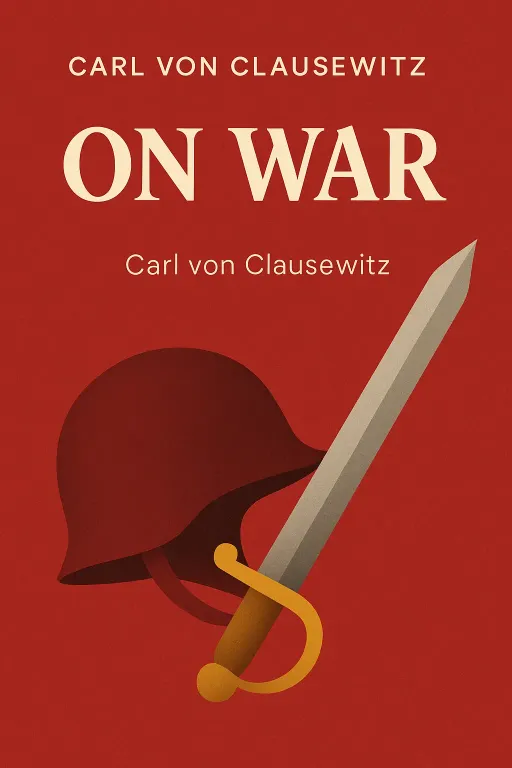
Nova: Precisely. Let's start with Carl von Clausewitz, the Prussian general and military theorist whose seminal work, "On War," is less about tactics and more about the very of conflict. He famously posited that "war is merely the continuation of policy by other means."
Atlas: That’s a heavy statement right there. "Continuation of policy by other means." So, he’s saying that war isn’t just random violence; it’s always serving a larger, political objective?
Nova: Exactly. It's not an end in itself; it's a tool. And this is crucial because it means that before you even about strategy, you need absolute clarity on your objective, your "policy." What are you trying to achieve? What's the desired political outcome? Without that, all your efforts are just flailing. He argued that the ultimate aim of war is to compel your opponent to do your will.
Atlas: Oh, I see. So for our listeners who are, say, trying to implement a new initiative at work, or even just dealing with a difficult negotiation, the first question isn’t "How do I win?" but "What's the absolute core outcome I need here?" That shifts the entire perspective. It's about purpose.
Nova: Absolutely. And then, there’s his equally profound concept of the "fog of war." Clausewitz understood that once a conflict begins, reality rarely matches the plan. There's friction, uncertainty, incomplete information, unexpected events, and the sheer chaos of human interaction. He said, "Everything is very simple in war, but the simplest thing is difficult."
Atlas: That sounds like every single project I’ve ever been involved in! You start with a clear Gantt chart and then reality hits. The 'fog of war' isn't just about literal smoke and gunpowder; it’s about that overwhelming uncertainty that descends when things get real.
Nova: Exactly! Think of Napoleon's Russian Campaign in 1812. He had a clear objective: force Russia into submission. His initial strategy was brilliant on paper. But then the 'fog' rolled in – the vastness of the Russian landscape, the brutal winter, the scorched-earth tactics of the retreating Russians, supply lines stretching to breaking point. His intelligence was incomplete, the enemy's resolve was underestimated, and the environment itself became a formidable, unpredictable adversary.
Atlas: Wow. So even the greatest strategic mind of his time couldn’t escape the 'fog.' This is insightful for anyone leading a team or even just navigating their daily life. You can plan all you want, but the moment you step out the door, the 'fog' of unexpected traffic, a sudden email, or a changed priority descends. It forces you to always be recalibrating.
Nova: It’s about recognizing that perfect information is a myth, and friction is inevitable. True strategic brilliance, according to Clausewitz, isn't about having a flawless plan, but about having the mental agility to navigate that fog, to adapt when everything goes sideways, and still keep your ultimate objective in sight. It's about resilience and clarity of purpose amidst chaos.
The Art of Applied Strategy: Sun Tzu's Principles for Modern Challenges
SECTION
Atlas: That makes so much sense, Nova. So, Clausewitz gives us the philosophical lens, the "why" and "what" of conflict. But once you understand that, how do you actually it? How do you operate within that fog?
Nova: Excellent transition, because that's where Sun Tzu, the ancient Chinese military strategist, comes in. His work, "The Art of War," is incredibly practical. While Clausewitz is philosophical, Sun Tzu offers actionable principles. His core idea? "The supreme art of war is to subdue the enemy without fighting."
Atlas: Winning without fighting? That sounds like the ultimate strategic flex. For project managers, that's like delivering a project on time and under budget without a single late-night scramble. Or for a leader, resolving a conflict before it even erupts into a full-blown crisis.
Nova: Exactly! And how do you achieve that? Sun Tzu emphasizes knowing yourself and knowing your enemy. "If you know the enemy and know yourself, you need not fear the result of a hundred battles." This isn't just about military intelligence; it's about deep self-awareness and understanding your competitive landscape, your market, your team, and even your own internal biases.
Atlas: So in personal projects, the 'enemy' could be procrastination, or a lack of clarity, or simply not understanding the resources available to you. Or in business, it's understanding your customer's needs better than they do, and anticipating market shifts.
Nova: Precisely. Sun Tzu is all about preparation, positioning, and exploiting opportunities. He talks about understanding the terrain, using deception, and striking where the enemy is weakest. Think of a classic strategic maneuver, like Hannibal's double envelopment at the Battle of Cannae. He used a seemingly weak center to draw the Roman legions in, then enveloped them with his cavalry. It was a masterclass in understanding the terrain, the enemy's predictable movements, and then exploiting their overconfidence.
Atlas: Oh, that's a brilliant example. It’s not about brute force; it's about leveraging intelligence and positioning. It’s making your opponent's strengths work against them, or exposing their vulnerabilities. For a master builder, that’s about identifying the critical path in a project, foreseeing potential bottlenecks, and then proactively designing solutions before they become problems.
Nova: And Sun Tzu's teachings on adaptability are also incredibly powerful. He says, "Water shapes its course according to the nature of the ground over which it flows; the soldier shapes his victory in relation to the foe whom he faces." It’s about being fluid, responsive, and not rigidly sticking to a plan when circumstances change.
Atlas: So, if Clausewitz tells us to understand the inherent chaos and friction, Sun Tzu gives us the tools to dance that chaos. It’s about preparation to be adaptable, not just preparation to execute a rigid plan. That’s a huge distinction for anyone trying to command their path, as our listeners often are.
Synthesis & Takeaways
SECTION
Nova: Absolutely, Atlas. When you bring these two titans together, you realize that effective strategy is a powerful blend. From Clausewitz, we learn the paramount importance of clarity of purpose – what is your true objective? What "policy" are you trying to enact? And from Sun Tzu, we gain the practical wisdom of preparation, self-knowledge, understanding your environment, and the agility to exploit opportunities.
Atlas: It really boils down to seeing beyond the immediate "battle" – whether that's a deadline, a difficult conversation, or a complex personal goal – and understanding the deeper currents at play. The book challenges us to look beyond just the actions and into the.
Nova: Exactly. Many see military history as just battles and dates. But as we've seen, it actually holds profound lessons in strategy, leadership, and adapting to chaos. Understanding these patterns, these timeless principles, can dramatically sharpen your own strategic thinking.
Atlas: So, for all our listeners out there, the deep question from "Beyond the Battlefield" is: How can the principles of preparation and adaptability from military strategy apply to current personal projects? Are you clear on your ultimate objective? Have you truly assessed your "terrain" and your "adversaries," whether they're external challenges or internal roadblocks? And are you agile enough to adapt when the 'fog of war' inevitably descends?
Nova: It's about moving from simply reacting to challenges, to proactively shaping your outcomes with clear purpose and informed action. It's about becoming the architect of your own strategic success.
Atlas: And that, my friends, is a lesson worth taking "beyond the battlefield" and into every aspect of your life.
Nova: This is Aibrary. Congratulations on your growth!