When Power Corrupts: Unpacking the Ethics of Leadership in History
Golden Hook & Introduction
SECTION
Nova: We're often told that "good" leaders are moral, ethical, and always act with integrity. It's the bedrock of our democratic ideals, isn't it? But what if the very act of leadership, to be truly effective, sometimes demands that you shed those virtues entirely?
Atlas: Whoa, that sounds like a dangerous thought, Nova. Are you saying our ideal vision of leadership might actually be a liability in the real world?
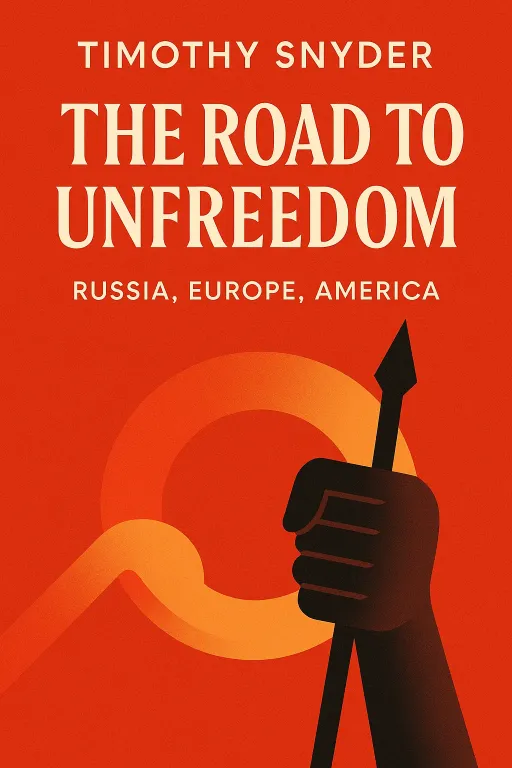
Nova: Precisely, Atlas. And that uncomfortable truth is precisely what we’re unpacking today. We're diving into two incredibly potent, yet very different, examinations of power and ethics: Niccolò Machiavelli's foundational work,, and Timothy Snyder's urgent modern guide,.
Atlas: I mean, Machiavelli is still scandalous centuries later, right? And Snyder’s a historian who’s been sounding the alarm on democratic erosion, which feels incredibly relevant right now. It's a fascinating pairing, looking at the mechanics of power from the top down and then from the citizen's perspective.
Nova: Absolutely. Machiavelli wrote in the early 16th century, a time of intense political upheaval in Italy. He was a diplomat, a political theorist, and his advice on how a prince should acquire and maintain power was so ruthless it earned him a reputation for cynicism. It was less about what leaders do ethically, and more about what they do pragmatically to survive.
Atlas: So he was kind of like the original political realist, stripping away all the idealistic fluff to reveal the brutal truth.
Nova: Exactly. And Snyder, centuries later, draws stark lessons from the 20th century's descent into authoritarianism, showing us how democratic norms erode and how ordinary citizens can resist. Together, these works reveal that leadership is often a precarious balancing act between virtue and necessity, shaping the very fabric of political evolution. It's crucial for anyone trying to make sense of our current world.
Machiavellian Pragmatism: The Necessity of Power Over Virtue
SECTION
Nova: So let's start with Machiavelli. His central, often shocking, argument is that a ruler must be willing to be immoral if it's necessary to secure and maintain the state. He wasn't suggesting leaders being cruel, but that they must be to be so. He famously said it's better to be feared than loved, if you cannot be both.
Atlas: That sounds rough. Better to be feared? What kind of leadership is that advocating for?
Nova: It’s not an endorsement of sadism, but a cold calculation. Machiavelli observed that love is fickle, easily broken, but fear is maintained by a dread of punishment that never fails. He also introduced the famous analogy of the prince needing to be both a lion and a fox. The lion to frighten off wolves, and the fox to recognize traps.
Atlas: Okay, so the lion is brute force, and the fox is cunning. But give me an example. How does a leader actually embody this "lion and fox" idea in a way that’s not just pure villainy?
Nova: Think of a hypothetical state facing imminent collapse from internal factions and external threats. An idealistic leader might try to negotiate, compromise, and appeal to everyone’s better nature. But Machiavelli would argue that such a leader, in trying to be universally loved, might lose control entirely, leading to greater chaos and suffering for all.
Atlas: So the cause is imminent collapse, the process is ruthless decision-making, and the outcome is stability, but at a moral cost.
Nova: Precisely. A Machiavellian leader, in that situation, might swiftly and decisively crush one powerful faction, even if it means employing tactics that are ethically questionable, to send a clear message. The immediate action appears brutal, but the long-term goal is to restore order and prevent widespread civil war. The stability gained, in Machiavelli's view, outweighs the moral transgression, because without a stable state, no virtues can flourish anyway.
Atlas: I see. So for Machiavelli, the leader’s primary ethical duty is to the of the state, even if it means sacrificing personal virtue. He's not saying be evil for evil's sake, but be effective for the state's sake.
Nova: Exactly. He was writing in a fragmented Italy, where states rose and fell with alarming frequency. His advice was born from a harsh reality, not some abstract moral philosophy. He was describing how power often exercised, not necessarily how it be in an ideal world. It's a stark, almost clinical, look at power.
Snyder's Modern Lens: Resisting Tyranny and Preserving Democratic Norms
SECTION
Nova: And that brings us squarely into the modern era, where the erosion of democratic norms can feel like Machiavelli's warnings playing out in slow motion, but from the perspective of the ruled, not the ruler. Timothy Snyder, a renowned historian of totalitarianism, picks up this thread with his book.
Atlas: I've heard Snyder is incredibly direct, almost blunt, about the dangers we face.
Nova: He is. Snyder draws lessons from 20th-century authoritarian regimes – like Nazi Germany and Soviet Russia – to offer twenty practical lessons for resisting tyranny today. He essentially gives us a playbook for citizens to recognize and push back against the subtle creep of authoritarianism.
Atlas: Okay, so Machiavelli tells us how power often exercised, and Snyder tells us how to its darker manifestations. What does that look like in practice? What's one of his most crucial lessons?
Nova: One of my favorites is "Be calm when the unthinkable arrives." It sounds almost Zen, but it's incredibly practical. When a crisis hits, or a new, alarming political development occurs, our natural instinct is often panic or outrage. Snyder argues that these emotional responses can be manipulated by those seeking to undermine democracy. Instead, he urges us to be calm, to reflect, and to understand the situation before reacting.
Atlas: That makes me wonder, how does that apply to our modern political landscape? When news cycles are 24/7 and everything feels urgent, how do you stay calm and reflective without becoming complacent?
Nova: It’s not about complacency; it’s about strategic action. He also advises to "Believe in truth." In an age of disinformation, alternative facts, and deep fakes, Snyder stresses the importance of objective reality. He encourages us to verify facts, to read widely, and to understand that the deliberate assault on truth is a hallmark of authoritarianism.
Atlas: So it’s not enough just to consume information; we have to actively engage with it critically. For our listeners who are managing information overload and trying to dissect the roots of current events, this concept of "believing in truth" feels incredibly vital.
Nova: Absolutely. And it feeds into another of his lessons: "Be a patriot." Snyder reframes patriotism not as blind allegiance to a leader or a party, but as loyalty to the ideals and institutions of one's country. It’s about defending the constitution, the rule of law, and democratic processes, even when they’re under attack from within.
Atlas: That’s a powerful distinction. So he's essentially calling for active civic engagement, linking it directly to historical patterns of democratic erosion. It's a more hopeful, citizen-centric response to the darker aspects of power Machiavelli illuminated.
Synthesis & Takeaways
SECTION
Nova: So, bringing these two thinkers together, we see a profound dialogue across centuries. Machiavelli shows us the raw, amoral mechanics of power and the tough choices leaders face. Snyder, on the other hand, gives us the citizen's guide to recognizing and resisting the abuse of that power, drawing on history's most painful lessons.
Atlas: It's like Machiavelli gave us the blueprint for how power corrupt, and Snyder gave us the instruction manual for how to prevent that corruption from taking hold, or how to fight it when it does. The real takeaway here isn't just that power corrupts, but that understanding it corrupts, and how it's maintained, is our first line of defense as citizens.
Nova: Exactly. It sharpens our critical insight, allowing us to see past the rhetoric and understand the deeper motivations and potential consequences of political actions. This isn't just academic; it's about connecting historical patterns to current events, and seeing the continuum of human struggle for ethical leadership and just governance.
Atlas: I imagine a lot of our listeners who care about ethical leadership and civic engagement are reflecting on what this means for their own role. What's one final thought you'd leave them with about bridging this gap between theory and action?
Nova: I'd say that the most powerful thing we can do is to cultivate an informed skepticism. It's not cynicism, but a deep, analytical curiosity that questions assumptions, dissects motivations, and demands transparency. Because an informed citizenry is the most potent check on power, ensuring that while the necessity of power might be grim, it doesn't have to be corrupting.
Atlas: That’s a great way to put it. It’s about understanding the game so you can play your part in shaping it.
Nova: Absolutely.
Atlas: This is Aibrary. Congratulations on your growth!