

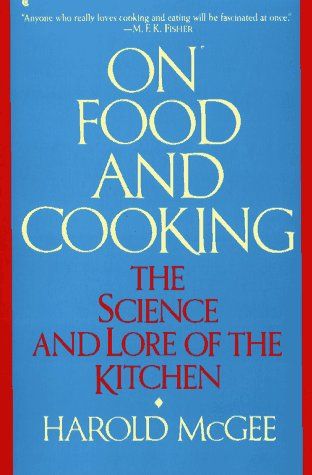
On food and cooking
Introduction
Nova: Have you ever heard that you need to sear a steak to seal in the juices?
Atlas: Of course. That is like the first rule of cooking a good steak. You get that high heat, you lock the moisture inside, and you get a juicy dinner. Why? Are you about to tell me I have been doing it wrong?
Nova: Not exactly wrong, but the reason you are doing it is a total myth. And the man who blew the whistle on that myth is the author of what many call the most important book in culinary history. We are talking about Harold McGee and his masterpiece, On Food and Cooking.
Atlas: Wait, searing does not seal in juices? Then why does every chef on TV do it?
Nova: They do it for the flavor, which is real, but the sealing part is pure fiction. In fact, searing actually makes meat lose more moisture because the high heat tightens the muscle fibers. This is just one of the hundreds of revelations in McGee's book. It is not a cookbook with recipes; it is an 800-page encyclopedia of the science, history, and lore of everything we eat.
Atlas: An 800-page science book about food? That sounds like a lot of homework for a Tuesday night dinner.
Nova: It might sound daunting, but it changed everything. Before this book, if you wanted to know why an egg turns white when you fry it, you had to be a chemist. McGee brought that knowledge into the kitchen. Today, we are diving into how a guy with a PhD in English Literature became the godfather of modern cooking and why his book is the secret weapon of every Michelin-starred chef you have ever heard of.
Key Insight 1
The Literature PhD in the Kitchen
Nova: One of the most fascinating things about Harold McGee is that he was not a professional chef or even a trained scientist when he started. He was actually a doctoral student at Yale studying English Literature.
Atlas: Hold on. You are telling me the guy who wrote the bible of food science was a Shakespeare guy? How does that even happen?
Nova: It is a classic case of curiosity. He was sitting at lunch with some friends in the late 70s, and someone asked why beans give you gas. No one knew. He went to the library to find out and realized that there were no books written for regular people that explained the science of food. There were industrial textbooks for food processing plants and there were cookbooks that told you what to do, but nothing that explained the why.
Atlas: So he just decided to write it himself? That is a massive leap from analyzing poetry to analyzing protein structures.
Nova: It really was. He spent years in libraries, digging through obscure scientific journals and historical texts. When the first edition of On Food and Cooking came out in 1984, it was a total anomaly. It did not have a single recipe. Instead, it had diagrams of molecules and deep dives into the history of the word meat.
Atlas: I bet the professional cooking world was skeptical. I can imagine a grizzled line cook looking at a guy with a literature degree and saying, stay out of my kitchen, kid.
Nova: Actually, it was the opposite. The book became an underground sensation among the world's top chefs. People like Thomas Keller and Heston Blumenthal started using it to solve problems they had been struggling with for years. It gave them a language to describe what was happening in their pans.
Atlas: It is interesting that he included lore in the title too. It is not just the science of food and cooking, but the lore. What does he mean by that?
Nova: That is where his literature background shines. He explores how our ancestors thought about food. For example, he points out that the word meat used to mean any solid food. That is why we still say mincemeat for a pie filled with fruit or nutmeat. He weaves together the chemistry of a molecule with the history of how that molecule shaped human civilization. It makes the science feel human.
Atlas: So it is basically the biography of everything on our dinner plate. I can see why that would be addictive once you start reading.
Key Insight 2
The Science of the Sizzle
Nova: Let us get back to that searing myth for a second, because it is the perfect example of how McGee uses science to debunk centuries of tradition. The idea that searing seals in juices actually came from a famous German chemist named Justus von Liebig in the 1840s.
Atlas: A chemist started the myth? I thought you said science was the solution!
Nova: Even scientists get it wrong sometimes! Liebig assumed that the crust formed during searing acted like a physical barrier, like a plastic wrap for the meat. Because he was a famous scientist, everyone just believed him for over a hundred years. McGee was one of the first to popularized the actual truth in a way that reached the public.
Atlas: So if it is not sealing in juices, what is that crust actually doing? Because it definitely tastes better.
Nova: That is the Maillard reaction. It is arguably the most important chemical reaction in the kitchen. When you heat proteins and sugars together, they create hundreds of new flavor compounds and that beautiful brown color. McGee explains that this is not just browning; it is a complex dance of molecules that gives us the smell of toasted bread, roasted coffee, and grilled steak.
Atlas: I love that. A complex dance of molecules. It makes my morning toast sound like a Broadway show.
Nova: It really is! And McGee goes deep into the specifics. He explains that the Maillard reaction usually starts around 285 degrees Fahrenheit. This is why boiling meat never gives you that flavor; water boils at 212 degrees, which is too low for the reaction to happen. That is why we sear, then roast, or why we fry instead of steam if we want that savory depth.
Atlas: Okay, so he explains the heat. But what about the ingredients themselves? Does he get into the nitty-gritty of, say, an egg?
Nova: Oh, he spends an entire chapter on eggs. He calls the egg a masterpiece of biological packaging. He explains that when you cook an egg, you are basically untangling long chains of proteins. As they heat up, they bump into each other and bond, creating a solid web that traps water. If you cook it too long, the web tightens too much, squeezes the water out, and you get rubbery eggs.
Atlas: That explains so much. I always wondered why my scrambled eggs sometimes end up in a puddle of water. I am just over-tightening the protein web!
Nova: Exactly! You are a molecular engineer every time you pick up a spatula. McGee just gives you the manual.
Key Insight 3
The Secret Life of Plants
Nova: It is not just about meat and eggs, though. McGee's insights into the plant world are just as revolutionary. Did you know that when you smell a freshly cut onion, you are actually experiencing a chemical defense mechanism?
Atlas: I knew they made me cry, but I did not realize it was an attack. Is the onion trying to kill me?
Nova: In its own way, yes! McGee explains that onions keep certain enzymes and sulfur compounds in separate compartments within their cells. When you bite or slice the onion, you break those compartments, the ingredients mix, and they create a volatile gas. When that gas hits the moisture in your eyes, it turns into a tiny amount of sulfuric acid.
Atlas: Sulfuric acid in my eyes? No wonder it hurts! Does McGee give a tip on how to stop it?
Nova: He does. He suggests chilling the onion before cutting it, which slows down the chemical reaction, or using a very sharp knife to minimize the number of cells you crush. It is all about managing the chemistry.
Atlas: That is so practical. What about vegetables losing their color? I hate it when my bright green broccoli turns that sad, muddy gray.
Nova: That is another classic McGee lesson. The green color comes from chlorophyll, which has a magnesium atom at its center. When you cook vegetables, the plant's own acids are released. Those acid molecules shove the magnesium atom out of the chlorophyll and replace it with hydrogen, which turns the color from bright green to dull olive.
Atlas: So how do we keep the magnesium in its place?
Nova: McGee explains that you can use a large amount of boiling water to dilute the acids, or leave the lid off the pot so the volatile acids can escape in the steam. It is a simple physical solution to a chemical problem. He also dives into the world of herbs and spices, explaining that most of the flavors we love are actually the plant's way of trying to poison insects.
Atlas: So my pesto is basically a collection of insect repellents? That is a bit dark, Nova.
Nova: Dark, but delicious! Humans have evolved to find those specific toxins flavorful. It is a weirdly beautiful relationship between us and the botanical world that McGee maps out in incredible detail.
Key Insight 4
A Legacy of Innovation
Nova: We have to talk about the 2004 edition of the book. The original 1984 version was great, but the 2004 revision was a massive undertaking. It was almost entirely rewritten and expanded to over 800 pages.
Atlas: Why the huge update? Did the science of food change that much in twenty years?
Nova: It did, and so did our culture. In 1984, Americans were not really eating sushi or using lemongrass or worrying about the difference between different types of salts. The 2004 edition brought in global cuisines and the latest technology. It also reflected the rise of what we now call Molecular Gastronomy.
Atlas: I have heard that term. That is the fancy stuff with the foams and the liquid nitrogen, right?
Nova: Exactly. And the leaders of that movement, like Ferran Adria of El Bulli, basically treated McGee's book as their North Star. They realized that if they understood the underlying physics of food, they could create entirely new textures and experiences. They were not just following recipes; they were manipulating matter.
Atlas: It is wild to think that a book without recipes influenced the most famous restaurants in the world. It is like a musician who does not write songs but teaches everyone else how to play their instruments.
Nova: That is a perfect analogy. Even Alton Brown, the host of Good Eats, has said that On Food and Cooking is the most important book in his library. If you have ever watched a cooking show where they use a 3D animation to show how heat moves through a turkey, you are seeing the influence of Harold McGee.
Atlas: It seems like he turned cooking from a craft you just mimic into a science you can master. But does he ever talk about the soul of cooking? Or is it all just atoms and molecules?
Nova: He actually addresses that. He believes that understanding the science does not take the magic away; it enhances it. When you understand the incredible complexity of a single drop of milk, which he describes as a microscopic world of floating fat globules and protein clusters, you appreciate it more, not less. He sees the kitchen as a place of wonder.
Atlas: I like that. It is not just about being a perfectionist; it is about being a participant in the natural world. You are not just making dinner; you are conducting an experiment that you get to eat at the end.
Conclusion
Nova: As we wrap up our look at Harold McGee's On Food and Cooking, it is clear that this book is more than just a reference guide. It is a manifesto for the curious cook. It teaches us that the why is just as important as the how.
Atlas: I am definitely going to think twice the next time I sear a steak or cry over an onion. It is amazing how much history and chemistry is hidden in a simple meal. I feel like I have been cooking with a blindfold on, and McGee just handed me a pair of high-tech goggles.
Nova: That is the best way to put it. Whether you are a professional chef or someone who just wants to make better scrambled eggs, understanding the science of food changes your relationship with what you eat. It turns the kitchen into a laboratory of flavor and a museum of human history.
Atlas: And it all started with a guy wondering why beans give you gas. Never underestimate the power of a simple question.
Nova: Exactly. If you want to level up your cooking, you do not need a new set of knives; you might just need a copy of this book. It is a deep dive that never ends because there is always something new to learn about the food on our plates.
Atlas: I think I am ready to go untangle some protein webs for dinner. Thanks for the insight, Nova.
Nova: Any time. This is Aibrary. Congratulations on your growth!