

The Art of Gentle Persuasion: Inspiring Action Through Connection.
Golden Hook & Introduction
SECTION
Nova: Atlas, what’s the first thing that comes to mind when I say ‘negotiation’?
Atlas: Ugh. Sweat, a clenched jaw, and probably someone trying to get more than they give. Why, what’s yours?
Nova: Mine is… a missed opportunity for actual connection. It’s funny, isn't it? We often walk into these high-stakes discussions ready for battle, armed with arguments, when what we really need is a map to understanding.
Atlas: That’s a powerful reframing right there. I imagine a lot of our listeners, especially those building cultures and trust, feel that tension between needing to achieve outcomes and wanting to maintain genuine human connection.
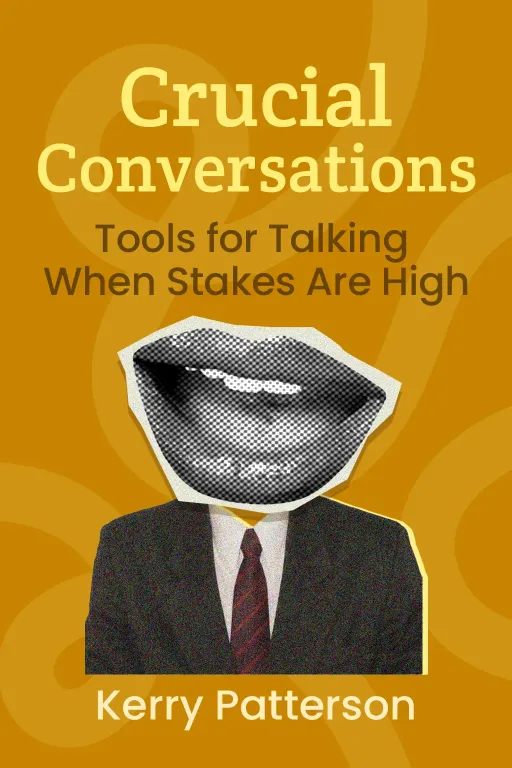
Nova: Absolutely. And that’s precisely what we're unraveling today as we dive into "The Art of Gentle Persuasion: Inspiring Action Through Connection." It’s a concept built on the bedrock of two truly insightful works: "Crucial Conversations" by Kerry Patterson, Joseph Grenny, Ron McMillan, and Al Switzler, and David Bohm’s groundbreaking work on "Dialogue."
Atlas: Oh, I know "Crucial Conversations" is incredibly popular, almost a bible for effective communication. But David Bohm? That name rings a bell, but I can’t quite place it in this context.
Nova: That’s because Bohm, a protégé of Albert Einstein, was actually a physicist! He brought a physicist's rigorous thinking to the messy, beautiful art of human communication. His work wasn't just about talking; it was about creating a shared mental space, a collective intelligence that could transcend individual assumptions. It’s a concept that’s been deeply influential in organizational development and conflict resolution. And "Crucial Conversations" emerged from decades of research into what truly makes individuals and organizations successful. The authors, all renowned social scientists and business consultants, distilled their findings into actionable principles, teaching millions how to navigate high-stakes discussions with grace rather than aggression. It became a perennial bestseller, celebrated for its practical, transformative advice.
Atlas: Wow. So we’re talking about a blend of scientific rigor and practical, battle-tested advice. That’s a compelling combination. It sounds like they're saying negotiation isn't just about the deal, it's about the entire ecosystem around it.
The Shift from Confrontation to Connection in Negotiation
SECTION
Nova: Exactly. The core of their combined wisdom is this: true persuasion moves beyond traditional 'winning' to building lasting relationships and inspiring commitment. It's about guiding, not forcing. Think about it: a talent whisperer, someone who sees potential and cultivates it, doesn't strong-arm. They inspire.
Atlas: Okay, but for a lot of our listeners in high-stakes environments, where quarterly targets loom large, the idea of 'gentle persuasion' might sound… well, a little soft. Isn’t there a time to just be assertive and get what you need?
Nova: That's a great point, and it’s a common misconception. Gentle persuasion isn't about being soft or passive; it's about being strategically empathetic. Let me give you a scenario. Imagine a leader, let's call her Sarah, who has a brilliant but restless software architect, Mark. Mark is considering leaving for a competitor, lured by a flashy title and a slight salary bump.
Atlas: Classic scenario. Most leaders would probably counter-offer, maybe bring in HR to highlight benefits, or even subtly remind him of his loyalty.
Nova: Precisely. And Sarah, initially, did just that. She laid out all the reasons he should stay: the project he’d be abandoning, the team he’d leave behind, the growth trajectory she he wanted. It became a tug-of-war, and the more she pulled, the more Mark resisted. The conversation ended with him saying he needed to "think about it," which usually means he’s already halfway out the door.
Atlas: That sounds rough, but it also sounds familiar. So, how does "gentle persuasion" change that script?
Nova: Sarah realized she was approaching it as a zero-sum game, trying to 'win' Mark over. She shifted her mindset. Instead of preparing a persuasive speech, she prepared to. She invited Mark for another conversation, but this time, she started by saying, "Mark, I sense there's more to this than just a new title. Can you help me understand what's truly driving this decision for you? What's missing here?"
Atlas: Oh, I see. She disarmed him by acknowledging his feelings and inviting him to share, rather than immediately going on the offensive.
Nova: Exactly. She focused on finding shared meaning. Mark, surprised by her genuine curiosity, started talking about his desire for more creative freedom, his frustration with a specific bureaucratic process, and a deep-seated need to mentor junior engineers, which he felt wasn't being utilized. The competitor's offer wasn't just about title; it was about the of those opportunities.
Atlas: That’s incredible. So, by understanding his underlying motivations, she moved beyond the surface-level demands. It's like instead of arguing about the price of a car, she found out he really needed a truck for his hobby.
Nova: That’s a perfect analogy! Sarah didn't just counter-offer; she co-created a solution. She proposed a new role that carved out dedicated time for Mark to lead a mentorship program, streamlined the process he found frustrating, and gave him oversight on a new, innovative project. It wasn't about winning an argument; it was about building a stronger, more committed relationship based on mutual understanding. Mark stayed, and his engagement soared.
Atlas: That’s a game-changer for anyone driven by impact and sustainable growth. It shows that the "win" isn't just about getting your way, it's about fostering an environment where everyone feels heard and valued enough to commit.
Cultivating Shared Meaning Through Crucial Conversations and Dialogue
SECTION
Nova: And that naturally leads us to the second key idea: once you realize it's not about winning, the next question is, 'How do you actually build that shared understanding?' This is where "Crucial Conversations" and Bohm’s "Dialogue" offer incredibly powerful frameworks.
Atlas: So you’re saying these aren't just feel-good theories, but actual tactical insights?
Nova: Absolutely. "Crucial Conversations" gives you tools for handling those high-stakes discussions with skill and grace. It teaches you how to speak persuasively listen effectively, fostering mutual respect even when opinions clash. The authors developed these insights from observing thousands of real-life interactions, identifying patterns that led to either breakthroughs or breakdowns. It’s like a playbook for navigating emotional minefields.
Atlas: Hold on, for leaders making quick decisions, does "skill and grace" mean slowing everything down? Because in a fast-paced environment, sometimes you just need to move forward.
Nova: That’s a very practical concern. But consider this: how much time is wasted fixing problems that arose from a poorly handled crucial conversation? The speed you gain by forcing a decision often costs you dearly in implementation, buy-in, and damaged relationships. "Crucial Conversations" teaches you to create psychological safety, to make it safe for others to speak their minds, which paradoxically progress because you get to the truth faster. It's about mastering your own emotional state first, before you even open your mouth.
Atlas: Okay, so it’s about efficiency through empathy. What about Bohm’s "Dialogue"? How does that fit in?
Nova: Bohm’s approach is a bit more philosophical, but profoundly practical. He explored how genuine dialogue can create shared understanding and new insights. It's about suspending assumptions and listening deeply to create collective intelligence. Think of "Crucial Conversations" as building a carefully engineered bridge over a chasm – structured, purposeful. Bohm’s "Dialogue" is more like exploring an uncharted territory together, hand-in-hand, realizing you might discover something entirely new that neither of you knew existed. You're not trying to cross to a pre-determined destination; you're discovering the destination together.
Atlas: That makes me wonder, how do you even begin to suspend your assumptions? Isn’t that just human nature, to come in with our viewpoints?
Nova: It is, and that’s the challenge and the power of it. Bohm suggested that in dialogue, we hold our assumptions lightly, offering them up for examination rather than clinging to them as absolute truths. It creates a space where collective intelligence can emerge, where the group's thinking becomes greater than the sum of its parts. It’s essential for talent development because it fosters an environment where ideas can truly flourish, unburdened by ego or pre-conceived notions.
Atlas: So, for a leader trying to build resilient, high-performing structures, this isn't just about getting people to agree; it's about getting them to co-create something better.
Nova: Exactly. It fundamentally solves the problem of confrontational negotiation by offering a path to collaborative influence, where everyone feels heard and valued. It leads to decisions that are not just accepted, but deeply owned. And the tiny step you can take right now? In your next challenging conversation, focus on finding shared meaning by asking open-ended questions and truly listening, rather than immediately stating your position. It's a small shift with monumental impact.
Synthesis & Takeaways
SECTION
Nova: What we've explored today is this profound realization: the most effective persuasion isn't about winning a battle; it's about building a bridge. It’s about cultivating connection, understanding underlying motivations, and co-creating solutions. It’s the ultimate strategy for sustainable growth and true impact, transforming individual interactions into cultural shifts.
Atlas: That’s actually really inspiring. It feels like a radical departure from the 'dog-eat-dog' mentality often associated with negotiation. But it also feels more… human.
Nova: It is. It’s about recognizing that every conversation is an opportunity to either reinforce old, adversarial patterns or to forge new, collaborative connections. The choice is always ours.
Atlas: So, if we truly embrace gentle persuasion, what does that mean for the future of leadership?
Nova: It means leadership becomes less about command and control, and more about cultivation and collaboration. It means building trust becomes the most valuable currency, and every challenge becomes an invitation for shared discovery. It means creating a legacy not just of achievement, but of profound human connection.
Atlas: That's a beautiful vision.
Nova: This is Aibrary. Congratulations on your growth!