

The Original Leader: Scaling Strategy and Self-Invention with Kehinde Olayiwola
Golden Hook & Introduction
SECTION
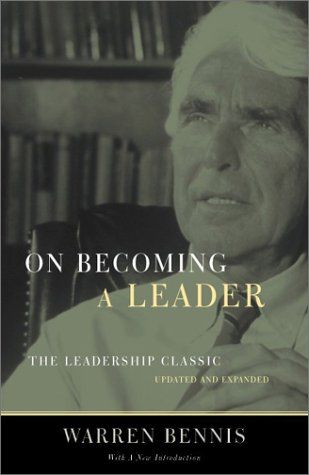
Nova: Are you managing your career, or are you truly leading it? In a world obsessed with optimization, metrics, and endless to-do lists, the legendary leadership pioneer Warren Bennis issued a radical challenge: most organizations are over-managed and under-led. Today, we are unpacking his masterpiece, On Becoming a Leader, to discover how to break free from the mold of the copy and become an original. We are going to tackle this brilliant book from two different angles. First, we will explore how to master your professional context instead of letting it master you, which is incredibly vital in fast-paced fields like technology. Then, we will dive into the crucible of self-invention, looking at the profound shift from managing systems to driving strategic, human-centered growth. I am Nova, and joining me today is Kehinde Olayiwola, a Business Analyst in tech who is deeply passionate about strategy, personal development, and helping businesses scale. Kehinde, it is so wonderful to have you here with us today.
Kehinde Olayiwola: Thank you so much, Nova. I am absolutely thrilled to be here. This book, On Becoming a Leader, has such a special place in my heart because it speaks directly to the journey so many of us are on. When you are starting out in your career, especially in a fast-moving field like tech, it is so easy to get caught up in just executing tasks and managing the immediate requirements in front of you. But Bennis challenges us to look up from our screens, to look beyond the immediate data, and to ask ourselves how we can actually shape the future of our organizations. It is about moving from a mindset of passive compliance to active, strategic contribution.
Nova: Oh, I love that so much. Moving from passive compliance to active contribution. That is the perfect way to frame this. And it fits so beautifully with your background as a Business Analyst, where you are constantly looking at systems and trying to find ways to make them better. We often think leadership is something that only people with fancy titles get to do, but Bennis argues that leadership is a choice and a process of self-actualization. It is about expressing yourself fully, not proving yourself. So, let us dive right into our first big topic, which is all about mastering the context.
Deep Dive into Core Topic 1
SECTION
Nova: Bennis writes that the first step to becoming a leader is to master the context, which basically means understanding the world around you so deeply that you are not defined or limited by it. He uses this wonderful, vivid example of the legendary television producer Norman Lear in the nineteen-seventies. Back then, American television was filled with very safe, highly sanitized sitcoms that completely ignored the massive social changes, political unrest, and cultural shifts happening in the real world. The context of television was to keep things comfortable and quiet. But Norman Lear refused to be mastered by that context. He saw the reality of what people were living through and decided to create shows like All in the Family, which brought real, messy, controversial human conversations right into people's living rooms. He completely redefined what television could be because he chose to master the context rather than submit to it.
Kehinde Olayiwola: That is such a powerful story, Nova, and it resonates so deeply with the work of a Business Analyst. In tech and consulting, we are constantly handed the context. We are given legacy systems, established workflows, and the classic phrase, well, this is just how we have always done things. If you just accept that context blindly, you end up designing solutions that merely patch up old, inefficient processes. You become a passive scribe. But if you want to help a business truly grow and scale, you have to be like Norman Lear. You have to step back, analyze the underlying assumptions, and ask, what is the actual problem we are trying to solve here? Is this current system serving our ultimate strategic goals, or are we just comfortable with the dysfunction?
Nova: Yes, exactly. It is about having the courage to ask those disruptive questions. Bennis talks about how leaders are characterized by a healthy skepticism and a refusal to accept things at face value. We have to be active learners, not passive vessels. And that requires a shift in how we process information. How do you see that playing out in your day-to-day work, Kehinde? How do you balance the need to analyze the data with the need to see the bigger strategic picture?
Kehinde Olayiwola: It really comes down to what Bennis calls having a guiding vision. As an analytical thinker, I love diving into the data, mapping out processes, and finding patterns. But data without vision is just noise. If I am looking at a bottleneck in a software development pipeline, for example, the analytical task is to identify where the delay is happening. But the leadership task is to understand how that delay impacts the team's morale, the customer's experience, and ultimately, the company's ability to innovate. You have to connect the micro-details to the macro-strategy. It is about asking, how does this small change help us scale? How does it empower the people using the system? That is how you master the context. You do not just report on the weather; you help navigate the ship through the storm.
Nova: That is a beautiful metaphor, Kehinde. Not just reporting on the weather, but helping navigate the ship. It reminds me of another point Bennis makes about how leaders learn. He says that leaders learn by doing, by taking risks, and by reflecting deeply on their experiences. They do not just accumulate facts; they integrate their learning into their very identity. And that brings us to a really interesting tension. In a highly analytical role, there can sometimes be a fear of making a mistake or proposing an idea that is not one hundred percent backed up by historical data. How do we overcome that fear to practice this kind of leadership?
Kehinde Olayiwola: I think it starts with reframing how we view failure and mistakes. Bennis talks about how leaders do not see mistakes as dead ends; they see them as invaluable lessons. In the tech world, we talk a lot about failing fast and iterating. But to actually do that, you need a high level of psychological safety and self-awareness. You have to be willing to say, I tried this strategic approach, it did not yield the results we expected, but here is what the data is telling us now, and here is how we pivot. It is about being curious rather than defensive. When you approach your work with a sense of wonder and a desire to learn, the fear of being wrong starts to take a backseat to the excitement of discovery.
Nova: That is so true. Curiosity is such a powerful antidote to fear. When we are curious, we are open to new possibilities, and we are much more likely to find those innovative, out-of-the-box solutions that businesses need to scale. We are not just trying to protect our egos; we are trying to serve the mission. And that leads us beautifully into our second major topic today, which is the profound difference between managing and leading, and the journey of self-invention.
Deep Dive into Core Topic 2
SECTION
Nova: Bennis has this famous list of contrasts between managers and leaders that I think is just brilliant. He writes: The manager administers; the leader innovates. The manager is a copy; the leader is an original. The manager focuses on systems and structure; the leader focuses on people. The manager relies on control; the leader inspires trust. The manager has a short-range view; the leader has a long-range perspective. Now, when we look at this list, it is easy to think that managing is bad and leading is good, but Bennis is quick to point out that both are necessary. However, he argues that our society is drowning in managers and starving for leaders. To move from being a copy to an original, Bennis says we must go through a process of self-invention. We have to understand who we are, what our values are, and what our unique voice is. He shares his own crucible experience from World War Two, where as a very young, inexperienced lieutenant, he was put in charge of a platoon of battle-hardened men. He quickly realized that trying to act like a stereotypical, tough-guy military commander did not work. It was not authentic to who he was, and the men saw right through it. He only began to lead effectively when he embraced his own natural style, focused on building trust, and showed genuine empathy and respect for his men. He had to invent himself as a leader, rather than copy someone else's blueprint.
Kehinde Olayiwola: That story of Bennis in the war is so moving, Nova. It highlights something that I think is often overlooked in professional development: leadership is an inside-out process. You cannot lead others effectively until you have done the hard work of leading yourself. For me, as someone with an INFJ personality type, authenticity and deep alignment with my values are absolutely essential. I cannot just show up to work and play a role. I need to feel that what I am doing has meaning, that it is helping people, and that it is contributing to a larger, positive purpose. When Bennis talks about the leader being an original, it means we have to stop trying to fit into the standard corporate mold of what we think a leader should look like. We do not have to be the loudest person in the room, or the most aggressive. We can lead through quiet observation, deep empathy, thoughtful analysis, and strategic clarity.
Nova: Oh, absolutely. There is so much power in quiet leadership. We need those deep, analytical, and empathetic voices so much, especially in industries like tech where things move so fast and can sometimes feel a bit cold or purely transactional. When you focus on people and trust, rather than just systems and control, you create an environment where people actually want to innovate and give their best. But let us talk about that transition from focusing on systems to focusing on people. As a Business Analyst, your job is literally to analyze systems and structures. How do you bring that human-centered, leadership focus into a role that is so technically oriented?
Kehinde Olayiwola: It is a fascinating challenge, Nova. When I am analyzing a business process, I have to remind myself that behind every step in a flowchart, behind every data point in a database, there is a human being. There is a user who might be feeling frustrated by a slow interface, or a team member who is stressed because a manual workaround is taking up hours of their day. If I only focus on the technical architecture, I am missing the most important part of the equation. True business growth and scaling do not happen just because you bought a new software tool; they happen because you empowered your people to work more effectively and collaboratively. So, when I design a solution, I try to involve the stakeholders early, listen to their pain points, and build trust. I want them to feel heard and valued. That is how you bridge the gap between systems and people. You use your analytical skills to serve human needs.
Nova: That is incredibly profound, Kehinde. Using analytical skills to serve human needs. That is exactly what Bennis means when he says the leader focuses on people. It is about seeing the human potential within the organization and designing systems that unlock that potential, rather than restrict it. And it requires us to go through our own crucibles, doesn't it? Those moments of challenge or self-doubt where we have to decide whether we are going to play it safe and remain a copy, or take a risk and step into our authentic self. Have you experienced a moment like that in your own career journey so far?
Kehinde Olayiwola: Yes, absolutely. I think one of the biggest crucibles for me was transitioning into the tech industry after graduating. Coming in with a Business Administration background, I initially felt a massive wave of imposter syndrome. I looked around at people who had years of deep technical experience, and I felt like a copy trying to mimic their language and their way of thinking. I thought I had to become a pure technical expert overnight to be respected. But then I realized that my unique value did not lie in trying to copy them. My value lay in my ability to connect the dots, to translate complex technical concepts into business strategy, to ask the big-picture questions, and to bring empathy and structure to the team. Once I embraced that, my confidence shifted. I stopped trying to prove myself and started trying to express my unique perspective to help the team succeed. It was a small but pivotal moment of self-invention.
Nova: That is beautiful, Kehinde. Thank you so much for sharing that. It takes so much courage to realize that your difference is actually your superpower. When you stopped trying to be a copy of a technical expert and started being an original strategic thinker, you unlocked your true leadership potential. And that is exactly what Warren Bennis wanted for all of us. He believed that everyone has the capacity to lead, if they are willing to go through the process of self-discovery and self-expression.
Synthesis & Takeaways
SECTION
Nova: We have covered some truly incredible ground today. We talked about mastering the context, looking at how leaders like Norman Lear rewrote the rules of their industry, and how we can do the same by challenging assumptions in our own workplaces. We also explored the vital difference between managing and leading, and how the journey of self-invention requires us to embrace our authentic values and unique voices, just like Warren Bennis did in his own life. As we start to wrap up our conversation, Kehinde, what would you say is the single most important takeaway from On Becoming a Leader for someone who is upskilling, passionate about strategy, and looking to make a real impact?
Kehinde Olayiwola: I think the most important takeaway is that leadership is not a destination or a title; it is a continuous process of becoming. It is about choosing, every single day, to be an active participant in your own growth and the growth of those around you. For anyone looking to scale their career or help businesses grow, my advice would be to start practicing micro-leadership right where you are. You do not need permission to lead. You can lead by asking a thoughtful question in a meeting, by taking the initiative to streamline a messy process, or by offering support to a colleague who is struggling. Master your immediate context, stay curious, and above all, stay true to your own authentic voice. The world does not need another copy of someone else; it needs the original version of you.
Nova: Oh, what a powerful and inspiring note to end on. The world does not need another copy; it needs the original version of you. Kehinde, thank you so much for sharing your brilliant insights, your analytical depth, and your wonderful warmth with us today. This has been an absolutely delightful conversation.
Kehinde Olayiwola: Thank you so much, Nova. It has been an absolute pleasure.
Nova: And to all our listeners out there, thank you for joining us on this journey through On Becoming a Leader. We hope this episode has sparked your curiosity and encouraged you to step into your own unique leadership potential. Until next time, keep learning, keep growing, and keep leading from where you are. We will talk to you soon.