

The Art of Self-Invention: Navigating Leadership and Entrepreneurship with Aboubacar Baldé
Golden Hook & Introduction
SECTION
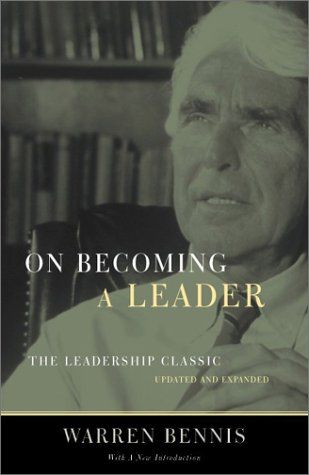
Nova: Why do so many brilliant businesses fail, not from a lack of resources, but from a surplus of management and a deficit of leadership? Today, we are unpacking Warren Bennis's masterpiece, On Becoming a Leader, to discover why the world doesn't just need people who do things right—it needs people who do the right things. Welcome to the podcast! I'm Nova, and today we have a very special guest with us. He's an alumnus of the Aspire Institute leaders program from Harvard University, a passionate entrepreneur, an avid traveler, and someone who lives and breathes leadership. Aboubacar Baldé, welcome to the show!
Aboubacar Baldé: Thank you so much, Nova! It is absolutely wonderful to be here with you today. You know, when we talk about leadership, especially in the context of entrepreneurship and global networks, Warren Bennis's work is like a compass. It doesn't just give you a map; it teaches you how to read the terrain of your own character. I'm really excited to dive into these ideas with you.
Nova: Oh, we are so thrilled to have your perspective, Aboubacar! Your background is just perfect for this. Today, we're going to tackle Bennis's insights from three key angles. First, we'll explore the critical distinction between managing and leading in a business context. Then, we'll discuss the concept of the crucible—how leaders are forged through self-knowledge and adversity. And finally, we'll focus on how to build trust and lead collaborative networks to drive real entrepreneurial success. Sound like a plan?
Aboubacar Baldé: That sounds like an incredible journey, Nova. Let's jump right in.
Deep Dive into Core Topic 1
SECTION
Nova: Let's start with one of the most famous distinctions Bennis makes in the book. He writes, "The manager administers; the leader innovates. The manager is a copy; the leader is an original. The manager focuses on systems and structure; the leader focuses on people." It's a powerful list, isn't it? We often see businesses getting bogged down in the administration side of things, forgetting that without innovation, they're just managing their own decline.
Aboubacar Baldé: Exactly, Nova. And as someone passionate about entrepreneurship, this distinction is absolutely vital. In the startup world, you often start as a manager because you have to build the systems, manage the cash flow, and set up the structures. But if you stay in that purely managerial mindset, you stifle the very spark that created the business in the first place. You become a copy of other successful companies instead of remaining an original.
Nova: That is so true! Bennis actually shares a wonderful case study about Edwin Land, the founder of Polaroid. Now, Land wasn't just a manager; he was a classic leader-innovator. He didn't just look at market research to see what people wanted; he had this deep, almost poetic vision of what photography could be. He famously said that his task was to see what was invisible to others and make it visible. When he was developing the instant camera, his financial advisors and managers told him it was impossible, that the market wasn't there, and that the technology was too expensive. But Land didn't just manage the existing market; he created a whole new one because he was focused on the horizon, not just the bottom line. He led his team into the unknown through the sheer force of his vision.
Aboubacar Baldé: I love that example of Edwin Land, Nova. It highlights a key analytical point: managers look at the constraints, while leaders look at the possibilities. Land's managers were doing their jobs—they were looking at the data, the systems, the immediate costs. That's what managers do, and it's necessary. But Land, as a leader, understood that true entrepreneurship requires a leap of faith based on a clear vision. He didn't ignore the constraints; he reframed them. In business, if we only focus on the 'how'—the systems and structures—we lose sight of the 'why' and the 'where.'
Nova: Yes! We lose the heart of the enterprise. And Bennis argues that this happens because our educational and corporate systems are designed to produce managers, not leaders. They train us to fit into existing slots rather than creating our own. Aboubacar, with your experience in the Aspire Institute and Harvard networks, how do you see this play out? How do we train ourselves to be originals rather than copies?
Aboubacar Baldé: That's a profound question, Nova. In my experience, especially working with diverse groups of young leaders globally, the shift from copy to original begins with self-awareness. The Aspire program, for instance, doesn't just teach you business frameworks; it forces you to look inward. Bennis talks about this extensively—he says that the process of becoming a leader is identical to the process of becoming a fully integrated human being. To be an original, you have to understand your own values, your own strengths, and your own unique perspective. You can't lead others if you haven't first learned to lead yourself.
Nova: Oh, I love that! "Becoming a fully integrated human being." It sounds so encouraging, doesn't it? It means leadership isn't some elite club with a secret handshake; it's a journey of self-discovery that anyone can embark on. But it's not always an easy journey, which brings us to our second core topic.
Deep Dive into Core Topic 2
SECTION
Nova: Bennis introduces this beautiful, yet challenging concept of the "crucible." He argues that leaders are not born; they are self-made, and they are often forged in the fires of adversity. A crucible is a transformative experience—a trial, a failure, a period of intense struggle—that forces you to question who you are and what you stand for.
Aboubacar Baldé: This concept of the crucible resonates so deeply with me, Nova. When you look at entrepreneurship, failure isn't just a possibility; it's practically a guarantee at some point. But Bennis's point is that the failure itself isn't what defines you; it's how you process it. Do you let it break you, or do you use it as a crucible to refine your vision and build resilience?
Nova: Exactly! And Bennis shares the incredible story of Clifton Wharton Jr. to illustrate this. Wharton was a pioneer—he was the first African American to lead a major US philanthropic foundation, the first to be chancellor of the State University of New York, and the first to be CEO of a Fortune 500 company, TIAA-CREF. Talk about a trailblazer! But his journey was filled with intense crucibles. When he became the president of Michigan State University in 1970, it was a time of massive student protests against the Vietnam War. The campus was a powder keg. He faced intense pressure from all sides—politicians wanting him to crack down on students, students demanding radical change, and trustees worried about the university's reputation.
Aboubacar Baldé: That sounds like an incredibly high-stakes environment. How did he navigate that without losing his way?
Nova: Well, Wharton didn't hide in his office, and he didn't just react blindly. He used that crisis as a crucible to clarify his core values. He realized his primary responsibility was to keep the channels of communication open and to protect the university as a place of free inquiry. He actually went out and talked to the protesters, listened to their grievances, and refused to use force unless absolutely necessary. By standing firm in his values of dialogue and empathy, he not only defused the tension but also earned the deep respect of both the students and the faculty. He emerged from that fire as a much stronger, more integrated leader.
Aboubacar Baldé: What a powerful story, Nova. Wharton's experience shows that a crucible forces you to strip away the superficial aspects of leadership—the title, the authority—and rely entirely on your character and values. As an analytical thinker, I see a direct connection here to how we handle setbacks in business and entrepreneurship. When a venture fails, or when a market shifts unexpectedly, that is a crucible. It's an invitation to examine our assumptions, to learn, and to pivot.
Nova: Yes! It's about learning from adversity rather than being defeated by it. And you know, Aboubacar, you love to travel. I imagine traveling the world and experiencing different cultures can also be a form of a crucible, albeit a more pleasant one! It steps you out of your comfort zone, doesn't it?
Aboubacar Baldé: Absolutely, Nova! Traveling is a wonderful way to challenge your own perspectives. When you immerse yourself in a completely different culture, your default ways of thinking and behaving are put to the test. You have to learn to listen more, to be comfortable with ambiguity, and to find common ground with people who see the world through a completely different lens. In a way, travel is a voluntary crucible that expands your empathy and your cognitive flexibility—both of which are essential for modern leadership.
Nova: I love that term, "voluntary crucible." It's like we are actively seeking out opportunities to grow and stretch our minds. And that capacity to connect with diverse people, to listen, and to build empathy is exactly what we need for our third topic: leading people and building networks.
Deep Dive into Core Topic 3
SECTION
Nova: Bennis writes that "leadership is a transaction between leaders and followers." It's not a one-way street. And the absolute key to this transaction, the lubrication that makes organizations work, is trust. But trust isn't just a warm, fuzzy feeling; Bennis breaks it down into four very specific ingredients: constancy, congruity, reliability, and integrity.
Aboubacar Baldé: Those four ingredients are so precise, Nova. Let's look at them. Constancy means staying the course, not shifting your values with every passing trend. Congruity means there is no gap between what you say and what you do. Reliability means being there when it counts. And integrity means honoring your commitments and being honest. In the business area, especially when managing teams, these aren't just moral virtues; they are operational necessities.
Nova: They really are! Think about a leader who lacks constancy—one day they want to go in one direction, the next day they change their mind. It creates chaos! The team gets whiplash. But when a leader exhibits those four qualities, it creates a safe psychological space where people feel empowered to take risks and innovate. Bennis talks about how great leaders don't just command people; they align them. They communicate a vision so clearly and passionately that others willingly adopt it as their own.
Aboubacar Baldé: This is where the power of networking and collaborative leadership comes into play, Nova. In today's globalized, entrepreneurial ecosystem, the old command-and-control model of leadership is dead. You can't just tell people what to do. Instead, we have to lead through influence, collaboration, and shared vision. When I think about my passion for networking, it's not about collecting business cards; it's about building a web of trust-based relationships. It's about connecting diverse talents to solve complex problems.
Nova: That is such an important distinction, Aboubacar! Networking as building a "web of trust-based relationships." That sounds so much more meaningful and effective. It's about creating a community of leaders, rather than just a hierarchy of followers.
Aboubacar Baldé: Exactly, Nova. When you build a network based on trust and shared values, you are essentially scaling your leadership. You are empowering others to lead within their own spheres of influence. In entrepreneurship, your network is your net worth, not just financially, but in terms of the collective intelligence and support you can draw upon. A leader's job is to cultivate that network, to nurture those connections, and to ensure that the flow of communication is open and honest.
Nova: It's like being the conductor of an orchestra, right? You're not playing all the instruments yourself, but you're helping everyone play in harmony to create something beautiful.
Aboubacar Baldé: That's a perfect metaphor, Nova. The conductor doesn't make a sound; their power comes from their ability to enable others to make beautiful music together. That is the essence of leading and managing people in business today.
Synthesis & Takeaways
SECTION
Nova: This has been such an incredibly rich conversation, Aboubacar! We've covered so much ground, from Bennis's distinction between managing and leading, to the transformative power of crucibles, and finally to the importance of trust and collaborative networks. If we were to synthesize all of this for our listeners, what would you say is the core message of On Becoming a Leader?
Aboubacar Baldé: I think the core message is that leadership is not a destination or a title; it is a continuous process of self-invention. It is about having the courage to step out of the mold, to face your crucibles with curiosity and resilience, and to build deep, trust-based connections with others. For anyone in the business area, whether you're a corporate manager or an aspiring entrepreneur, the challenge is to move beyond just doing things right, and start focusing on doing the right things—for your people, your organization, and the world.
Nova: That is beautifully put, Aboubacar. And to leave our audience with a practical call to action: what is one thing our listeners can do today to start their own journey of self-invention?
Aboubacar Baldé: I would challenge everyone listening to identify one "voluntary crucible" they can embrace this week. It could be having a difficult but necessary conversation, stepping into a new and unfamiliar environment, or simply taking time for deep, honest self-reflection. Ask yourself: "Am I acting as an original, or am I just copying what is expected of me?" Use that insight to guide your next step.
Nova: What a powerful challenge! Thank you so much, Aboubacar, for sharing your insights, your passion, and your journey with us today. It has been an absolute pleasure having you on the show.
Aboubacar Baldé: The pleasure was all mine, Nova. Thank you for having me, and keep up the amazing work of inspiring leaders everywhere!
Nova: And thank you to all our listeners! Remember, the world doesn't need more copies; it needs your original voice. Until next time, keep learning, keep growing, and keep leading!