

The Vitality Blueprint
Golden Hook & Introduction
SECTION
Nova: We’re often told happiness is an inside job. Find your center, meditate, manifest your best life. But what if true vitality, genuine flourishing, actually comes from looking?
Atlas: Outward? That's a fascinating twist, Nova. I think a lot of us are constantly told to "look within" for answers, especially about happiness. Are you saying we've been barking up the wrong tree?
Nova: Well, not entirely barking up the wrong tree, but perhaps only half of it. Today, we're diving into what we're calling "The Vitality Blueprint," an exploration of how our most fundamental human needs – for connection and sustenance – are intertwined paths to a truly vital existence.
Atlas: That sounds like a profound idea. I'm already thinking about how many self-help books focus on individual achievement. So, where do we begin unraveling this blueprint?
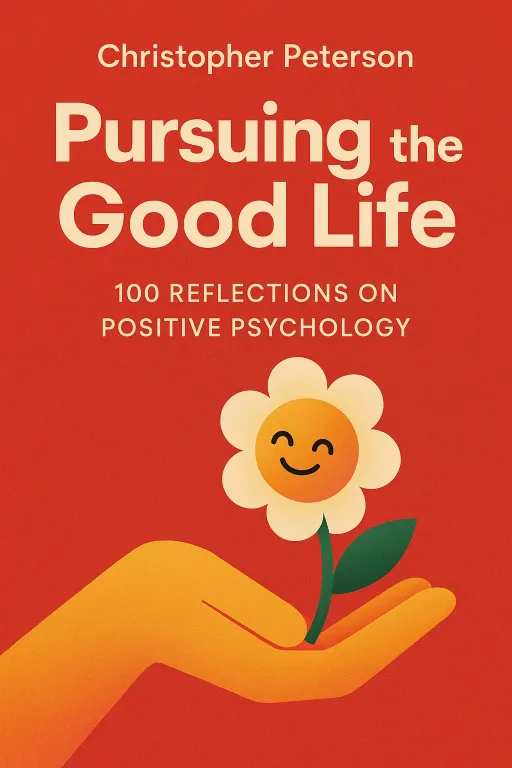
Nova: We start with a foundational pillar of modern positive psychology, and one of its architects. Christopher Peterson, a pioneering researcher in the field, argued that happiness is not a solo sport; it's deeply rooted in our relationships and our contribution to others. His insights, often distilled in works like "Pursuing the Good Life," really challenge the hyper-individualistic narrative of well-being.
Atlas: Oh, I like that – "happiness is not a solo sport." That immediately resonates with the idea that we’re social creatures. So, Peterson is basically saying that if you want to be happy, don't just focus on yourself?
Nova: Exactly. And to round out this blueprint, we'll connect that social vitality with something even more elemental: what we put into our bodies. We'll then look at Michael Pollan’s seminal work, "The Omnivore's Dilemma." Pollan, a brilliant investigative journalist, really shifted the conversation around food, making us confront the ecological and personal consequences of our dietary choices. His book sparked a nationwide conversation about where our food truly comes from and the hidden costs of our modern food system.
Atlas: That's a huge leap, from human connection to food systems. But I can see the potential. The idea that knowing your food's origin could be part of a "vitality blueprint" is intriguing. It makes me think about that simple prompt: "Reflect on your last meal: do you know where it came from?"
The Social Fabric of Well-being (Peterson)
SECTION
Nova: That question about your last meal actually perfectly bridges our two core topics. But let's first unpack Peterson's profound insight into the social fabric of well-being. He was one of the key figures in the positive psychology movement, which shifted focus from mental illness to what makes life worth living. His research, spanning decades, consistently pointed to one overwhelming factor for enduring happiness and a "good life."
Atlas: And that factor isn’t meditation retreats or self-optimization apps?
Nova: Not primarily, no. It’s other people. Peterson’s work suggests that our well-being is intrinsically linked to the quality of our relationships and our sense of contribution to something larger than ourselves. Think of it as the ultimate antidote to loneliness, which has become such an epidemic in our modern world.
Atlas: That makes perfect sense. I imagine a lot of our listeners, especially those who enjoy deep thinking, might grapple with the tension between personal ambition and the need for connection. How does Peterson elaborate on this idea of "contribution"?
Nova: He frames it beautifully. It’s not just about grand gestures or philanthropy, though those certainly count. Contribution can be as simple as being a good neighbor, mentoring someone, or even just offering a genuine smile to a stranger. It’s about feeling useful, feeling needed, and seeing the positive impact you have on another person or your community. One of his often-cited examples involves studies on longevity, which consistently show that people with strong social ties and a sense of purpose beyond themselves live longer, healthier, and happier lives.
Atlas: Wow, so it's not just a fuzzy, feel-good concept; it's actually linked to our physical longevity. That’s a powerful argument. But what about the practical side? In a world that often rewards individualism and competition, how do we actively cultivate this sense of contribution and stronger relationships? It can feel like an extra item on an already overwhelming to-do list.
Nova: That’s a brilliant point, Atlas. It can feel like another obligation. Peterson would argue it's not an obligation, but a fundamental human need, like sleep or food. He wasn't advocating for forced altruism, but for recognizing that when we genuinely connect and contribute, we're fulfilling a deep human drive that ultimately benefits us. It’s a virtuous cycle. Think of the innate satisfaction you get when you genuinely help someone, or when you feel truly seen and supported by a friend. It's a profound, intrinsic reward that no amount of individual achievement can replicate.
Atlas: I can definitely relate to that. There’s a certain emptiness that can come with achieving a personal goal if there’s no one to share it with, or if it doesn't feel like it contributed beyond yourself. So, the "good life" isn't about isolating yourself to achieve personal zen; it's about weaving yourself into the tapestry of human existence.
Nova: Precisely. It’s about recognizing that we are interdependent beings, and our flourishing is often a collective endeavor. It’s a powerful reframe for anyone who feels like they’re constantly striving for happiness alone.
The Conscious Consumption of Vitality (Pollan)
SECTION
Nova: And that naturally leads us to the second key idea we need to talk about, which, surprisingly, also revolves around connection: our connection to what we consume. From who we connect with, to what we consume, it's all part of this vitality blueprint. Michael Pollan, in "The Omnivore's Dilemma," takes us on a journey that's far more profound than just dietary advice.
Atlas: Okay, so from human relationships to our relationship with food. I'm curious how Pollan connects this to mental clarity and overall vitality beyond just, you know, eating healthy. We all know we eat healthy.
Nova: Right, but Pollan goes so much deeper than "eat your vegetables." His argument is that the modern industrial food system has created a profound disconnect between us and our food. We eat, often without knowing where it came from, how it was produced, or the true cost – both ecological and personal. He meticulously traces the origins of various meals, from a McDonald's hamburger to a gourmet organic dinner, exposing the often-shocking realities behind each bite.
Atlas: That sounds like an eye-opening, and potentially appetite-killing, journey. So, his point is that this lack of awareness, this disconnect, has consequences beyond just physical health?
Nova: Absolutely. Pollan argues that when we lose touch with the source of our food, we lose a vital connection to nature, to agriculture, and even to our own bodies. He highlights how the industrial food chain, designed for efficiency and profit, often compromises nutritional value, animal welfare, and environmental sustainability. This disconnect isn't just an abstract concept; it manifests in our physical health, our mental clarity, and even our spiritual well-being. Knowing where your food comes from, understanding its journey, is an act of awareness that can profoundly impact your entire system.
Atlas: So, it’s not just about avoiding processed foods; it’s about engaging with the story of your food. Like, if I'm eating a tomato, I should know if it was grown in a sterile hydroponic lab or picked from a sun-drenched field down the road?
Nova: Exactly. Take, for example, the story of corn in America, a central theme in "The Omnivore's Dilemma." Pollan reveals how corn isn't just a vegetable; it's the foundation of our industrial food system, showing up in everything from soda to feed for cattle that aren't naturally grass-fed. This intricate, often hidden, web has enormous implications for our health and the environment. By tracing these chains, Pollan makes the invisible visible, empowering us to make more conscious choices.
Atlas: That’s a powerful point. It’s like the food on our plate carries an entire history, and by ignoring it, we're missing out on a huge part of our own vitality. But for a curious learner, someone who's busy and just trying to make ends meet, how do you actually implement this? Is conscious eating only for those with the time and resources to shop at farmer's markets every week?
Nova: That's a critical question, and Pollan acknowledges the systemic challenges. His work isn't about shaming, but about raising awareness. Even small steps, like choosing one meal a week to cook from scratch with locally sourced ingredients, or simply asking questions at the grocery store, can begin to rebuild that connection. It’s about intentionality. It's about recognizing that what we eat isn't just fuel; it's a profound interaction with the world around us, and that interaction shapes our physical and mental clarity.
Synthesis & Takeaways
SECTION
Nova: So, when we look at Peterson’s emphasis on relational well-being and Pollan’s call for conscious consumption, what emerges is a powerful, interconnected "Vitality Blueprint." Both authors, in their distinct ways, are urging us to move beyond a narrow, isolated view of ourselves.
Atlas: It’s about seeing ourselves as part of a larger ecosystem, both social and natural. The idea that mental clarity isn’t just about brain exercises, but also about the quality of our connections and the integrity of our food, is truly illuminating.
Nova: Precisely. The "good life" isn't found in isolation, nor is optimal health achieved by ignoring the origins of what sustains us. True vitality, profound flourishing, comes from understanding and nurturing these fundamental connections. It's about intentionality in our relationships and awareness in our consumption.
Atlas: That really makes me reconsider that initial prompt: "Reflect on your last meal: do you know where it came from?" It's not just a casual question; it's an invitation to a deeper relationship with life itself. And knowing that our social connections are just as vital as our diet for longevity and happiness? That’s a message everyone needs to hear.
Nova: Indeed. It's a reminder that our personal vitality is inextricably linked to the vitality of our community and our planet. It’s about living in a way that acknowledges and honors those connections.
Atlas: What a powerful way to frame it. It changes how you approach every meal, every conversation.
Nova: It’s about building a life that nourishes not just ourselves, but the world around us.