Unlocking the Unseen: How Cognitive Biases Shape Learning Design
10 minGolden Hook & Introduction
SECTION
Nova: You know, Atlas, I was today years old when I truly grasped just how often my brain, despite my best intentions, leads me down the path of least resistance when it comes to learning. Not necessarily the path of resistance, but definitely the easiest.
Atlas: Oh, I love that. That hits home hard for anyone who's ever clicked "skip intro" on a tutorial or opted for the summary over the full report, only to realize later they missed something crucial. It's like our brains are constantly trying to optimize for effort, sometimes at the expense of actual growth.
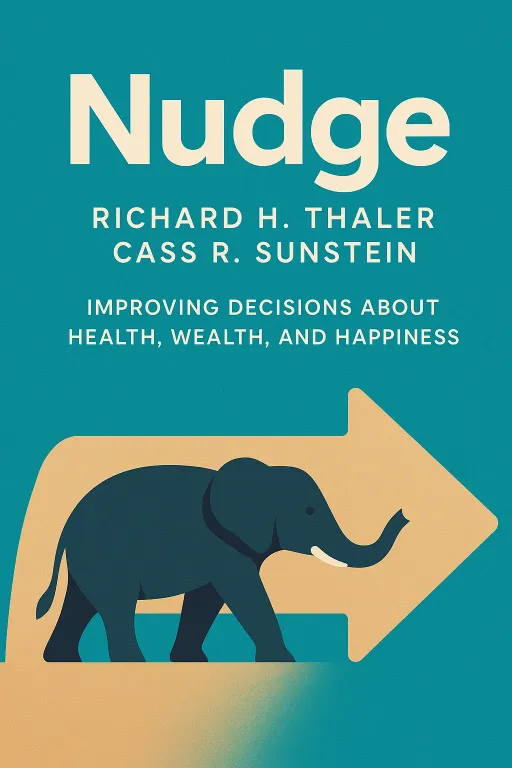
Nova: Exactly! And that's precisely what we're unraveling today. We’re diving deep into the hidden forces of cognitive biases and how they shape every learning choice we make. We're drawing insights from two seminal works: "Nudge: Improving Decisions About Health, Wealth, and Happiness" by Richard H. Thaler and Cass R. Sunstein, and "Predictably Irrational: The Hidden Forces That Shape Our Decisions" by Dan Ariely.
Atlas: Both incredible. And for those unfamiliar, Richard Thaler actually won the Nobel Memorial Prize in Economic Sciences for his work in behavioral economics, which "Nudge" is a cornerstone of. It really underscores the scientific rigor behind these seemingly simple ideas.
Nova: Absolutely. And Ariely, with his fascinating, often counter-intuitive experiments, truly brings the concept of predictable irrationality to life. He shows us that our "irrationality" isn't random; it's patterned, and therefore, understandable.
Atlas: Which is a huge relief, honestly. Because if it's predictable, we can work with it. The core of our podcast today is really an exploration of how understanding this 'predictably irrational' nature of human decision-making, particularly through the lens of cognitive biases, can fundamentally transform the design of personalized and impactful learning experiences, especially with the power of AI.
Nova: Today we'll dive deep into this from two perspectives. First, we'll explore the often-surprising ways our brains make 'irrational' learning choices, then we'll discuss how we can use subtle 'nudges' and AI to engineer learning environments that effortlessly guide students toward their goals.
The Hidden Hand: How Cognitive Biases Shape Learning Choices
SECTION
Nova: So, let's start with this cold, hard fact: even with the best intentions, learners often make choices that seem irrational or counterproductive to their own growth. We all want to learn, to grow, to master new skills, right? But then we find ourselves procrastinating, avoiding challenging material, or simply choosing the path of least resistance.
Atlas: But wait, for someone designing a learning platform or cultivating continuous improvement in their organization, isn't the goal to empower learners to make best choices? This idea of "predictably irrational" behavior feels a bit… unsettling. Are you saying people aren't capable of rational learning?
Nova: Not at all, Atlas. It's not about capability; it's about wiring. Dan Ariely, in "Predictably Irrational," reveals that human behavior is often predictably irrational because we rely on cognitive shortcuts, mental heuristics, and are heavily influenced by context. It’s less about being "dumb" and more about how our brains are built to conserve energy and react quickly.
Atlas: Okay, so what does "predictably irrational" actually look like in a learning context? Can you give me an example that really hits home for someone trying to cultivate growth in their teams, perhaps in an AI-powered literacy program?
Nova: Think about the "decoy effect," a classic from Ariely's work. Imagine a learning platform offering three subscription options for advanced literacy courses. Option A: Online-only for $100. Option B: Print-only for $200. And Option C: Online Print for $200.
Atlas: Huh. So Option B, the print-only, seems a bit… useless if Option C is the same price for both.
Nova: Exactly! Most people wouldn't choose Option B. But its presence dramatically increases the number of people who choose Option C, the most expensive bundle. Without the decoy, more people would likely choose the cheaper online-only option. In a learning context, this could translate to learners choosing a more comprehensive, but initially daunting, learning path because it's presented alongside a clearly inferior, similarly priced alternative that makes the comprehensive option seem like an undeniable "deal."
Atlas: That's fascinating. So the presence of a less optimal choice, one that no one would rationally pick, can actually steer people towards a seemingly better, but perhaps more challenging, option. It's not about the direct value, but the comparative value.
Nova: Precisely. Or consider the power of "free." Ariely has experiments showing people will choose a free, lower-value item over a slightly more valuable item that costs a penny. Applied to learning, offering a "free" introductory module, even if it's less robust than a paid one, can draw in far more learners than a slightly better, low-cost option. It taps into our deep-seated aversion to loss.
Atlas: So you're saying we're not as rational as we think, even when we to learn better? That feels a bit… unsettling for someone trying to design truly personalized experiences. If we're always falling for these cognitive traps, how can we ever truly optimize learning?
Nova: That's the key: it's not about fighting human nature, but understanding it. Recognizing these patterns allows you to anticipate potential pitfalls in learning design and proactively create environments that support optimal learning outcomes. It’s about building guardrails and gentle guidance, not a prison. This takes us naturally to the next crucial insight.
Engineering Choice: Nudges and Personalized Learning Architectures
SECTION
Nova: If we know we're predictably irrational, that's not a dead end. It's actually a starting point for truly brilliant design, especially when it comes to AI for literacy and personalized learning. This is where Thaler and Sunstein's concept of "nudges" becomes incredibly powerful.
Atlas: Okay, "nudging." I hear that term a lot. But how do you "nudge" someone in an AI-powered literacy program without it feeling like, well, manipulation? For leaders aiming for equitable outcomes and fostering a growth mindset, that's a fine line. We're not trying to trick people into learning.
Nova: Absolutely not. The beauty of a nudge is that it guides individuals towards better decisions. It's about structuring choices or feedback to encourage deeper engagement or more effective study habits. It's about subtle engineering of the "choice architecture."
Atlas: Can you give an example of a nudge in a learning context that feels ethical and genuinely beneficial? Like, how would this play out in an AI-driven system designed to personalize learning experiences?
Nova: Imagine an AI-powered literacy platform where learners often struggle to transition from easier practice exercises to more challenging, high-impact tasks. A common irrational behavior is to stick with what's comfortable. A nudge here could be setting a "default" option. For instance, when a learner completes a module, the system doesn't just offer "more practice." Instead, it defaults to "Continue to Next Challenge Level," with "Review Easier Content" as an alternative that requires an explicit click.
Atlas: That’s clever. So, instead of making the learner the challenge, the challenge is gently presented as the natural next step. It simplifies the decision-making process for the learner while guiding them towards a better outcome. It leverages our inertia.
Nova: Exactly. Another example could be how feedback is framed. Instead of simply saying "Incorrect answer," an AI could "nudge" by saying, "You're getting closer! This type of problem often trips up learners, but focusing on usually helps. Would you like a hint or to review that concept briefly?" This leverages our desire for progress and avoids demotivation.
Atlas: So, for someone cultivating continuous improvement in their organization, this isn't about forcing choices. It's about creating an environment where the 'right' choice feels natural, almost effortless. It’s like the AI becomes a subtle, wise mentor, rather than a demanding taskmaster. That's a powerful idea for AI in literacy, where engagement and persistence are crucial.
Nova: That's Nova's take, precisely. By understanding and subtly engineering choice architectures, we can create learning experiences that effortlessly guide students toward their goals. It’s about making the optimal path the path of least resistance, not through coercion, but through intelligent design.
Synthesis & Takeaways
SECTION
Nova: So, bringing it all together: the realization that human behavior is predictably irrational, as Ariely describes, isn't a problem to be solved with more willpower. It's a fundamental truth that, when understood, allows us to design learning environments with incredible precision. And this is where Thaler and Sunstein's "nudges" come into play – creating those subtle prompts and architectural adjustments that guide learners toward better outcomes.
Atlas: It really reframes the challenge, doesn't it? Instead of asking "How do we make learners more rational?", we ask "How do we design systems that work with, rather than against, our inherent irrationality?" For leaders driving innovation in AI for literacy, this shifts the focus from managing individual learner flaws to cultivating systemic solutions.
Nova: It's about recognizing the profound responsibility and opportunity designers have. Every default setting, every feedback message, every choice presented is a potential nudge. When harnessed ethically and intelligently, these nudges can transform learning journeys from frustrating struggles into seamless paths of growth.
Atlas: That's actually really inspiring. So, for our listeners who are navigating this complex world of AI and learning, what's one concrete thing they can do tomorrow to start applying this wisdom?
Nova: The tiny step is this: identify one common 'irrational' learning behavior in your target audience—perhaps a tendency to skip review, or always choose the easiest content—and brainstorm a subtle 'nudge' your AI or learning design could implement to guide them to a better outcome. It could be as simple as changing the default button, or rephrasing a prompt.
Atlas: That's a fantastic, actionable starting point for someone who wants to make a real impact. It’s about starting small but thinking big about how these subtle shifts can cultivate equitable and effective learning experiences.
Nova: Indeed. It's about unlocking the unseen forces that shape our learning, and then gently, wisely, guiding them towards growth.
Atlas: This is Aibrary. Congratulations on your growth!