The Illusion of Certainty: Why Even Smart Leaders Miss Obvious Truths
7 minGolden Hook & Introduction
SECTION
Nova: What if I told you that being smart, too confident in your own judgment, is actually your biggest strategic vulnerability?
Atlas: Whoa. That's a bold claim, Nova. Especially for our listeners, who are often in roles where decisive, confident judgment is practically a job requirement. Are you saying we should all just... second-guess ourselves constantly?
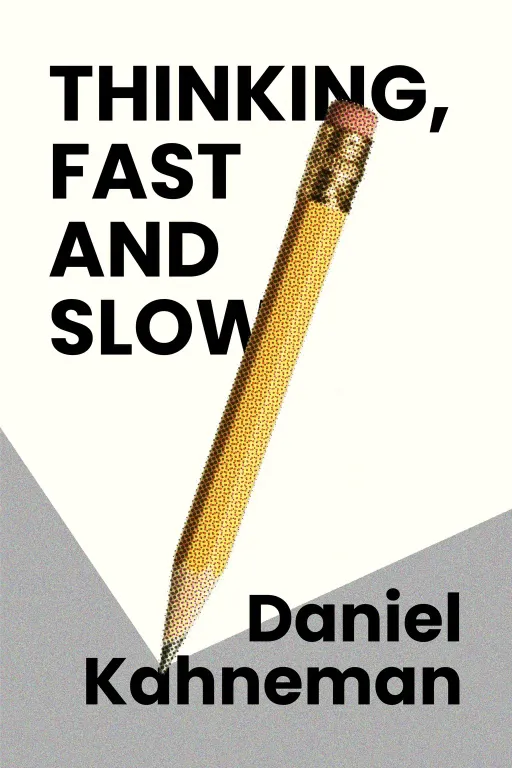
Nova: Not constantly, Atlas, but strategically. Today, we're dissecting a concept that challenges the very notion of 'smart leadership,' drawing heavily from the groundbreaking work of Nobel laureate Daniel Kahneman, particularly his seminal book,.
Atlas: And how that connects with the practical application of 'nudge theory' from Richard Thaler and Cass Sunstein, which also earned Thaler a Nobel. It really shows us how to actually something about these blind spots. So, we're talking about why even strategic minds can get it wrong, and how to fix it?
Nova: Exactly. We're going to expose the hidden biases that create our strategic blind spots, then discuss how designing for better decisions can help us navigate complex truths and achieve impactful outcomes. Let's start with the 'why' – our inherent blind spots.
The Blind Spot: System 1's Treacherous Efficiency
SECTION
Nova: Kahneman's work, which is incredibly highly rated and has been transformative across economics and psychology, reveals that our minds operate with two distinct systems. Imagine System 1 as your intuition: fast, automatic, emotional, and always running in the background. It's what tells you 2+2=4 or makes you jump when you hear a loud noise. It’s brilliant for survival and quick decisions.
Atlas: Okay, so System 1 sounds great for quick decisions, the kind you need to make on the fly in a fast-paced environment. But where does it become a 'blind spot' for a strategic orchestrator?
Nova: It becomes treacherous when it tackles complex problems that simple to System 1, but actually require deep thought. For example, System 1 loves a good story. It prefers coherence over completeness. So, if a leader is interviewing a charismatic candidate who tells a compelling, confident story, System 1 might jump to 'this person is perfect!' even if their qualifications don't fully align with the strategic needs. You're building a narrative, not necessarily evaluating objective data.
Atlas: But leaders are to trust their gut! Isn't that part of being decisive, especially when you have to make calls with imperfect information? It feels almost counter-intuitive to say your gut is leading you astray.
Nova: That's the illusion of certainty, Atlas. System 1 generates feelings of ease and confidence, even when it's making a mistake. Think about a company that's been consistently investing in a particular technology because it has 'always worked.' System 1 sees past success and equates it with future success, ignoring emerging market shifts or disruptive innovations. That's confirmation bias at play, amplified by overconfidence. Your intuitive judgment might be hiding a deeper, more complex truth—that the landscape has changed.
Atlas: So, an insightful navigator, someone who prides themselves on connecting the dots, could actually be connecting the dots because of these unconscious shortcuts? That's a tough pill to swallow for anyone leading an impactful team.
Nova: Absolutely. Another classic is the availability heuristic. If you've just seen a competitor launch a flashy new product that failed, your System 1 might make you overly cautious about new product launch, regardless of its merits. It biases your perception based on readily available, vivid examples, not a comprehensive analysis of all possibilities. These are the moments where quick, intuitive judgments can mask critical, underlying realities.
Designing for Better Decisions: The Power of Nudges and System 2 Engagement
SECTION
Atlas: So, if our brains are wired for these shortcuts, are we just doomed to make bad strategic calls? Or is there a way to 'nudge' ourselves out of these traps and engage that slower, more logical System 2?
Nova: That's where Thaler and Sunstein's work on 'nudges' becomes incredibly powerful. They show that instead of trying to rewire our brains or force people to 'think harder,' we can design environments – what they call 'choice architecture' – that gently steer System 1 towards better outcomes, or even prompt System 2 engagement. It's about making the desired choice the easiest or most obvious one, without removing freedom of choice.
Atlas: Okay, I get the concept. But give me an example of a 'nudge' that could genuinely impact a high-stakes business decision, not just getting people to eat more vegetables or save for retirement. For a strategic orchestrator, this needs to be tangible.
Nova: Think about strategic planning meetings. Often, the most confident voices dominate, and groupthink can set in. A 'nudge' could be requiring everyone to submit their initial strategic recommendations in writing any discussion begins. This simple act forces individuals to engage their System 2, articulate their reasoning, and prevents their ideas from being swayed by the initial, charismatic arguments of others. It levels the playing field and ensures a wider range of perspectives are genuinely considered.
Atlas: That's fascinating. So, instead of just saying 'everyone think critically,' you're modifying the to make critical thinking more likely. Or, another example: imagine a company trying to decide on a new market entry. Instead of just presenting the 'best case' scenario, a nudge could be mandating a 'pre-mortem' where everyone assumes the strategy and works backward to identify potential causes.
Nova: Exactly! That pre-mortem is a brilliant nudge. It explicitly forces System 2 to consider negative possibilities, counteracting System 1's optimism bias. Or consider data presentation. Instead of just showing positive trends, a nudge could be requiring all strategic dashboards to prominently display both best-case and worst-case scenarios, or even the historical error rate of previous predictions. That visual 'nudge' forces a more balanced assessment.
Atlas: So it's about designing the for better thinking, not just telling people to 'think harder.' That's a profound shift for how we approach problem-solving and how we structure our processes for impactful leadership. It moves beyond just individual willpower.
Synthesis & Takeaways
SECTION
Nova: Precisely. The core insight here is that our intuitive, fast-thinking System 1 is a powerful asset, but it comes with predictable liabilities. The illusion of certainty it creates can blind us to deeper truths. By understanding these cognitive shortcuts, we empower ourselves to proactively design 'nudges' – small, intelligent interventions – that either guide System 1 to better choices or, crucially, activate our slower, more rational System 2 when it truly matters.
Atlas: So, for leaders designing strategies, where might a quick, intuitive judgment be hiding a deeper, more complex truth they need to uncover? What's one actionable step they can take right now?
Nova: The next time you feel absolute certainty about a strategic decision, take a deliberate pause. Ask yourself: 'What System 1 shortcuts might be at play here? Am I just going with the familiar, or the most vivid example?' And then, introduce a small 'nudge' – perhaps bring in a structured devil's advocate, ask for a completely different data set, or simply take an extra 24 hours to consciously engage your System 2. It’s about building a 'speed bump' for your intuition when the stakes are high.
Atlas: That's a powerful way to build more robust strategies and ensure we're truly navigating, not just guessing. It’s about being effective, not just busy.
Nova: Exactly. It’s about making sure your strategic instincts are informed by profound insight, not just gut feeling.
Atlas: This is Aibrary. Congratulations on your growth!