The Hidden Hand: How Systems Shape Our Choices
8 minGolden Hook & Introduction
SECTION
Nova: You think you're making choices. You're not. At least, not as much as you believe. What if your 'free will' is actually being quietly orchestrated by an invisible hand? Today, we're pulling back the curtain on the subtle architects of your everyday decisions.
Atlas: Whoa, that's a bold statement, Nova! I mean, I like to think I'm the master of my own destiny, making perfectly rational decisions all the time. Are you telling me I'm just a puppet on strings I can't even see?
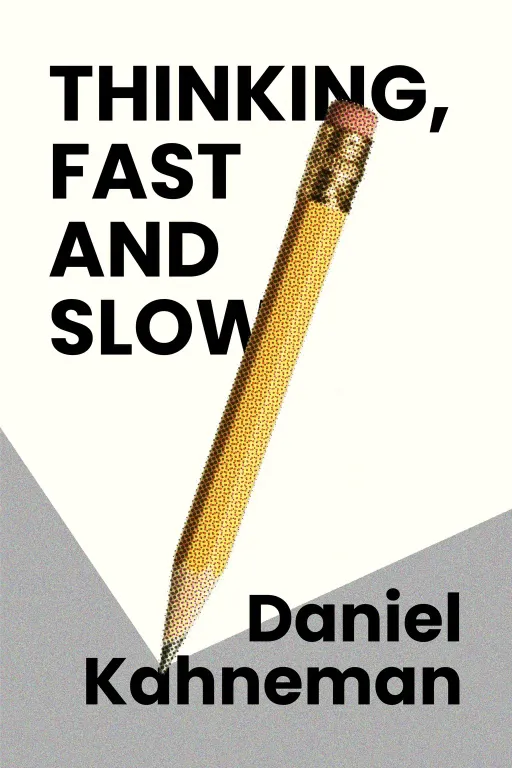
Nova: Not a puppet, Atlas, but perhaps a passenger in a beautifully designed vehicle you didn't realize had an autopilot. Our entire discussion today is really an exploration of the hidden forces that shape our choices, and how we can consciously design these forces to create better outcomes for ourselves and others. We're diving into the powerful ideas from "The Hidden Hand: How Systems Shape Our Choices," drawing heavily from two monumental works: Daniel Kahneman’s "Thinking, Fast and Slow" and Richard H. Thaler and Cass R. Sunstein’s "Nudge."
Atlas: Ah, Kahneman and Thaler – both Nobel laureates who fundamentally reshaped how we understand human behavior. For our listeners who are constantly building and iterating, whether it’s a product, a team, or even a personal routine, the idea that our choices aren't purely rational is both unsettling and incredibly powerful. It sounds like a secret weapon for impact.
Nova: Absolutely. Today we'll dive deep into this from two perspectives. First, we'll explore the invisible architects behind our everyday decisions, pulling back the curtain on how our environments subtly hack our minds. Then, we'll discuss the art and ethics of 'nudging' – designing those environments to foster better choices, both for ourselves and the systems we build.
The Invisible Architects of Our Choices: How Our Environments Hack Our Minds
SECTION
Nova: So, let's start with Kahneman. His work, particularly on System 1 and System 2 thinking, is foundational here. System 1 is our fast, intuitive, emotional brain – the one that makes snap judgments. System 2 is our slow, deliberate, logical brain. The catch is, our environment often primes System 1, leading us to quick decisions without much conscious thought.
Atlas: Okay, so you’re saying our brains are being 'hacked' without us even knowing it? That sounds a bit out there. What about individual responsibility? For someone trying to build robust systems, this sounds like a massive vulnerability.
Nova: It's less about hacking and more about influence. Think about walking into a supermarket. Do you consciously evaluate every single product on the shelf? Or do you grab the cereal box that’s at eye level, brightly colored, and perhaps has a familiar brand? That’s System 1 at work, guided by the 'choice architecture' of the store layout. The store isn't forcing you, but it's making certain choices easier, more appealing, or simply more visible.
Atlas: Oh, I've been there! Making a quick decision only to realize later I was led down a path. It's like a well-designed website guiding your clicks without you even noticing the breadcrumbs. So, what's a classic example of this environmental influence?
Nova: One of my favorites, illustrating how our attention can be so narrowly focused by our environment, is the "invisible gorilla" experiment. Participants are asked to count basketball passes, and a person in a gorilla suit walks right through the game, thumps their chest, and walks off. A significant number of people don't see the gorilla.
Atlas: Wait, seriously? They just don’t see it? That’s wild.
Nova: Exactly! Their environment – the instruction to count passes – focused their System 2 so intently that System 1 screened out the unexpected. It’s a powerful illustration that our perception isn't a passive recording; it's an active construction, heavily influenced by what our environment tells us to prioritize. This is the 'cold fact' we opened with: our environments subtly guide us, often without our knowing.
Atlas: Huh. That’s actually really profound. It makes me wonder about all the 'gorillas' I'm missing in my own work because I’m so focused on a specific metric or task. For our listeners building products and systems, this implies that the 'defaults' and 'framing' they create have an enormous, often unseen, power over user behavior.
Nova: Precisely. And that naturally leads us to the second key idea we need to talk about, which takes this understanding and asks: if our environments are already shaping our choices, what if we could design those environments for better outcomes?
Designing for Better Decisions: The Art and Ethics of the Nudge
SECTION
Nova: This is where Thaler and Sunstein's "Nudge" comes in. They take Kahneman's insights and show us how to apply them through what they call "choice architecture." A nudge is essentially any aspect of the choice environment that alters people's behavior in a predictable way without forbidding any options or significantly changing their economic incentives. It's about making the better choice easier.
Atlas: Okay, so this isn't about manipulation, but guidance. But where's the line? For someone building systems for people, how do you ensure you're 'nudging' responsibly and not just being paternalistic? I mean, who decides what a "better outcome" is?
Nova: That's a crucial question, Atlas, and it's one Thaler and Sunstein address head-on. Their definition of a nudge explicitly states it must preserve freedom of choice. It's about designing environments that make it to do the right thing, not to do the wrong thing. Think about the classic example of organ donation. In many countries, you have to actively opt-in to be an organ donor. Participation rates are low. But in countries where the default is "opt-out" – meaning you're a donor unless you actively choose not to be – participation skyrockets, often to over 90%.
Atlas: Wow, that’s an incredible difference for such a simple change. It’s like the difference between having to actively go to the gym versus having your workout clothes laid out for you. It removes a layer of friction. So, it's about making the healthy or beneficial choice the path of least resistance.
Nova: Exactly. Or consider a cafeteria where healthy food is placed at eye level and unhealthy options are tucked away. People still have the freedom to choose the unhealthy food, but the environment subtly nudges them towards healthier options. This approach is rooted in what they call "libertarian paternalism" – preserving freedom while guiding choices.
Atlas: That's actually really inspiring. So, for our listeners who are architects of systems, whether it's a product, a team, or even their own daily routine, what's a 'tiny step' they can take to apply this? How do they become conscious choice architects themselves?
Nova: The first step is to recognize that choice architecture is already all around us. Once you see it, you can start to intentionally design it. It's about changing the surrounding environment to make the better choice easier for yourself and for those interacting with your systems.
Synthesis & Takeaways
SECTION
Nova: So, to bring it all together: understanding how our brains process information allows us to consciously design environments that 'nudge' us towards better outcomes. It's about moving beyond the illusion of purely rational choice and embracing the power of intentional design to foster beneficial behaviors.
Atlas: That’s a powerful reframing. It means that as architects, psychologists, and scientists, we have a profound responsibility to understand these hidden hands, not just to build efficient systems, but to build systems that truly serve human well-being. It’s about being an architect of your own choices, and the choices of others, with intention. Not just building products, but building systems that empower.
Nova: Absolutely. And our tiny step for you this week is simple: Think of a daily decision you want to improve. How can you change its surrounding environment to make the better choice easier?
Atlas: What's one small 'nudge' you can introduce into your day, or into a system you oversee, that could lead to a monumental shift? We'd love to hear your thoughts.
Nova: This is Aibrary. Congratulations on your growth!