The Blind Spot: Why Your Decisions Need a Behavioral Edge
9 minGolden Hook & Introduction
SECTION
Nova: Atlas, quick game for you. Give me a five-word review of the last significant decision you made. Go!
Atlas: Oh, man. "Good intentions, messy, unexpected outcome."
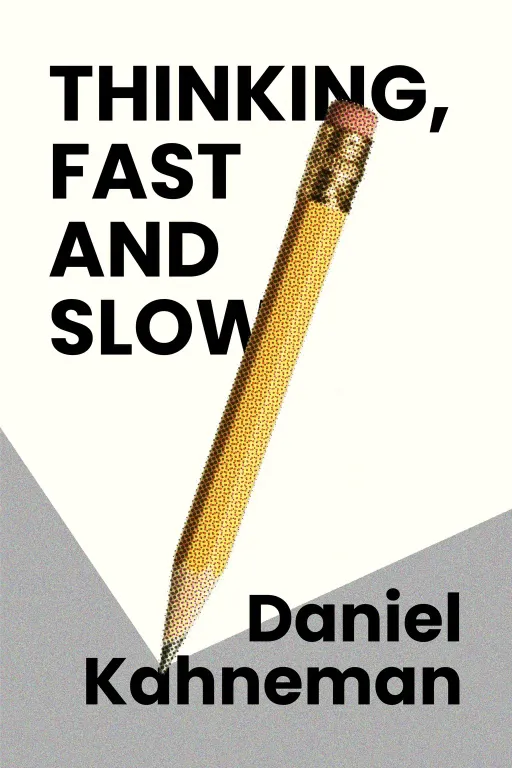
Nova: Ha! I feel that in my soul. And that, my friend, is exactly what we're tackling today – that universal experience of thinking you're making a sound choice, only for it to veer off course. We're talking about 'The Blind Spot: Why Your Decisions Need a Behavioral Edge.' It’s a concept that really brings together the groundbreaking work of two giants: Daniel Kahneman's "Thinking, Fast and Slow" and Richard Thaler and Cass Sunstein's "Nudge."
Atlas: I'm curious. As someone who tries to be very strategic, I often feel like I'm doing all the right things – gathering data, weighing pros and cons. But then sometimes, it just… doesn't land. You know? So this idea of a 'blind spot' feels incredibly relevant.
Nova: Absolutely. And what's truly remarkable is that Kahneman, a psychologist, actually won the Nobel Memorial Prize in Economic Sciences for his work, which was, at the time, a huge shake-up. It showed just how much our psychology impacts economics, and frankly, every decision we make. It’s not just about numbers; it’s about how our brains process those numbers, or don't.
Atlas: That's a fascinating twist. I always thought economics was all about rational actors. So, are you saying we’re not as rational as we think?
The Invisible Hand of Bias: Unmasking System 1 Thinking
SECTION
Nova: Precisely. Kahneman reveals we have two main systems of thinking. There's System 2: that slow, logical, deliberate part of your brain that you use for complex problem-solving, like doing your taxes or learning a new skill. It's effortful.
Atlas: Okay, that makes sense. That's the strategic thinker in me, right? The one that analyzes reports and plans for the future.
Nova: Exactly. But then there’s System 1. This is the fast, intuitive, automatic part. It’s what helps you recognize a friend's face, drive a car on a familiar road without thinking, or react instantly to a sudden noise. It’s incredibly efficient, but it’s also the source of our 'blind spots' – our cognitive biases.
Atlas: Wait, so the part of my brain that lets me quickly assess a situation or trust my gut in a meeting... that’s also the part that can lead me astray? That feels a bit counterintuitive.
Nova: It is! Let me give you a quick example. Have you ever been in a negotiation where someone throws out a really high or low number first? That’s often an anchor. Even if you know it’s an arbitrary figure, that number can unconsciously influence your counter-offer, pulling it closer to their initial, often extreme, suggestion. Your System 1 latches onto that 'anchor' even if your System 2 knows better.
Atlas: Oh, I've definitely felt that. It's like, you intellectually dismiss the number, but it still sets the tone in your head. So, it's not just about having the data; it's about how that initial piece of data gets processed by this fast, intuitive system.
Nova: Exactly. Or think about confirmation bias. As a leader, you might have a hypothesis about a new market strategy. System 1 loves efficiency, so it subtly directs your attention to information that your hypothesis, and you might unintentionally discount or ignore data that contradicts it. Even with all the reports in front of you, your brain is predisposed to see what it expects to see.
Atlas: That’s actually a bit unsettling. Especially for anyone in a high-stakes environment where you need to make objective decisions. How can I even these blind spots in my own decision-making, especially when things move fast and I rely on my intuition? It's not like I can just turn off System 1.
Nova: You can’t turn it off, but you can understand its tendencies. The key lies in recognizing that System 1 is always running in the background, offering its quick judgments. The goal isn't to eliminate intuition, but to know when to engage System 2 for a more deliberate, critical check. It’s about building in moments for reflection, for actively seeking disconfirming evidence, or for getting a fresh perspective. Because if you don't, your blind spots will keep dictating your outcomes.
Architecting Better Choices: The Power of Behavioral Nudges
SECTION
Nova: And that brings us to the exciting part, Atlas. If our minds have these inherent blind spots and biases, can we actually our way around them? Can we create environments that subtly guide us, or our teams, towards better decisions? This is where Thaler and Sunstein's radical idea of 'nudges' comes in.
Atlas: Nudges? Like a gentle push? I’m intrigued. You’re saying we can engineer better choices without resorting to mandates or heavy-handed rules?
Nova: Precisely! A nudge is any aspect of the choice architecture that alters people's behavior in a predictable way without forbidding any options or significantly changing their economic incentives. It’s about making the desired choice easier, more obvious, or the default. Think about something as simple as putting healthy food options at eye level in a cafeteria.
Atlas: Oh, I see! So it's not about saying "you eat salad," but making the salad the path of least resistance. That's fascinating. For someone focused on leadership development and guiding teams, this sounds incredibly powerful. How does this apply to, say, encouraging better team collaboration or fostering a learning culture?
Nova: Absolutely. Let's say you want to encourage a learning culture, which is crucial for adaptive learners. Instead of just telling everyone to 'learn more,' you could implement a 'default' nudge. For example, automatically enrolling new hires in a curated, short online course relevant to their role, with an easy opt-out if they truly don't want it. Or creating a dedicated 'learning hour' in the team calendar that people have to rather than.
Atlas: That's a clever way to reframe it. It shifts the burden of action. Instead of relying on individual willpower, you're designing the environment to support the desired behavior. I can see how that would resonate with leaders trying to implement new strategies or improve team performance. It’s like creating guardrails for good habits.
Nova: Exactly! Another classic example is organ donation. In many countries, you have to to be an organ donor, and rates are low. But in countries where the default is – meaning you're a donor unless you specifically say no – donation rates skyrocket. It’s the same underlying intention, but the choice architecture makes all the difference.
Atlas: Wow, that’s a huge impact from such a subtle change. But wait, this brings up an ethical question for me. Couldn't 'nudges' be manipulative? Where's the line between guiding people to better decisions and subtly controlling them? For a strategic thinker, that distinction is really important.
Nova: That’s a critical question, and Thaler and Sunstein address it directly. They argue that nudges should always be transparent and in the best interest of the people being nudged. It's about helping people make choices they would rationally prefer if they had perfect information and no biases. It's not about tricking them into doing something against their will or for someone else's selfish gain. It's about designing for human flourishing, not exploitation. It’s about making the decision landscape clearer, removing friction, and aligning choices with long-term well-being.
Synthesis & Takeaways
SECTION
Nova: So, bringing it all together, Atlas. We've talked about Kahneman exposing our inherent 'blind spots' through System 1 biases, and then Thaler and Sunstein offering a powerful toolkit with 'nudges' to help us navigate those blind spots. It truly is about understanding how our minds work, not just how we they worked.
Atlas: That feels like a profound shift. The real takeaway isn't just to be aware of our flaws, but to actively build systems and environments that support smarter choices. It's almost like creating guardrails for our own minds and the minds of our teams. It moves beyond just individual willpower to intelligent design.
Nova: Absolutely. For aspiring leaders and strategic thinkers, this knowledge empowers you to not just make better personal decisions, but to better decision-making processes for your teams and organizations. It's about being an architect of choice, not just a participant. It's about moving from reacting to biases to proactively shaping outcomes.
Atlas: So, for our listeners, what recent decision might have approached differently, now that you've glimpsed your own blind spots and considered how a 'nudge' might have helped? It makes me wonder about all those "good intentions, messy, unexpected outcomes" in my own past.
Nova: Exactly! Start small. Apply one new concept this week. Perhaps it's just pausing before a quick System 1 judgment, or thinking about how you could 'nudge' a team member towards a better habit. The journey to better decisions starts with understanding the invisible forces at play.
Atlas: This is Aibrary. Congratulations on your growth!