The Behavioral Blind Spot: Why Logic Alone Fails in Marketing.
8 minGolden Hook & Introduction
SECTION
Nova: Atlas, five words. Describe the biggest challenge marketers face today.
Atlas: Oh, easy: "Humans. Are. Not. Rational. Enough."
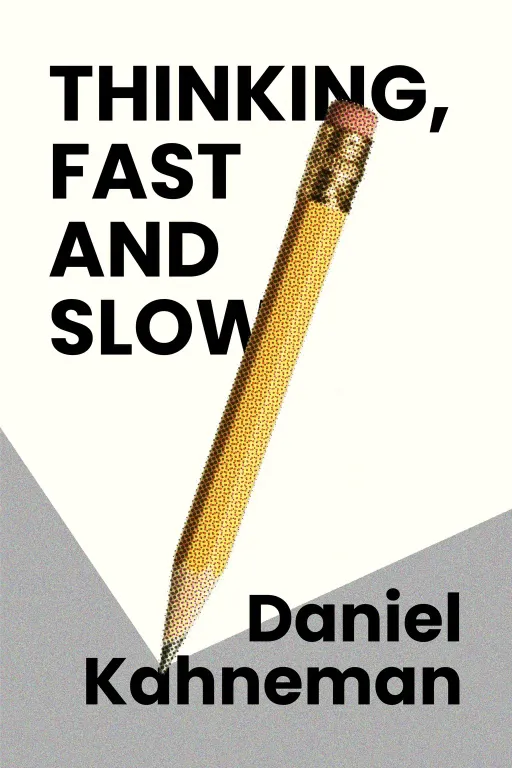
Nova: Bingo! You just nailed our topic with surprising precision. Because today, we are diving into the fascinating, often maddening, world of human decision-making and why logic alone often fails in marketing. We're drawing heavily from two seminal works: first, Daniel Kahneman's groundbreaking book,, and then by Richard H. Thaler and Cass R. Sunstein.
Atlas: Kahneman, right? The psychologist who won a Nobel in economics. I always found that wild. It's like a philosopher winning an engineering prize.
Nova: Exactly! It speaks volumes about how profoundly his research, often with his longtime collaborator Amos Tversky, reshaped our understanding of decision-making, moving it far beyond traditional economic models. It really hammered home that our brains aren't always the perfectly logical machines we imagine them to be, especially when it comes to choices that involve risk or uncertainty.
Atlas: So, we're talking about unmasking the hidden psychological levers that actually drive action, not just the ones we drive action.
Nova: Precisely. And that brings us to what we call "The Behavioral Blind Spot."
The Blind Spot: Unmasking Irrationality in Decision-Making
SECTION
Nova: So, let's talk about this 'blind spot'—why do even brilliant strategies, especially in marketing, sometimes just… falter? It's often because we assume purely rational behavior from our audience, a sort of ideal economic actor who weighs all pros and cons perfectly.
Atlas: Right, like if we just present the facts, the superior features, the logical benefits, then people will naturally choose our product or service. That's the playbook for so many strategic plans.
Nova: It is. But Kahneman's work, particularly, reveals that our minds operate with two systems. He calls them System 1 and System 2. System 2 is the slow, deliberate, logical thinker – the one that crunches numbers and analyzes data. System 1, though, is the fast, intuitive, emotional, almost automatic part of our brain. It's the one that makes snap judgments, often based on instinct or past experiences.
Atlas: So, when a company designs a marketing campaign purely for System 2, showing detailed specs and rational arguments, they're missing the part of the brain that often makes the actual purchasing decision?
Nova: Absolutely. Think about a public health campaign. Let's say it's designed to encourage healthier eating. The campaign might present a ton of data: statistics on heart disease, detailed nutritional breakdowns, long-term health benefits. It's all incredibly logical, System 2 stuff. But for many people, the decision to grab a sugary snack isn't a logical one; it's a System 1 response to stress, habit, or immediate gratification.
Atlas: I can see that. It's like, I I should do X, but I like doing Y. That's a huge disconnect. So the cause of failure is appealing only to logic, the process is a purely rational presentation, and the outcome is minimal behavior change, because System 1 is just... elsewhere.
Nova: Exactly. Or consider a classic example from investing. People often sell good stocks too early to lock in small gains, or hold onto losing stocks too long hoping they'll recover, even when all logical indicators scream "sell!" That's System 1's emotional biases, like loss aversion, overriding System 2's rational analysis.
Atlas: That's a bit unsettling, honestly. For someone building a strategic plan, where do they even begin to look for this blind spot? How do you anticipate irrationality when you're used to designing for reason?
Nova: That's the deep question, isn't it? It means critically examining every touchpoint where you expect a customer to make a choice. Are you assuming they'll read every word of your terms and conditions? Are you expecting them to meticulously compare every competitor's feature list? Chances are, System 1 is making a lot of those micro-decisions based on gut feel, convenience, or perceived social proof. And if you're not designing for that, you're leaving impact on the table.
The Shift: Harnessing System 1 and Choice Architecture
SECTION
Nova: And that naturally leads us to the solution, or at least a powerful shift in perspective. If logic alone fails, what work? This is where the insights from become incredibly powerful, building on Kahneman's work. It's about understanding and subtly influencing System 1.
Atlas: So it's not about forcing people, but guiding them? Like, making the default option the desired option?
Nova: Precisely. Thaler and Sunstein's concept of "choice architecture" demonstrates how subtle changes in the environment or the way options are presented can "nudge" people toward better decisions without restricting their freedom. It's about designing the context of choice.
Atlas: I’m curious, can you give an example? How does this actually play out in real life, especially if I'm thinking about crafting more effective strategies?
Nova: One of the most famous examples comes from organ donation. In some countries, citizens are automatically enrolled as organ donors unless they explicitly "opt out." In others, they have to "opt in" to become a donor. The difference in donation rates is astronomical. Countries with opt-out systems see vastly higher donor rates, not because their citizens are inherently more altruistic, but because the default option leverages System 1's inertia.
Atlas: Wow. So a simple change in the default setting radically changes behavior. That's leveraging System 1's tendency to go with the path of least resistance, bypassing System 2's effort to actively choose. That's brilliant and a little scary.
Nova: It is. It's not about making people do something they don't want to do, but making the desired choice the easiest, most frictionless one. Think about how Google structures its search results, or how streaming services suggest your next show. These are all subtle nudges.
Atlas: But wait, looking at this from a strategist's perspective, isn't there a fine line between nudging and outright manipulation? For a visionary trying to anticipate the future and build trust, how do these insights help them design strategies that truly resonate, not just logically convince, without being unethical?
Nova: That's the critical question, Atlas. The authors of are very clear: nudges should be transparent and easily avoidable. They should improve welfare and be consistent with what most people would choose if they were fully rational and informed. The goal isn't to trick people, but to help them overcome their own behavioral biases to make choices that are genuinely better for them. For a forward-thinking strategist, it's about anticipating these biases and designing choice environments that lead to mutual benefit.
Atlas: So, it's about ethical design. It’s about understanding that our customers aren't always going to do the "logical" thing, and instead of fighting that, we design our marketing funnels and user experiences to work human nature, not against it. That's a powerful shift for anyone trying to stay ahead of the curve.
Synthesis & Takeaways
SECTION
Nova: Absolutely. What Kahneman, Thaler, and Sunstein collectively show us is that true strategic insight comes not just from anticipating market trends or technological shifts, but from deeply understanding the human element. It's about anticipating irrationality and designing it, not against it. Kahneman's Nobel Prize wasn't just for psychology; it was for showing economists and strategists that human behavior is the ultimate variable, and it's often far from rational.
Atlas: Honestly, that sounds like my Monday mornings trying to get through my inbox. So, for our listeners who are aiming to be truly impactful and ahead of the curve, what's they can do this week to start applying this?
Nova: I'd say, take a look at your current marketing or product strategy. Where are you implicitly assuming your user will behave like a perfectly rational robot? Identify just one of those points. Then, ask yourself: how could I introduce a subtle "nudge" or reframe the choice to align better with System 1 thinking, making the desired action the easiest, most intuitive one?
Atlas: That's an excellent challenge. It's about questioning the fundamental assumptions we make about our users, and then designing with empathy for their actual, messy, human decision-making process.
Nova: Exactly. It's a powerful way to transform your impact from merely logical to genuinely resonant.
Atlas: That’s such a hopeful way to look at it. It offers a path to truly connect with people, not just their spreadsheets.
Nova: This is Aibrary. Congratulations on your growth!