How to Navigate Uncertainty Without Losing Your Way
10 minGolden Hook & Introduction
SECTION
Nova: Everyone says 'trust your gut,' right? It's that intuitive feeling, that instant knowing. But Atlas, what if your gut is actually a master illusionist, leading you straight into a mental maze precisely when you need clarity the most?
Atlas: Whoa, that's a bold claim, Nova! I’ve been told my whole life to listen to my intuition, especially when things feel uncertain. Are you telling me that's not always the best advice? That sounds almost… counterintuitive itself!
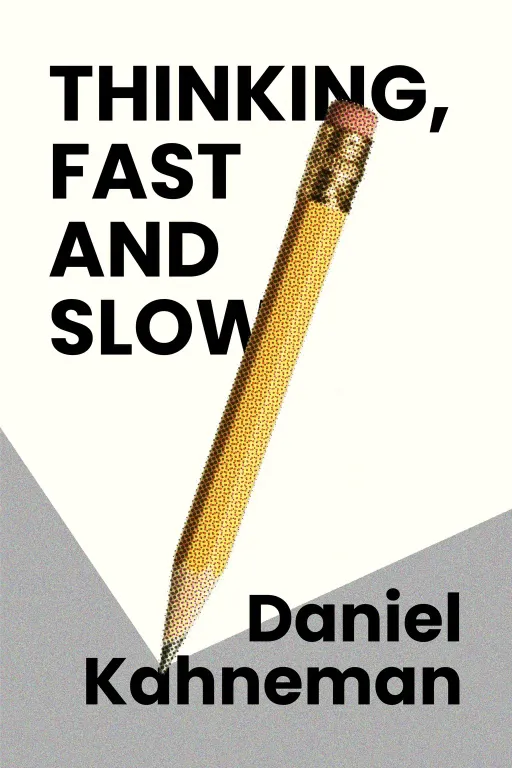
Nova: It absolutely can be, and that's the fascinating, sometimes frustrating, heart of our discussion today. When we're faced with uncertainty, our minds often play tricks on us. We default to quick thinking, which can be efficient, but also a source of poor decisions and unnecessary anxiety. Today, we're diving into some Nobel Prize-winning insights that unravel this. We're talking about the groundbreaking work in "Thinking, Fast and Slow" by Daniel Kahneman and "Nudge" by Richard H. Thaler and Cass R. Sunstein. Kahneman, a psychologist, actually won the Nobel Memorial Prize in Economic Sciences for proving that psychological insights are fundamental to understanding how we make decisions, even economic ones! Thaler, an economist, later won his own Nobel, building on Kahneman's foundations with the concept of nudges.
Atlas: Oh, I see. So these aren't just abstract theories; they're insights into how we make decisions, backed by serious science. So, our gut isn't always right? How does that work? How do we even begin to recognize when our minds are playing tricks?
The Default Trap: System 1 Thinking and Cognitive Biases
SECTION
Nova: Exactly! Kahneman introduces us to two systems of thought, and understanding them is the first step to making better choices. Think of it like this: System 1 is your brain's autopilot. It's fast, intuitive, emotional, and largely unconscious. It's what lets you recognize a friend's face instantly, or slam on the brakes without thinking. It's brilliant for survival and everyday tasks.
Atlas: Right, like driving a familiar route or knowing that 2+2=4 without having to really about it. It just….
Nova: Precisely. But then there's System 2. This is your brain's deliberate, analytical, slow-thinking mode. It's what you use to solve a complex math problem, or to consciously choose what to say in a difficult conversation. It requires effort, focus, and energy.
Atlas: So, you’re saying System 1 is efficient but prone to errors, especially when things are uncertain? And System 2 is more accurate but a lot more work?
Nova: You've got it. And the problem is, when we're facing uncertainty, our brains to default to System 1. It's trying to save energy. But that quick thinking can lead to cognitive biases, which are like systematic errors in our judgment. Let me give you a classic example, often called the 'Linda Problem.'
Atlas: Oh, I’ve heard whispers of this one! Lay it on me.
Nova: Imagine Linda. She's 31 years old, single, outspoken, and very bright. She majored in philosophy. As a student, she was deeply concerned with issues of discrimination and social justice, and she also participated in anti-nuclear demonstrations. Now, which of these two statements is more probable? Is Linda a bank teller, or is Linda a bank teller and active in the feminist movement?
Atlas: Hmm. Okay, so Linda, outspoken, social justice, anti-nuclear… my gut immediately goes to the second one. She’s a bank teller a feminist. That just her profile.
Nova: And that's your System 1 at work! It's creating a compelling, coherent story that feels right. But here’s the logical truth: it is statistically impossible for "Linda is a bank teller and active in the feminist movement" to be more probable than simply "Linda is a bank teller." Why? Because the set of "bank tellers and feminists" is a of "bank tellers." Every single bank teller who is also a feminist is, by definition, a bank teller. So the probability of being a bank teller must be higher or equal.
Atlas: Hold on. That's… that's completely messing with my head! My initial reaction felt so strong, so. But intellectually, I can see the logic. That’s incredible. I’ve definitely fallen for that kind of mental trap in my own life, making decisions based on what 'feels right' rather than what's logically sound. So, how do we even begin to recognize when our minds are playing tricks like that, especially when we're trying to figure out what's next in an uncertain situation?
Nova: That's the million-dollar question, isn't it? Recognizing these mental shortcuts is the first step. When facing uncertainty, our System 1 loves to jump to conclusions, fill in gaps with assumptions, and seek out information that confirms what it already suspects. This is confirmation bias, and it can lead us down rabbit holes of anxiety or misinformed decisions. But the good news is, once you understand these systems, you can start to engage System 2 more intentionally.
Architecting Your Environment for Better Decisions: Nudges and System 2 Engagement
SECTION
Atlas: Okay, so our brains can be tricky. We've just seen how System 1 can lead us astray, making us think we know things we don't, especially when the future feels blurry. But how do we that? What's the practical step beyond just knowing about System 1 and System 2? For our listeners who are trying to make sense of an uncertain career path, or a big life decision, this knowledge is powerful, but they need to know what to with it.
Nova: That's where the insights from "Nudge" come in, and it's incredibly empowering. Thaler and Sunstein show us that while our brains have these biases, we're not helpless. We can actually our environment, our choices, and even our internal thought processes to "nudge" ourselves towards better, more deliberate System 2 thinking. It's about becoming the architect of your own cognitive landscape.
Atlas: So, it's not about brute-force willpower, it's about setting up the game so you're more likely to win? That’s empowering! Can you give an example of how that works in practice?
Nova: Absolutely. Think about something as simple as organ donation. In some countries, you have to actively to be an organ donor. The default is 'no.' In others, you're automatically a donor unless you actively. The default is 'yes.' The difference in donation rates between these two systems is enormous, even though the choice is technically the same.
Atlas: Wow. That's a huge impact for such a small change. The default setting completely changes behavior.
Nova: Exactly. That's a classic nudge. It doesn't restrict your choice, but it leverages our System 1 tendency to stick with the path of least resistance. For navigating uncertainty, we can apply this principle ourselves. For instance, if you're facing a big, uncertain decision – say, whether to take a new job or stay put – your System 1 might jump to fear or excitement. A "nudge" you could set up for yourself might be to establish a specific "decision-making ritual."
Atlas: A ritual? Like what?
Nova: It could be something as simple as blocking out 30 minutes in your calendar, physically going to a quiet space, and then, before you even start analyzing, writing down three pros and three cons for each option. The act of scheduling, the change of environment, and the structured writing your System 2 to engage. It's a subtle environmental design that encourages deliberate thought and pulls you away from quick, potentially biased reactions.
Atlas: That makes perfect sense. So, instead of just letting my thoughts swirl in an uncertain space, I'm creating a structured environment that encourages me to slow down and really process. That sounds like a powerful tool for someone trying to make sense of a chaotic situation. It's about consciously asking myself, "How can I set up this choice so my best thinking emerges?"
Nova: Precisely. It's about recognizing that your mind defaults to quick thinking, and then designing your world to encourage more rational, thoughtful actions. It's empowering because it places the agency back with you. You're not just a victim of your biases; you're actively shaping how you respond to uncertainty.
Synthesis & Takeaways
SECTION
Nova: So, what we've discovered today is this powerful interplay: understanding the two systems of thought, especially how our quick System 1 can lead us astray, and then actively using that knowledge to design environments and processes that 'nudge' us towards more deliberate System 2 thinking. It's about becoming more intentional in a world that often feels chaotic and uncertain.
Atlas: It’s a profound shift, really. It moves us from passively being influenced by our mental shortcuts to actively, consciously shaping our decision-making process. For anyone who feels buffeted by uncertainty, this offers a real path to regaining control and clarity. So, for our listeners, what's one tiny, practical step they can take today to start being their own 'nudge' architect, especially when facing a decision that feels murky?
Nova: That's a great question, Atlas. Next time you face a decision, big or small, especially one that feels uncertain, consciously ask yourself: "Am I using System 1 or System 2 thinking here?" And then, just take a deep breath before you answer. That pause, that moment of mindful observation, is itself a powerful nudge towards engaging your more deliberate thought process. It’s an embrace of self-discovery, a tiny step on that journey of improving your inner peace and making more effective choices.
Atlas: I love that. It’s a simple, yet incredibly powerful way to practice mindful observation daily, to notice your thoughts, notice your feelings, and then choose how to respond, rather than just react. This isn't just about making better decisions; it's about cultivating a deeper understanding of ourselves.
Nova: Absolutely. It's about understanding that navigating uncertainty isn't about eliminating it, but about mastering your internal world. It's about embracing the journey of self-discovery, because that's where true resilience and clarity are found.
Nova: This is Aibrary. Congratulations on your growth!