Beyond the Pixel: Why Understanding Human Nature Makes Your UI Irresistible
9 minGolden Hook & Introduction
SECTION
Nova: What if all your meticulously crafted, perfectly logical UI designs are fundamentally flawed, not because of your code, but because of the squishy, unpredictable thing on the other side of the screen: the human brain?
Atlas: Oh, Nova, you're hitting me right where it hurts! Every designer has had that moment, right? You build something elegant, intuitive, following all the best practices, and then users just… don't. They click the wrong button, they miss the obvious prompt, they just behave in ways that defy all logic. It's like building a perfect maze, and then the mouse just walks around it.
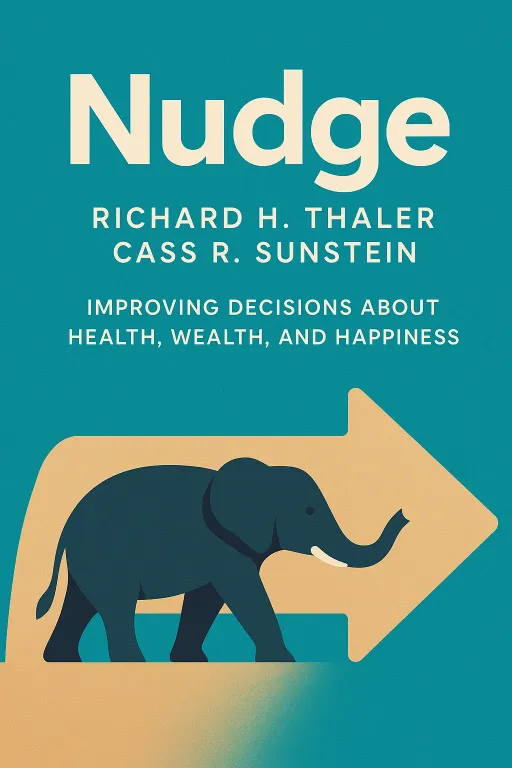
Nova: Exactly! And today, we're diving into the groundbreaking work of Nobel laureate Richard H. Thaler and Cass R. Sunstein, with their seminal book,. Thaler, a pioneer in behavioral economics, brought this concept to the forefront, essentially proving that humans are not the rational actors economists once assumed. His work revealed that our decisions are far more influenced by context and subtle cues than pure reason.
Atlas: That makes perfect sense, but it also feels incredibly frustrating for someone who thrives on building order. How do you design for something that's inherently illogical? It's almost counter-intuitive for a UI designer, whose job is literally to create a logical, predictable experience.
Nova: Well, that's the "cold fact" that Thaler and Sunstein lay bare. You craft logical and beautiful interfaces, yet users often don't behave logically. People are influenced by subtle cues and biases that we, as designers, often overlook. Ignoring these human quirks means your brilliant UI might not be used as intended. It's a fundamental disconnect.
The Illogical User: Why UI Designers Must Understand Human Nature
SECTION
Atlas: So, when we spend hours perfecting a user flow, ensuring every step is clear and rational, we're essentially building a beautiful house for a ghost that doesn't follow blueprints. What are these "human quirks" we're actually talking about? Beyond just being "illogical," what's going on in our users' heads?
Nova: It's fascinating, Atlas. It's not about users being unintelligent; it's about how our brains are wired. We're wired for shortcuts, for relying on defaults, for making choices based on minimal effort. One of the most powerful examples of this is what's called the "default effect." People tend to stick with pre-selected options, even if a quick glance would tell them another option might be better for them. The effort of changing the default is often enough to prevent action.
Atlas: I've definitely seen that in forms. If a checkbox is already ticked, people rarely untick it. If it's unticked, they rarely tick it. It's almost like a passive agreement.
Nova: Absolutely. Think about organ donation systems. This is a powerful, real-world illustration from Thaler and Sunstein's work. In countries where you have to actively "opt-in" to be an organ donor – meaning you have to fill out a form, sign something, make a conscious effort – donation rates are incredibly low, often in the single digits.
Atlas: Right, because it requires effort and forethought.
Nova: Exactly. Now, compare that to countries where the system is "opt-out." You are automatically registered as an organ donor unless you actively state that you don't want to be. In these countries, donation rates skyrocket, often into the high 90s.
Atlas: Wow, that's incredible. So, it's not that people in "opt-in" countries are inherently less generous or less willing to save lives. It's literally just the friction of having to make a choice, having to fill out a form, versus the ease of doing nothing. The default is that powerful.
Nova: It is. The cause is cognitive inertia and the perceived effort of making a change. The process is simply changing a single default setting in a bureaucratic system. But the outcome? Vastly different societal impact, saving countless lives. It's a profound demonstration that our choices are heavily influenced by the context in which they are presented.
Atlas: That makes me wonder, how many "logical" UI decisions are actually fighting against this inherent human tendency for the path of least resistance or cognitive laziness? We spend so much energy trying to make things crystal clear, when perhaps we should be spending more energy making the choice the choice by default. This really challenges my INTP brain's love for pure, unadulterated logic. It's like the beauty of a perfect pattern, but humans are always just slightly off-center.
Nova: That's a perfect way to put it. People often choose what is easiest, not necessarily what is best or most logical for them. And that's where the concept of the "nudge" comes in, not as a way to trick, but as a way to thoughtfully design for that human reality.
Nudge Theory: Guiding User Behavior Ethically and Effectively
SECTION
Nova: And that naturally leads us to the solution: the "Nudge." Thaler and Sunstein aren't just pointing out problems; they're offering a powerful framework. A nudge, they say, is any aspect of the choice architecture that alters people's behavior in a predictable way without forbidding any options or significantly changing their economic incentives. It's about designing the environment, not restricting freedom.
Atlas: Okay, so it's not about forcing people, it's about making the "right" choice feel like the natural, effortless one. It’s like a gentle hand on the back, rather than a push. But how do we, as designers, apply that without feeling like we're manipulating users? Where's the line between guiding and tricking, especially when we're talking about subtle cues? My desire for logical beauty also comes with a strong sense of ethical design.
Nova: That's a crucial distinction, Atlas. Nudges, when applied ethically, preserve freedom of choice. You can always choose the alternative, but the nudge makes one path more appealing or obvious. Thaler and Sunstein introduce the idea of "choice architects"—anyone who designs the context in which people make decisions. And we, as UI designers, are absolutely choice architects. Think about the famous "fly in the urinal" example.
Atlas: The fly in the urinal? You have my full attention.
Nova: This comes from Schiphol Airport in Amsterdam. They had a problem with "spillage" in the men's restrooms, which meant higher cleaning costs. Instead of putting up signs telling people to aim better, or redesigning the urinals entirely, they etched a tiny image of a fly into the porcelain, right near the drain.
Atlas: And… what happened? Did people suddenly become entomologists in the bathroom?
Nova: Not quite! This simple, subtle visual cue, this tiny "nudge," dramatically reduced spillage by 80%. It's a prime example of how a small, almost playful design intervention can leverage an instinctive human tendency – in this case, aiming at a target – to guide behavior without any explicit instructions or loss of freedom. You could still aim anywhere you wanted, but the fly made aiming more engaging.
Atlas: That’s a perfect example! It's so subtle, almost artistic in its effectiveness, and it leverages a primal instinct. This feels like connecting logic and sensory input in a really elegant way. It's less about telling people what to do, and more about designing the environment so the desired action good or natural. It’s a beauty in its efficiency, I suppose.
Nova: Exactly! Good design anticipates human behavior, rather than fighting against it. In a UI context, this could be something as simple as how you present options. Instead of just listing three subscription tiers, you might visually highlight the "Standard" option as the default, perhaps with a slightly larger button or a subtle glow, because you know it's the best value for most users. Or pre-selecting privacy settings that are generally beneficial, allowing users to opt-out if they wish. These are all subtle environmental cues that guide without forcing.
Atlas: So, it's about creating an environment where the easiest path is also the most beneficial one, making our designs feel effortless, almost like they're reading the user's mind, but in a helpful way. That's a powerful shift in perspective. It moves us from just building functional interfaces to building truly intuitive, almost empathetic ones.
Synthesis & Takeaways
SECTION
Nova: So, when we bring these ideas together, 'Beyond the Pixel' isn't just a catchy title; it's a philosophy. It's recognizing that the true power of UI design comes when we move beyond perfect grids and beautiful fonts, and truly understand the messy, wonderful, and sometimes irrational human at the other end. It’s about being a conscious choice architect.
Atlas: Absolutely. It’s about building interfaces that don’t just look good, but right to use, because they work our human nature, not against it. For our listeners who are UI designers, I imagine a lot of them are now looking at their screens a little differently, wondering where their own "flies in the urinal" might be. This isn't about simplifying things; it's about enriching the user experience by building a deeper understanding of human behavior into the very fabric of our designs.
Nova: Exactly. The tiny step for you this week is to identify one key decision point in your UI where users often hesitate or make suboptimal choices. How could you apply a "nudge"—a small, subtle change—to guide them more effectively towards a better outcome? Think about those defaults, those visual cues, those subtle prompts. It could be as simple as reordering options or changing the default selection.
Atlas: And share your insights with us! We'd love to hear how you're using these principles to craft more irresistible UIs. This is a journey of exploration and connection, finding that harmony between logic and human intuition.
Nova: Remember, the most irresistible UIs aren't just logical; they're human. This is Aibrary. Congratulations on your growth!