

Unpacking the Mind's Quirks: Navigating Cognitive Biases
Golden Hook & Introduction
SECTION
Nova: Atlas, if I asked you to quickly judge someone based on, say, their outfit or their job title, how often would you say your first impression is… well, let's just say, not entirely accurate?
Atlas: Oh, Nova, I’d have to admit, probably more often than I’d like to believe. It’s like my brain just leaps to conclusions, sometimes before I’ve even finished the thought. It’s a bit humbling, actually.
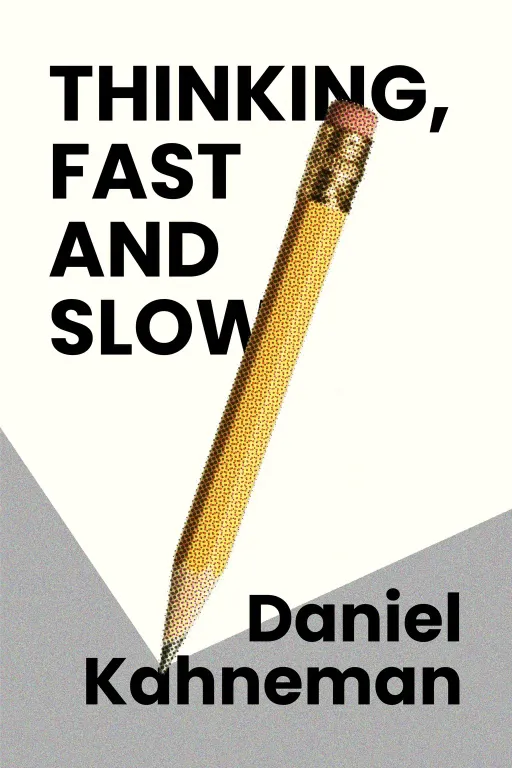
Nova: It is, isn't it? That lightning-fast leap is exactly what we're dissecting today. We’re diving into the fascinating, and sometimes frustrating, world of cognitive biases through two seminal works: Daniel Kahneman's groundbreaking "Thinking, Fast and Slow" and Richard H. Thaler and Cass R. Sunstein's influential "Nudge: Improving Decisions About Health, Wealth, and Happiness."
Atlas: Ah, Kahneman! I remember hearing about him. He actually won a Nobel Prize in Economic Sciences, which is wild for someone whose work is so rooted in psychology. It really highlights how deeply our individual minds impact the larger systems around us.
Nova: Absolutely. He, along with Amos Tversky, essentially gave us the blueprint for understanding why humans are so predictably irrational. And "Nudge" builds on that by showing us how we can use those very insights to gently steer ourselves and others toward better choices. It’s like they’re saying, "Okay, your brain has these quirks, now let's work with them, not against them."
The Architecture of Irrationality: System 1 & System 2
SECTION
Nova: So, let's kick things off with Kahneman's core premise: the two systems that drive our thinking. He calls them System 1 and System 2. Atlas, what comes to mind when you hear "System 1"?
Atlas: Hmm, System 1. I guess that would be the quick, gut-feeling part of our brain, right? The one that makes snap judgments, recognizes faces, or slams on the brakes without conscious thought. It’s almost like an autopilot.
Nova: Exactly! It's fast, intuitive, emotional, and operates automatically with little or no effort. Think about reading "2 + 2 =" and instantly knowing the answer, or recognizing a familiar face in a crowd. That's System 1 doing its thing, and it’s incredibly efficient for routine tasks. It’s the hero of survival, helping us react quickly to threats.
Atlas: Oh, I like that – the hero of survival. So, it’s not inherently bad then. It’s just… prone to shortcuts.
Nova: Precisely. And these shortcuts, while often helpful, are also the birthplace of cognitive biases. They're mental heuristics that allow us to make quick decisions, but they can lead us astray when accuracy is paramount.
Atlas: Okay, so if System 1 is the fast, intuitive one, then System 2 must be the slow, deliberate, logical part. The one that actually thinks things through.
Nova: You've got it. System 2 is the conscious, effortful mental activity like focusing attention, complex calculations, or comparing two washing machines for their efficiency ratings. It's the one that kicks in when a problem is too hard for System 1, or when System 1 makes a mistake.
Atlas: That makes sense. Like when you’re trying to parallel park, or figure out a complicated tax form. That's definitely System 2 working overtime. But why do we have two systems? Why not just one super-smart, always-logical system?
Nova: That's a great question, and it gets to the heart of our mental architecture. If we relied solely on System 2, we'd be paralyzed. Imagine having to consciously analyze every single piece of information, every sensory input, every mundane decision. We'd never get anything done. System 1 allows us to navigate the world efficiently. The challenge is that System 1 is always running in the background, generating impressions and feelings, and System 2 is often quite lazy. It tends to endorse System 1's suggestions rather than challenging them.
Atlas: Huh. So, System 1 is the eager, fast-talking sales rep, and System 2 is the tired manager who just rubber-stamps everything unless something seriously goes wrong.
Nova: That’s a fantastic analogy! And that rubber-stamping is where biases creep in. Take the Availability Heuristic, for example. System 1 makes us overestimate the probability of events that are easily recalled, often because they're vivid or recent. If you just saw a news report about a plane crash, you might suddenly think air travel is more dangerous, even though statistics prove otherwise.
Atlas: Oh, I’ve definitely felt that. Or after hearing about a shark attack, I suddenly feel a lot less comfortable swimming in the ocean, even though the chances are astronomically low. It’s like my brain says, "Danger! Remember that thing you just heard?"
Nova: Exactly. Or the Anchoring Effect, where our estimates are unduly influenced by an initial piece of information, even if it's irrelevant. A car salesman might start with a ridiculously high price, knowing it will anchor your perception, making a slightly lower, but still expensive, price seem reasonable.
Atlas: That sounds rough. It’s like my brain is constantly being tricked by itself, or by others who understand these tricks. So, recognizing these two systems and their interplay is the first step toward, well, not being so easily led?
Nova: Precisely. Kahneman's work is a powerful invitation to introspection. Once you understand that your brain operates with these two modes, you start to notice when System 1 is taking over, and when it might be beneficial to engage the more effortful System 2.
Nudges Towards Better Decisions
SECTION
Nova: And this brings us beautifully to "Nudge" by Thaler and Sunstein. If Kahneman maps out the landscape of our irrationality, Thaler and Sunstein offer a toolkit for navigating it. They argue that by understanding these biases, we can design environments that 'nudge' people towards better decisions without restricting their freedom of choice.
Atlas: That’s fascinating. So, it’s not about forcing people, but about subtly guiding them? Like putting healthy food at eye level in the cafeteria, or making organ donation an opt-out rather than an opt-in?
Nova: You’ve hit on two classic examples. That organ donation example is particularly powerful. In countries where organ donation is the default, donation rates are significantly higher than in countries where people have to actively opt-in. It's the power of the default option, playing right into our System 1's preference for the path of least resistance.
Atlas: That’s actually really inspiring. It feels less like manipulation and more like thoughtful design for human well-being. It’s understanding how our brains work and then making it easier for us to do the "right" thing, whatever that "right" thing might be in context.
Nova: Exactly. Thaler, who also won a Nobel Prize for his contributions to behavioral economics, along with Sunstein, champion what they call "libertarian paternalism." It's about preserving freedom of choice while still nudging people towards outcomes that are demonstrably better for them. It’s not about taking away options, but about arranging them in a way that makes the beneficial choice the easiest or most obvious one.
Atlas: So, for someone like me, who’s always trying to connect ideas to real life, how does this translate into a practical everyday step? Beyond just recognizing my own biases, how can I use this "nudge" idea?
Nova: That’s where the "Tiny Step" from our content comes in: "Next time you make a quick judgment, pause and ask yourself: 'What assumptions am I making?'" This simple act is a mini-nudge for your own System 2. It forces you to engage that slower, more deliberate thinking, even for a moment.
Atlas: That’s a good one. It’s like a built-in mental speed bump. Because System 1 is so fast, those assumptions often go unchecked. A quick pause could derail a lot of potential misunderstandings.
Nova: And it extends beyond self-reflection. The "Deep Question" we posed was: "How can recognizing cognitive biases in others foster greater understanding and patience in your interactions?" If you understand that someone else's seemingly irrational behavior might be driven by a very common, very human bias – say, confirmation bias, where they seek out information that confirms their existing beliefs – it changes your perspective.
Atlas: Oh, I see. Instead of thinking, "That person is just being stubborn," you might think, "Ah, they're probably falling prey to confirmation bias, just like I do sometimes." It shifts from judgment to a kind of empathetic analysis.
Nova: Precisely. It builds patience because you realize it's not a personal failing, but a feature of the human operating system. It allows for more compassionate and effective communication, because you can try to frame your arguments in a way that respects their likely biases, rather than just confronting them head-on.
Atlas: That’s actually really inspiring. It means that understanding these quirks isn't just about making better decisions for yourself, but about building stronger, more understanding connections with others. It helps us see the world, and each other, with a little more clarity and a lot more grace.
Synthesis & Takeaways
SECTION
Nova: So, what we've uncovered today, from Kahneman's dual systems to Thaler and Sunstein's nudges, is that our minds are incredibly powerful, but also wonderfully quirky. We're not perfectly rational agents, and that's okay. The profound insight here is that awareness is the first step toward empowerment.
Atlas: Absolutely. It’s not about eradicating bias—that’s probably impossible—but about gaining enough self-awareness to pause, to question our assumptions, and to design our environments, and even our conversations, in ways that gently steer us toward better outcomes. It's about upgrading our perception compass, as our content puts it, so we can navigate the world more wisely.
Nova: And that journey of discovery, of understanding these inherent biases, is what leads to more rational thought, more empathetic interaction, and ultimately, a richer human experience.
Atlas: I love that. It’s like we’re all on this shared quest to understand ourselves better, not just for our own sake, but for the collective good. It leaves me wondering, what other hidden mental shortcuts are we all taking without realizing it?
Nova: A fantastic question to ponder, Atlas. For all our listeners out there, we encourage you to take that tiny step this week: pause and ask yourself what assumptions you're making. And let us know what you discover!
Atlas: It’s a simple challenge that could lead to profound insights. Thank you for joining us on this intellectual adventure today.
Nova: This is Aibrary. Congratulations on your growth!