

Unlocking Consumer Minds: The Psychology Behind Purchase Decisions
Golden Hook & Introduction
SECTION
Nova: Atlas, quick game. Imagine you're at a buffet. Do you grab the first thing you see, or do you meticulously scan every option before making a choice?
Atlas: Oh, I'm definitely a 'scan every option, weigh the pros and cons, overthink it, and then probably still pick the first thing I saw' kind of guy. Why?
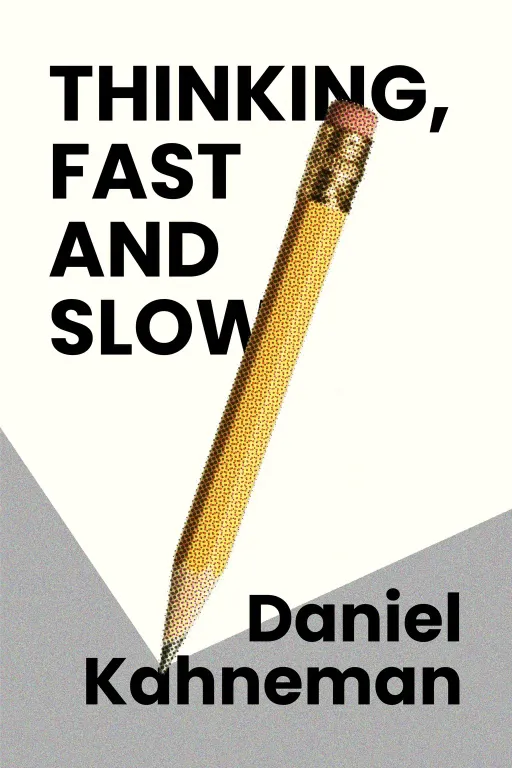
Nova: Because that simple buffet decision is a micro-cosmic battleground for the two systems that shape almost every choice we make. And understanding those systems, as laid out brilliantly in books like Daniel Kahneman's "Thinking, Fast and Slow" and Richard H. Thaler and Cass R. Sunstein's "Nudge," is like getting the secret decoder ring to human behavior.
Atlas: That's a great way to put it. We're talking about unmasking the hidden forces behind why we buy what we buy, why we choose what we choose. It’s not just about marketing; it’s about understanding ourselves.
Nova: Absolutely. Today, we're unlocking consumer minds by diving into the psychology behind purchase decisions, drawing heavily from Kahneman’s groundbreaking work on System 1 and System 2 thinking, and then Thaler and Sunstein’s incredibly influential 'nudge theory.' Kahneman, a psychologist, actually won the Nobel Memorial Prize in Economic Sciences, which tells you how profoundly his work reshaped our understanding of rationality in economics. It wasn't just theory; it had real-world impact.
Atlas: That’s fascinating. A psychologist winning an economics prize really underlines how much our so-called rational decisions are actually driven by something far more complex. It's not just numbers and logic, is it?
Nova: Not at all. And that brings us perfectly to our first deep dive: the dual-process mind.
The Dual-Process Mind: System 1 vs. System 2
SECTION
Nova: So, Kahneman introduces us to these two main characters in our mental drama: System 1 and System 2. Think of System 1 as the flash, intuitive, almost automatic part of your brain. It's what tells you 2+2=4 without thinking, or helps you swerve to avoid a pothole. It's fast, effortless, and often emotional.
Atlas: Oh, I know that feeling. That's the part of my brain that sees a shiny new gadget and immediately thinks, "Must have!" before I've even checked my bank balance.
Nova: Exactly! It's also responsible for those gut feelings, snap judgments, and the vast majority of our everyday decisions. It operates below the surface of conscious awareness, constantly making predictions and forming impressions.
Atlas: So, it's like our brain's autopilot. It’s efficient, but I imagine it can lead us astray sometimes.
Nova: Precisely. And that's where System 2 comes in. This is the slow, deliberate, effortful, and logical part of your brain. It's what you engage when you're solving a complex math problem, trying to parallel park, or carefully considering the pros and cons of a major purchase. It requires attention and effort.
Atlas: So, if System 1 is the impulsive shopper, System 2 is the one reading every review, comparing specs, and agonizing over the final decision.
Nova: Perfect analogy! The challenge is, System 2 is inherently lazy. It prefers to conserve energy, so it often lets System 1 have its way. And System 1, for all its efficiency, is prone to a whole host of cognitive biases.
Atlas: Cognitive biases. Now that’s a phrase that resonates with anyone trying to make strategic decisions. We think we're being objective, but our brains are constantly playing tricks on us.
Nova: They are! Take the anchoring effect, for example. It’s a classic. If you see a shirt originally priced at $200, then marked down to $100, that initial $200 acts as an anchor. The $100 now seems like a fantastic deal, even if it's still overpriced for the quality. Your System 1 latches onto that initial high number.
Atlas: Oh, I see that everywhere, especially in sales. That initial high price sets a reference point, and suddenly, a slightly lower price feels like a steal, even if it's not.
Nova: Or consider the availability heuristic. This is where we overestimate the likelihood of events that are easy to recall. If news reports are constantly showing plane crashes, you might think flying is incredibly dangerous, even though statistics show it's far safer than driving. Your System 1 brings those vivid images to mind, skewing your perception.
Atlas: So, our perception of risk or opportunity is often shaped by how easily we can bring examples to mind, not necessarily by the actual data. That’s a powerful insight for anyone trying to communicate effectively, or even just understand why certain fears are so prevalent.
Nova: Absolutely. Understanding these biases isn't just academic; it's a superpower for marketers, policymakers, and anyone trying to form better habits. If you know System 1 is going to jump to conclusions, you can design your messages or your environment to either counteract that bias or, sometimes, to leverage it ethically.
Atlas: That's the key, isn't it? The ethical part. Because if we know how predictably irrational humans are, there's a fine line between helping people make better choices and manipulating them. That makes me think about what we discussed in terms of ethical innovation and responsible marketing.
Nova: Indeed. And it's a perfect segue into our next core topic, which builds directly on this understanding of the dual-process mind: crafting choice architectures.
Crafting Choice Architectures: Nudges and Ethical Responsibilities
SECTION
Nova: So, if we accept that our decisions aren't always purely rational, and that System 1 often takes the wheel, then what? This is where Thaler and Sunstein's "Nudge" comes in. They argue that by understanding these cognitive biases, we can subtly 'nudge' people towards better decisions without restricting their freedom of choice.
Atlas: So, it's not about forcing people, but about gently guiding them. Almost like rearranging the buffet line so the healthy options are more prominent.
Nova: Exactly! They call it 'choice architecture.' It's the design of different ways in which choices can be presented to consumers, and the impact of that presentation on consumer decision-making. Think about organ donation. In some countries, you have to 'opt-in' – actively check a box to become a donor. In others, you're automatically a donor unless you 'opt-out.'
Atlas: And I'm guessing the opt-out countries have massively higher donation rates.
Nova: Spot on. It’s a classic example of a powerful nudge. The default option, which System 1 tends to stick with because it's easier, makes a huge difference. Another simple one: putting healthier foods at eye level in a cafeteria, or making smaller plates the default.
Atlas: That's incredibly powerful. For a strategic analyst, understanding how defaults or presentation can impact behavior, even for complex systems, is huge. It moves beyond just understanding the 'why' to understanding the 'how' – how to actually influence outcomes.
Nova: And it’s everywhere once you start looking. In retirement savings plans, for example, many companies now automatically enroll employees unless they actively choose to opt out. This simple 'nudge' has dramatically increased participation rates, helping people secure their financial futures.
Atlas: Wait, so it's not just about consumer products then? This has implications for public policy, health, finances... pretty much any area where human behavior is involved.
Nova: Precisely. Thaler, like Kahneman, also received a Nobel Memorial Prize in Economic Sciences for his contributions to behavioral economics, highlighting the profound real-world impact of these ideas. Their work has influenced governments around the world to set up 'nudge units' to improve public welfare.
Atlas: That’s incredible. But it also brings us back to that ethical innovator mindset. If human behavior is so predictably irrational, and we can influence it with subtle nudges, what ethical responsibilities do we have?
Nova: This is the deep question, isn't it? Thaler and Sunstein emphasize that nudges should be transparent and easily avoidable. They should improve welfare, not exploit weaknesses. The line between a helpful nudge and manipulative dark pattern can be very thin.
Atlas: Oh, like those websites where it's incredibly easy to sign up for a subscription but almost impossible to cancel. That feels less like a nudge and more like a trap.
Nova: Exactly. A good nudge, according to them, is something you'd want for yourself or for those you care about. It respects autonomy. It's about helping people make better choices for, based on their own long-term interests, rather than tricking them into doing something that only benefits the choice architect.
Atlas: So, the designer of the choice architecture holds significant power. It's not neutral; every design choice, every default, every presentation, has an impact. That means those of us building systems, whether they’re marketing campaigns or new AI interfaces, have a moral obligation to consider the downstream effects.
Nova: It’s a heavy responsibility. The ethical innovator must ask: Is this nudge truly in the user's best interest? Am I empowering them, or subtly coercing them? Are the long-term consequences positive for the individual and society? It’s not just about designing for efficiency or profit, but for human flourishing.
Atlas: That connects directly with the idea of leveraging emerging tech for future competitive advantage, but doing it responsibly. It’s not just about what we do, but what we do.
Synthesis & Takeaways
SECTION
Nova: So, what we've really explored today is the incredible complexity of our own minds, and the profound implications of that complexity. From Kahneman teaching us about our fast, intuitive System 1 and our slow, deliberate System 2, to Thaler and Sunstein showing us how we can construct environments that 'nudge' us towards better decisions, it’s clear that our choices are rarely as simple or as rational as we think.
Atlas: It’s a powerful reminder that our curiosity is a superpower. Digging into the 'why' behind our decisions, and the decisions of others, isn't just academic; it's a practical skill for anyone looking to make a meaningful impact, whether in business, policy, or personal growth.
Nova: And understanding these mechanisms provides a bridge from theory to practice. Whether you're designing a new product, crafting a marketing message, or even just trying to stick to a new habit, recognizing the power of defaults, framing, and cognitive biases can help you design for success. But always with that crucial ethical lens.
Atlas: Absolutely. Because with great power comes great responsibility, especially when you're subtly influencing the choices of millions. It's about nudging towards a better world, not just better sales figures.
Nova: Precisely. It’s about building systems that honor human autonomy while gently guiding us towards our own best interests.
Atlas: That’s a deep insight and a powerful call to action for anyone listening.
Nova: This is Aibrary. Congratulations on your growth!