The Pressure Prescription: A Dietitian's Guide to Thriving in Healthcare
Golden Hook & Introduction
SECTION
Dr. Warren Reed: Büşra, as a new dietitian, you hold someone's health in your hands. That feeling—that mix of profound importance, the uncertainty of whether your advice will work, and the sheer volume of patients—can be crushing. But what if that pressure isn't the enemy? What if it's the very thing that forges expertise?
Büşra Bayıroğlu: That's a powerful way to put it, Warren. It’s something I think about every day. The weight is real, but so is the desire to do good. The idea that the pressure itself could be a tool… that’s intriguing.
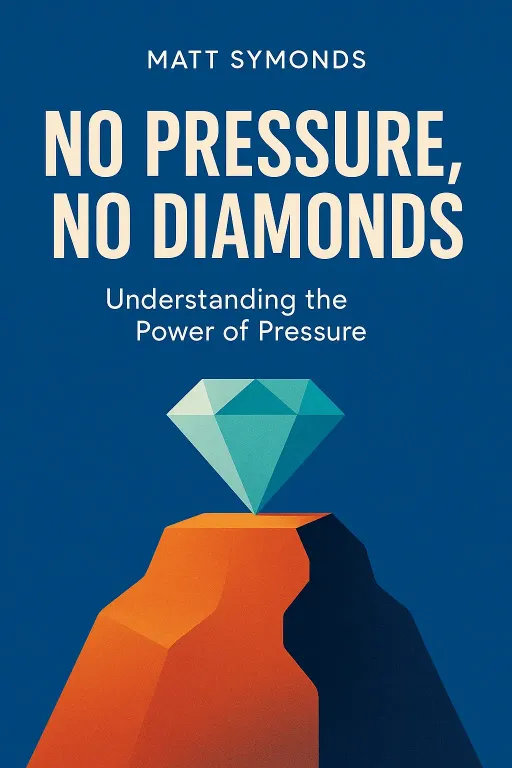
Dr. Warren Reed: Exactly. And that's the core idea we're exploring today, through the lens of a fantastic book, "No Pressure, No Diamonds" by Matt Symonds. It’s a practical playbook for anyone in a high-stakes environment, which is why I’m so glad you’re here.
Büşra Bayıroğlu: I'm excited to dive in. It feels incredibly relevant.
Dr. Warren Reed: Good. In our conversation today, we're going to tackle this from two angles. First, we'll dissect the very formula of pressure, breaking it down into three key ingredients. Then, we'll explore why managing a single, high-stakes moment is completely different from enduring the day-to-day grind, and how to master both.
Deep Dive into Core Topic 1: The Anatomy of Pressure
SECTION
Dr. Warren Reed: So let's start with a diagnosis. The book proposes a simple but powerful formula: Pressure equals Importance, times Uncertainty, times Volume. Let's break that down. Importance is the stakes—what you stand to lose or gain. Uncertainty is the unpredictability of the outcome. And Volume is the sheer number of demands on your plate.
Büşra Bayıroğlu: Okay, I can already feel my own work fitting into that.
Dr. Warren Reed: I’m sure. The book gives a great, non-medical example to make this crystal clear. It tells the story of a woman named Michelle Segal. She worked at an agribusiness company that got acquired by a larger European firm. Eight months after the acquisition, the new parent company announced they were merging her department with their existing one.
Büşra Bayıroğlu: Oh no, I can see where this is going.
Dr. Warren Reed: Precisely. They announced that out of the combined 13 staff members, only 8 would keep their jobs. Michelle quickly realized she was in direct competition with her exact counterpart in the other company for a single position. For months, she went to work every day not knowing if she would have a job. The book points out how the pressure equation was in full effect here.
Büşra Bayıroğlu: Let me guess. The was her job, her income, her family's security.
Dr. Warren Reed: Exactly. If she lost her job, she'd likely have to relocate her family to find similar work. The stakes were incredibly high. The was total—she had no idea what the decision criteria were or when the decision would be made. And the was still there; she had to perform her daily duties perfectly, all while this massive cloud of uncertainty hung over her. That combination is what creates crushing pressure.
Büşra Bayıroğlu: That resonates so deeply. In dietetics, the is a given. It's always high—it's someone's health, their quality of life. We can't just decide it's not important today. But the... that's the part that keeps you up at night.
Dr. Warren Reed: Tell me more about that. What does uncertainty look like for you?
Büşra Bayıroğlu: It's multi-layered. As a new professional, there's uncertainty about my own knowledge—am I giving the absolute best, most current advice? Then there's the patient. Did I explain this complex diet plan clearly enough? Will they be able to afford the foods I recommended? And the biggest one: will they actually it? You give them the plan, and then they walk out the door, and so much is out of your hands. You're waiting for the follow-up, for the lab results to come back, living in that gap of not knowing.
Dr. Warren Reed: That's a perfect illustration. And the book argues that pressure isn't just stress or anxiety; it's the in the face of those things. You still have to show up for your next patient, even with all that uncertainty.
Büşra Bayıroğlu: Yes, exactly! And the volume is relentless. More patients, more charting, more research to do. It feels like all three dials are turned up to the maximum.
Dr. Warren Reed: Which brings up a key strategic point.
Büşra Bayıroğlu: So, if Importance is a constant in my field, a non-negotiable, the equation suggests my only real levers are to reduce Uncertainty or manage Volume. Is that the idea?
Dr. Warren Reed: That's the strategic insight right there. You've nailed it. You can't make a patient's health less important. But you can take action to reduce uncertainty—for example, by creating clearer, simpler patient handouts with checklists, which gives both you and the patient more certainty. Or you can manage volume by creating templates for your notes or blocking specific time for administrative work. You focus your energy on the variables you can actually influence.
Büşra Bayıroğlu: That reframing is... incredibly helpful. It moves the problem from an overwhelming feeling to a set of variables I can work on. It feels more like a puzzle to solve than a wave to be crushed by.
Dr. Warren Reed: That's the goal. To turn you from a victim of pressure into an architect of your response to it.
Deep Dive into Core Topic 2: Pressure Ambidexterity
SECTION
Dr. Warren Reed: And that leads perfectly to our second point. Because managing that daily volume and uncertainty is a marathon, not a sprint. The book calls this being 'pressure ambidextrous'—adept at handling two very different kinds of pressure.
Büşra Bayıroğlu: Ambidextrous, I like that. So, what are the two types?
Dr. Warren Reed: The first is 'the long haul.' This is the sustained, grinding, day-in-day-out pressure. It's the three years of medical school, the slow process of building a business, or the daily work of managing a chronic condition. The second is the 'peak pressure moment.' This is short, intense, and has a clear outcome. It's the final exam, the big presentation, the championship game.
Büşra Bayıroğlu: The marathon and the sprint.
Dr. Warren Reed: Exactly. And they require totally different mindsets and skills. The book uses the story of Canadian Olympic rower Jeremiah Brown. In 2008, he was a former football player with a desk job at a bank. He watched the Canadian men's eight rowing team win gold and, despite having almost no rowing experience, decided he would be on that boat at the 2012 London Olympics.
Büşra Bayıroğlu: That sounds... ambitious.
Dr. Warren Reed: Wildly. What followed was his 'long haul.' For three years, he endured a brutal regimen. He'd wake up at 4:30 a. m. for icy morning rows, work a full day at the bank, and train again in the evening. He was dealing with relationship strain, financial stress, and the constant physical pain that comes with elite rowing. As he put it, "Rowing is a pain game." That was his marathon.
Büşra Bayıroğlu: Wow. As a new professional, I feel like I'm entirely in the 'long haul' right now. I'm building skills, establishing routines, trying to prove myself. The idea of a 'peak' moment is almost scary.
Dr. Warren Reed: Well, Jeremiah got his peak moment. He made the team. At the 2012 Olympics, they were ranked third and expected to do well. But in their first heat, they came in dead last. Suddenly, all that work, all that sacrifice, felt like it was for nothing. The pressure was immense. Jeremiah said he felt intense self-doubt and even contemplated just escaping.
Büşra Bayıroğlu: I can't even imagine. After all that work.
Dr. Warren Reed: This was his peak pressure moment. They had one last chance to qualify for the final in a race called the repechage. The book describes how before that race, the team's coxswain—the person who steers the boat and acts as the on-water coach—refocused them. He didn't talk about winning or medals. He said, "It’s up to the nine guys in this boat right now. We’re going to do it for each other—no one else." He simplified the stakes.
Büşra Bayıroğlu: He brought the focus back to something they could control: their effort for each other.
Dr. Warren Reed: Exactly. They won the repechage, made the final, and won a silver medal. The story perfectly shows the two sides. The long haul required resilience, commitment, and a deep connection to his 'why'. The peak moment required him to manage his physiology, simplify his focus, and take direct action.
Büşra Bayıroğlu: Can you imagine a 'peak pressure' moment in your work?
Büşra Bayıroğlu: I can. Maybe a patient has a severe, unexpected allergic reaction to a food recommendation right in the clinic. Or a senior doctor publicly challenges my nutrition plan in front of a patient and their family. It's a moment where you have to perform, with no time to go look something up. Your credibility and the patient's trust are on the line in that single instant.
Dr. Warren Reed: And the skills are different, right? The long haul of your career requires that deep sense of meaning and purpose—the 'why' you became a dietitian. The book talks about connecting with growth and contribution. For you, that's the satisfaction of seeing a patient's health markers improve over months.
Büşra Bayıroğlu: Yes, that's what fuels you on the hard days.
Dr. Warren Reed: But that peak moment—responding to that doctor—requires a different toolkit. It requires controlling your physiology, maybe taking one deep, calming breath before you speak. It requires direct action, like calmly and clearly stating the evidence-based rationale for your plan. You can't rely on your long-term 'why' to get you through that 30-second interaction.
Büşra Bayıroğlu: You need a different prescription for a different condition. That makes so much sense. One is about endurance, the other is about immediate, focused execution.
Synthesis & Takeaways
SECTION
Dr. Warren Reed: So, let's bring it all together. We have two powerful ideas from "No Pressure, No Diamonds." First, pressure isn't some vague, mystical force; it's a formula of Importance, Uncertainty, and Volume. Giving it a name and structure is the first step to managing it.
Büşra Bayıroğlu: And second, that we need to be 'pressure ambidextrous.' We need one toolkit for the long-haul marathon of our careers and another for the acute, peak-pressure sprints that inevitably happen along the way.
Dr. Warren Reed: Perfectly put. So, as you reflect on this, Büşra, what's one practical takeaway you're grabbing onto that you feel you can apply in your work this week?
Büşra Bayıroğlu: What I'm really taking from this is the power of focusing on what I can control, especially in the face of uncertainty. I can't control if a patient follows my advice perfectly over the weekend. I can't control if they have a stressful week at work and fall back on old habits. That uncertainty can be paralyzing.
Dr. Warren Reed: But?
Büşra Bayıroğlu: But I control the clarity of the handout I give them. I can control whether I include a simple, one-day sample menu to make it feel less overwhelming. I can control the follow-up email I send on Monday to check in. Focusing on those small, direct actions feels incredibly empowering. It shifts my focus from worrying about the uncontrollable to executing on the controllable.
Dr. Warren Reed: That's a perfect takeaway. It's about shrinking the problem down to the size of your next action. For everyone listening, especially those in demanding roles like Büşra's: What is one small, direct action you can take this week to turn an overwhelming uncertainty into a manageable task? It might be the most important prescription you write for yourself.
Büşra Bayıroğlu: I love that. It’s about taking care of ourselves so we can better care for others.
Dr. Warren Reed: Couldn't have said it better myself. Büşra, thank you for sharing your perspective. It was incredibly insightful.
Büşra Bayıroğlu: Thank you, Warren. This was a fantastic conversation.