The Growth Equation: Scaling Beyond Startup
Golden Hook & Introduction
SECTION
Nova: You know, Atlas, I was reading this wild statistic the other day. Apparently, only about 10% of businesses that start up actually make it past the five-year mark, and even fewer manage to scale significantly beyond that initial growth spurt. It's like, they hit a wall.
Atlas: Whoa, only 10%? That's a brutal reality check for anyone dreaming of building something big. It makes you wonder what separates the few that break through from the many that just… plateau. Is it luck? A magic formula?
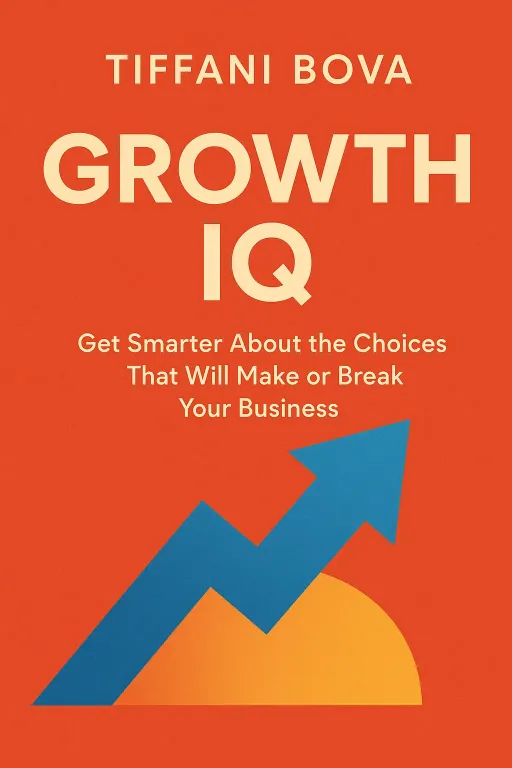
Nova: Exactly! And that's what we're diving into today with two incredibly insightful books: Tiffani Bova's and by David Kidder and the Bionic team. Bova, an incredibly influential thought leader in sales and marketing, really challenges the whole "single growth hack" mentality that so many companies fall prey to. She argues that sustained growth isn't about one silver bullet; it's about strategically combining ten interconnected paths.
Atlas: Oh, I like that. The idea that there's no magic button for growth really resonates, especially for our listeners who are trying to navigate complex industries like food. It often feels like everyone's chasing the latest trend, hoping it's answer. But what about? How does that tie in?
Nova: comes from a slightly different angle, but it's incredibly complementary. It posits that large, established enterprises often stifle innovation, and to truly grow, they need to adopt the agility and methodologies of startups. It’s about being big nimble, which sounds like an oxymoron, but it’s crucial.
Atlas: So, we're talking about not just finding growth, but it, and doing so by being adaptable and strategic. That’s a deep question for anyone in business, especially in the food sector where regulations, supply chains, and consumer tastes are constantly shifting. How do you combine different growth levers in your food business to ensure sustained expansion, instead of just a short-term sugar rush?
The Myth of the Single Growth Hack & Bova's Growth IQ
SECTION
Nova: That’s precisely the heart of it, Atlas. Bova's core argument in is that there’s no singular path to growth. She identifies ten distinct growth paths—things like customer experience, product innovation, market acceleration, or even partnerships—and the real genius lies in understanding which combinations work best for specific situation. It's not about picking one; it's about orchestrating several.
Atlas: So you’re saying it’s less about finding a secret shortcut and more about understanding the whole orchestra, and knowing when to bring in the violins versus the percussion? That sounds a lot more complex than the "just innovate!" advice you often hear.
Nova: Exactly! Think of a food business. Many might immediately jump to "product innovation"—new recipes, new ingredients, new packaging. And that's valid. But if your supply chain is a mess, or your customer experience is terrible, even the most innovative new product will falter. Bova uses a fantastic example of a company that focused heavily on and simultaneously. They realized their sales team was bogged down by archaic processes and couldn't effectively convey the value of their innovative products.
Atlas: Oh, I see. So the innovative product was there, but the mechanism was broken. It’s like having a Michelin-star chef but the front-of-house staff is rude and the reservation system crashes. Nobody gets to enjoy the culinary genius.
Nova: Precisely. This company invested heavily in training their sales force, giving them better digital tools, and streamlining the customer onboarding process. This wasn't a product innovation, but by optimizing their sales enablement and customer experience, they saw a massive uptick in sales of their products, simply because they made it easier and more pleasant for customers to buy and use them. It was about removing friction points, not just creating new things.
Atlas: That makes me wonder, though, for a food business, how do you even begin to identify which of these ten paths to prioritize? It sounds like you could get lost trying to fix everything at once. Is there a framework for deciding?
Nova: Bova provides a framework, actually. She encourages businesses to assess their current strengths and weaknesses, and then look for the where two or three growth paths can amplify each other. For instance, if you have a unique, locally sourced ingredient, combining that with a strong strategy—like getting your product into specialty farmers' markets and direct-to-consumer online platforms—could be incredibly powerful.
Atlas: So it’s about understanding your unique ingredients, both literally and figuratively, and then finding the best ways to get them to the right people. That’s a great way to put it. It’s not just about the food itself, but the entire journey from farm to fork, and the experience around it.
Startup Agility in Big Business & New to Big
SECTION
Nova: And that brings us beautifully to. While Bova talks about combining growth levers, Kidder and the Bionic team are saying that if you're a large, established food company, you’re almost inherently disadvantaged in this agile growth game because of your size and bureaucracy. They argue that big companies need to fundamentally rethink their internal structures and mindsets to innovate and grow like startups.
Atlas: But wait, how can a massive food corporation, with hundreds of thousands of employees and complex supply chains, suddenly start acting like a scrappy startup operating out of a garage? That sounds a bit out there. Isn’t the whole point of being big that you have stability and scale?
Nova: That’s the common misconception, isn’t it? says that stability and scale are only advantages if they don't lead to stagnation. They highlight that large companies often get stuck in what they call "the innovation theater"—lots of talk about innovation, but no real action or results. They propose a framework that involves creating internal "startup teams" that operate with autonomy, minimal bureaucracy, and a focus on rapid experimentation and learning.
Atlas: So basically, creating little pockets of agility within a giant structure. Like a food company setting up a small, independent team to explore plant-based protein alternatives, without having to jump through all the corporate hoops every single day?
Nova: Exactly! They actually use a compelling case study of a large pharmaceutical company that adopted this approach. Instead of traditional R&D, they empowered small, cross-functional teams to tackle specific health problems with the mandate to act like a startup—fail fast, learn quicker, and pivot when necessary. This led to breakthroughs that their conventional, slower processes simply couldn't achieve. For a food business, imagine a team tasked with, say, reducing food waste in the supply chain. Instead of years of committee meetings, they'd have a budget, a tight timeline, and the freedom to test solutions rapidly.
Atlas: That’s actually really inspiring. It’s about trusting your instincts, right? Giving people the freedom to experiment and fail, which is often antithetical to how big corporations usually operate. It’s like saying, "We'll give you a small kitchen, a budget, and a problem, now go create something amazing, and don't worry if the first few batches burn."
Nova: That's a perfect analogy. And it also touches on the user profile you represent: the pragmatist, the visionary, the communicator. You see the whole picture, you identify challenges, and you want actionable steps. offers those steps for established companies to foster that very agility. It's about empowering people to trust their vision and act on it, rather than getting bogged down in endless approvals.
Atlas: I can definitely relate to that. The idea of embracing the journey, allowing for experimentation, and refining the message daily—it’s all about continuous growth, not just one big launch. It's not enough to have a great product; you also need the internal culture and structure that allows you to keep evolving that product, and your processes, quickly.
Synthesis & Takeaways
SECTION
Nova: So, bringing these two powerful ideas together, Atlas, what we see is a compelling argument for a multi-faceted, agile approach to growth. Bova tells us that sustainable growth isn't a single lever, but a strategic combination of them. And Kidder and Bionic tell us that even the largest organizations need to adopt a startup mindset to pull those levers effectively and adapt quickly.
Atlas: It’s fascinating, because it means that for a food business, the question isn’t just "What new product should we launch?" or "How do we get more customers?" It’s also, "How do we make our internal teams as nimble as a startup?" and "Are we combining the right growth strategies—like, say, optimizing our notoriously complex supply chain with a killer customer experience?"
Nova: Absolutely. It’s about seeing the whole picture, as you mentioned in your profile. Identifying the challenges, having that strategic mind, and then implementing actionable steps. For a food business, that might mean deeply understanding consumer psychology to connect with your market, then optimizing your supply chain to deliver consistently, all while navigating regulatory compliance. It’s a growth equation, not a growth arithmetic problem.
Atlas: That gives me chills, honestly. The sheer scale of what needs to be considered, but also the clarity of understanding that it’s all interconnected. It’s not about finding one thing, it’s about mastering the art of combining many things, and having the internal agility to do it. It’s a constant journey of refinement and adaptation.
Nova: Exactly. It's about being relentlessly curious, constantly asking "what if?" and having the courage to act on those insights, whether you're a startup or a global corporation. It's a testament to the idea that growth is a mindset, not just a metric.
Atlas: And a journey that never truly ends.
Nova: Well said, Atlas. This is Aibrary. Congratulations on your growth!