

New Map
Introduction
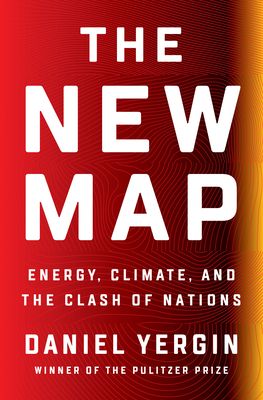
Nova: On April 20th, 2020, something happened in global energy markets that had never happened before. The price of a barrel of American crude oil didn't just fall. It went negative. Negative thirty-seven dollars and sixty-three cents. That means producers were literally paying people to take oil off their hands. And that moment, as bizarre as it sounds, is the perfect entry point into Daniel Yergin's sweeping 2020 book, The New Map.
Nova: : Negative oil? That sounds like economics upside-down. What does that have to do with a book about geopolitics?
Nova: Everything, actually. Yergin uses that pandemic price collapse as a dramatic illustration of how profoundly the global energy order has been remade. His book subtitle tells you the stakes: Energy, Climate, and the Clash of Nations. He argues that we are living through a transformation every bit as consequential as the shift from coal to oil a century ago, except now we have a shale revolution, a solar revolution, a new cold war between the US and China, and the urgent pressure of climate change all happening simultaneously.
Nova: : So this is basically the ultimate map of who has power in the world right now?
Nova: Exactly. And Yergin is the perfect guide. He won a Pulitzer Prize for his earlier book The Prize, which is essentially the bible of oil history. In The New Map, he walks us through four critical regions, America, Russia, China, and the Middle East, then takes us on a road map of transportation disruption and a climate map of the energy transition. It is ambitious, it is dense, and it is deeply revealing about why the world looks the way it does today. Ready to explore?
Nova: : Absolutely. Let's unfold this map.
Nova: This is Aibrary. Congratulations on your growth!
Key Insight 1
America's New Map: The Shale Revolution
Nova: Let's start with the biggest plot twist in global energy this century: the American shale revolution. For decades, the United States was the world's largest oil importer. Its foreign policy, its military presence in the Middle East, its entire strategic posture was shaped by energy dependence. And then, almost overnight, everything flipped.
Nova: : What do you mean by almost overnight? Energy transitions usually take generations.
Nova: You are right to be skeptical, but here is the astonishing timeline. In the 2000s, the US was building liquefied natural gas import terminals because it expected to be a major gas importer from Qatar and elsewhere. By 2015, those same terminals were being converted for exports. The technology that did it was hydraulic fracturing, fracking, combined with horizontal drilling. A Greek immigrant's son named George Mitchell spent decades perfecting the technique to crack open shale rock and release trapped oil and gas. For years, hardly anyone believed it would work at scale.
Nova: : So what changed?
Nova: The combination of horizontal drilling and fracking got dramatically cheaper and better through the 2000s. Natural gas production exploded first in the Barnett Shale in Texas and the Marcellus in Pennsylvania. Then drillers realized the same techniques worked for oil. Suddenly, places like North Dakota's Bakken formation and Texas's Eagle Ford and Permian Basin were booming. By 2020, the United States had surpassed both Russia and Saudi Arabia to become the world's largest producer of oil and natural gas. Yergin calls this the biggest energy innovation of the twenty-first century.
Nova: : That must have had massive economic ripple effects.
Nova: Massive. Yergin estimates the shale revolution reduced America's trade deficit by over three hundred billion dollars in 2019 alone. Industrial electricity prices in the US dropped to thirty to fifty percent lower than in Europe and Asia. More than two hundred billion dollars of new manufacturing plants were built on American soil that would otherwise have gone to the Middle East. Dow Chemical canceled planned plants there and built them in the US instead. And it supported over two point eight million jobs.
Nova: : But fracking is hugely controversial, right? What about the environmental costs?
Nova: Yergin does not dodge this. He details the concerns about water contamination, methane leaks, and even induced earthquakes. But his position is that the risks are manageable through state-level regulation. And he makes a counterintuitive environmental argument: the surge of cheap natural gas displaced coal in electricity generation, which is why, by 2019, US carbon dioxide emissions had fallen to early 1990s levels even though the economy had doubled in size. Critics, however, say he underplays the methane leakage problem and the long-term climate impact of locking in gas infrastructure.
Nova: : But the biggest shift here is geopolitical, isn't it?
Nova: That is Yergin's central point. The shale revolution didn't just change economics. It rewrote America's strategic options. Since World War II, the US had maintained an explicit security guarantee over Saudi Arabia to ensure the free flow of oil. A huge part of American military engagement in the Middle East was about protecting global energy supplies. Now, with energy abundance at home, the calculus has changed. When Iranian drones struck a major Saudi oil processing facility in 2019, Yergin notes it ended up being, quote, a blip. That would have been unthinkable a decade earlier.
Nova: : So America is free to disengage from the Middle East?
Nova: Not exactly, and Yergin is nuanced here. Oil is still a globally traded commodity, so a supply shock anywhere affects prices everywhere. But the flexibility that shale provides, short-cycle wells that can start producing in six months for around seven million dollars versus traditional projects that take five to ten years and billions of dollars, gives the market a shock absorber it never had before. America is not energy dominant in the sense of controlling global markets, but it has gained something more valuable: strategic flexibility.
Key Insight 2
Russia's Map: Pipelines and Power
Nova: Now let's pivot to Russia. Here is a stunning fact from Yergin: Russia's economy is only slightly larger than Spain's, yet it is one of the most consequential geopolitical actors on the planet. The reason? Energy.
Nova: : That seems like a huge disconnect. How does an economy the size of Spain's project so much power?
Nova: Because oil and gas exports make up about thirty percent of Russia's GDP and fund roughly forty to fifty percent of its government budget. Vladimir Putin, who Yergin portrays as having a deep, almost academic understanding of energy markets, has made hydrocarbons the engine of his great power project. High oil prices in the 2000s allowed Putin to pay off Soviet-era debts, raise wages and pensions, modernize the military, and restore national pride after what he famously called the greatest geopolitical catastrophe of the twentieth century, the collapse of the Soviet Union.
Nova: : But that dependence cuts both ways, doesn't it? If oil prices crash, Russia is in trouble.
Nova: Absolutely, and Yergin draws a direct line from oil prices to Russian political power. He notes that the 1986 oil price collapse contributed to the Soviet Union's eventual dissolution. Putin came to power in 2000 just as prices were recovering, which gave him the resources to consolidate control. This is the vulnerability at the heart of Russia's energy superpower status.
Nova: : And then there is the Europe question. Russia's gas pipelines run through Ukraine, which has been a source of endless conflict.
Nova: Right. Yergin traces how Russian gas flows to Europe through Soviet-era pipelines crossing Ukraine, and how disputes over transit fees and pricing have led to repeated cutoffs, affecting European consumers in the dead of winter. Putin's solution has been to build bypass pipelines, Nord Stream 1 and 2 under the Baltic Sea to Germany, TurkStream under the Black Sea. This is as much about isolating Ukraine geopolitically as it is about reliable gas delivery.
Nova: : The US opposed Nord Stream 2, right?
Nova: Vehemently. Yergin describes how the US imposed sanctions that halted construction just weeks from completion. The American argument was that the pipeline would give Russia excessive leverage over Europe and starve Ukraine of transit revenue. The German argument, and this split is crucial in Yergin's telling, was that it was simply a commercial project. This tension between viewing energy as pure commerce versus a geopolitical weapon runs through the entire book.
Nova: : And now Russia is pivoting east toward China?
Nova: This is one of the most consequential shifts Yergin documents. After Western sanctions following the 2014 annexation of Crimea, Russia accelerated its pivot to the east. The Power of Siberia gas pipeline, a forty-five billion dollar project, began delivering Russian gas to China. Yergin paints a vivid picture of Putin and Xi Jinping literally making pancakes together at an economic forum while their militaries conducted joint war games. Russia is seeking energy customers beyond Europe, and China is hungry for energy. This convergence, Yergin argues, is a cornerstone of the new cold war dynamic.
Key Insight 3
China's Map: The Energy Insecurity Paradox
Nova: If Russia's energy story is about using exports as a weapon, China's is the mirror image: it is about the desperate fear of being cut off from imports. China imports about seventy-five percent of its oil.
Nova: : Seventy-five percent? That feels like a massive strategic vulnerability.
Nova: That is exactly Yergin's argument, and it explains a surprising amount of Chinese foreign policy. Picture the geography. Most of that oil arrives by tanker through the Strait of Malacca, a narrow choke point between Malaysia and Indonesia. In a conflict scenario, an adversary, meaning the United States Navy, could blockade that strait and strangle China's economy in weeks. Chinese strategists call this the Malacca Dilemma.
Nova: : So when we see China being aggressive in the South China Sea, it is not just about territorial pride?
Nova: Yergin would say it is fundamentally about energy security. The South China Sea carries a staggering share of global trade, and China's nine-dash line claim covers virtually the entire sea. By building artificial islands with military installations, China is creating what Yergin describes as a forward defense perimeter to protect those sea lanes. The Belt and Road Initiative, that trillion-dollar global infrastructure program, is also driven by energy security. Many of its investments are in pipelines, ports, and energy projects designed to create land-based alternatives to the vulnerable sea routes.
Nova: : So is China's massive push into renewables also about security rather than just climate?
Nova: That is one of Yergin's most interesting insights. China is now the world's dominant manufacturer of solar panels and lithium batteries. It is the largest market for electric vehicles, with twenty-five million cars sold there in a single recent year. Yergin argues that China sees the energy transition as a strategic opportunity, a new game where it can compete internationally in ways it never could with conventional automobiles. Energy independence through renewables and electrification is the ultimate solution to the Malacca Dilemma.
Nova: : And China is still building eight new airports a year and consuming ever more energy?
Nova: Exactly. That is the paradox. China is simultaneously the world's largest investor in renewable energy and the world's largest consumer of coal and oil. Yergin uses this to make a broader point about the energy transition that we will get to later. The headlines about green China are real, but so are the coal-fired power plants. Both things are true at the same time. Meanwhile, China's energy hunger is reshaping the entire global order, from the South China Sea to the Arctic, where it has declared itself a near-Arctic state to get access to shipping routes and resources.
Nova: : What is Yergin's bottom line on where the US-China energy rivalry is headed?
Nova: He is cautious and not particularly optimistic. He describes the relationship as a new cold war, but notes that unlike the Soviet Union during the original Cold War, China is deeply embedded in the global economy. Countries around the world are increasingly being forced to choose sides, whether on Huawei and 5G, on Belt and Road investments, or on energy partnerships. Yergin doesn't offer a simple resolution. He just maps the fault lines with remarkable clarity.
Key Insight 4
The Middle East and the Big Three
Nova: Let's turn to the Middle East, the historic heartland of global oil. Yergin begins this section with a powerful framing: the borders of the modern Middle East were drawn by British and French diplomats after World War I, with very little regard for ethnic, religious, or tribal realities. The consequences of those lines drawn on a map over a century ago are still exploding today.
Nova: : That is quite a claim. How does Yergin connect those old maps to today's energy landscape?
Nova: He argues that the artificial nature of those borders, coupled with the discovery of oil, created a region where rivalries are baked into the soil. Iraq, for example, was stitched together from three Ottoman provinces, Kurdish, Sunni, and Shia, that had never been a single country. Saudi Arabia's founding involved a pact between a religious leader and a political leader that still shapes the kingdom. All of these states became dependent on oil revenues to function, making them extraordinarily vulnerable to price swings.
Nova: : And then came the shale revolution that crashed the price.
Nova: In 2014, the surge of American shale oil sent prices tumbling. Saudi Arabia initially tried to flood the market to drive American frackers out of business. It didn't work. The frackers just got more efficient. So by 2016, Saudi Arabia did something that would have been unthinkable a decade earlier: it partnered with Russia to form OPEC-Plus, coordinating production cuts to stabilize prices. The oil cartel had to invite in a non-member, a historic rival, to survive.
Nova: : And the US became the third member of this Big Three, as Yergin calls it?
Nova: Precisely. The US, Saudi Arabia, and Russia now effectively set the terms of the global oil market. This was dramatized during the COVID-19 crisis in early 2020. As demand collapsed, Saudi Arabia pushed for production cuts. Russia refused, not wanting to cede market share to American producers. Both countries ramped up production in a price war just as the pandemic worsened. Oil prices crashed to fourteen dollars, then futures briefly hit that negative thirty-seven dollars and sixty-three cents we mentioned at the start.
Nova: : What broke the deadlock?
Nova: Thirteen US senators from oil-producing states wrote to Saudi Arabia threatening to withdraw military support. President Trump got personally involved, brokering what Yergin calls the biggest and most complex deal ever. In April 2020, OPEC-Plus agreed to cut production by nine point seven million barrels per day, the largest supply cut in history. The US didn't formally join the agreement, but pointed out that market forces would naturally curtail American production. This was a new era: the Big Three acting in concert, however awkwardly.
Nova: : What about the energy transition and the Middle East? Saudi Arabia is trying to diversify, right?
Nova: Yes, and Yergin devotes serious attention to this. The public listing of part of Saudi Aramco, the kingdom's state oil company, was a landmark event. Crown Prince Mohammed bin Salman's Vision 2030 is explicitly designed to prepare for a post-oil future. But Yergin is cautious about how fast this can happen. These are economies where oil revenues fund everything from social programs to political stability. The transition away from oil is not just an economic question, it is an existential political one. He also highlights a fascinating side story: the discovery of major natural gas fields in the Eastern Mediterranean since 2009, which has transformed Israel from an energy importer to an exporter and created new alliances and rivalries across the region.
Key Insight 5
The Road Map and Climate Map: Transition or Addition?
Nova: Now we reach what might be the most debated part of Yergin's book: his analysis of the energy transition. He opens this section with a provocative framing. At the global level, the energy transition so far has actually been an energy addition. Renewables are growing on top of traditional sources, not replacing them.
Nova: : Wait, that sounds counterintuitive. Haven't we seen solar and wind grow exponentially?
Nova: We have, and Yergin acknowledges this fully. Solar costs have plummeted by something like ninety percent over the last decade. Wind power is now cost-competitive with fossil fuels in many markets. Electric vehicle sales are surging. But here is his point: global energy consumption keeps growing because emerging economies continue to develop. All those new airports in China, all the new cars in India, all the new factories in Southeast Asia, they are adding to total demand faster than renewables can offset fossil fuel use at the global level.
Nova: : So he is a skeptic of rapid transition?
Nova: He is, and this is where the book has drawn the most criticism. Yergin fully accepts the science of climate change. He is not a denier. But he is deeply skeptical that the ambitious net-zero targets being set by governments around the world can be met on the announced timelines. He points out that there are two hundred and eighty million cars in the United States, and about two hundred and seventy-nine million of them run on gasoline. The average car stays on the road for twelve years. Fleet turnover takes decades.
Nova: : What about his famous road map chapter? Electric vehicles, autonomous vehicles, ride-hailing?
Nova: This is one of the most compelling sections of the book. Yergin argues that the real disruption to oil demand could come from the convergence of three technologies: electric vehicles, autonomous or self-driving vehicles, and ride-hailing services like Uber and Lyft. He calls this the new triad. If you combine electrification with autonomy and shared mobility, you could fundamentally restructure the automobile industry and dramatically reduce oil demand in ways that any single technology alone could not achieve.
Nova: : That sounds almost utopian. Does he think it will happen soon?
Nova: He is characteristically cautious. He gives a wonderful history of the electric car, noting that Thomas Edison and Henry Ford actually collaborated on an early electric vehicle over a century ago. EVs are not new. What is new is the cost curve and the policy support. But Yergin emphasizes the practical obstacles: charging infrastructure, battery materials supply chains, grid capacity, range anxiety. He is impressed by Elon Musk and what Tesla has achieved, but he does not see the internal combustion engine disappearing anytime soon.
Nova: : And on climate policy, what does he propose?
Nova: Here the critics say Yergin is frustratingly vague. He supports carbon pricing, innovation in carbon capture and storage, advanced nuclear, and hydrogen. He dismisses the fossil fuel divestment movement as largely symbolic. He chastises environmentalists for what he sees as factual errors. But he doesn't offer a clear policy road map of his own. His core argument is that the transition will be longer, messier, and more expensive than activists acknowledge, and that oil and gas will remain central to the global energy mix for decades.
Nova: : Do you think that is realism or defeatism?
Nova: That is exactly the debate the book has sparked. Supporters say Yergin is injecting much-needed reality into wishful thinking about the energy transition. Critics, including prominent climate writers, say he is so embedded in the fossil fuel paradigm that he cannot recognize the urgency of the climate crisis or the speed at which tipping points in technology adoption can occur. Bill McKibben, a leading environmentalist, wrote that even history bends to physics, and Yergin gives too little weight to the physics of climate change.
Conclusion
Nova: So what have we learned from Daniel Yergin's The New Map? Let me try to pull the threads together. First, energy is not just one input into the global economy. It is the master variable that shapes the strategic choices of every major power. The shale revolution transformed the United States from a vulnerable importer into the world's top producer, giving it strategic flexibility. Russia uses its vast gas reserves as an instrument of geopolitical leverage. China's energy insecurity drives its aggressive posture in the South China Sea and its Belt and Road investments. The Middle East remains trapped between oil dependence and the need to diversify. And the energy transition is coming, but Yergin insists it will be more gradual, more complex, and more contested than the headlines suggest.
Nova: : So the new map is really about who has options and who doesn't?
Nova: That is a great way to put it. The countries with energy abundance and technological capacity have options. The countries dependent on a single resource or a single customer are vulnerable. And the biggest question Yergin leaves us with is whether the world can navigate the transition to a lower-carbon future without triggering new conflicts, new dependencies, or new forms of energy poverty. He doesn't answer that question. He just gives us the map to understand it.
Nova: : If someone reads this book, what is the single biggest takeaway they should hold onto?
Nova: That the era of energy scarcity that shaped the twentieth century is over, replaced by an era of energy abundance, but abundance brings its own problems: market volatility, geopolitical realignment, and the urgent challenge of managing that abundance in a climate-constrained world. The old map, where OPEC called the shots and the US was dependent on the Middle East, is gone. The new map is still being drawn, and Yergin gives readers the tools to follow the cartography in real time.
Nova: : It sounds like a book that is dense but essential. Worth the climb?
Nova: Absolutely. It is over four hundred pages of detailed geopolitical history, and some critics wish Yergin had a stronger narrative through-line or a bolder point of view. But for anyone who wants to understand why nations act the way they do, why oil prices matter to geopolitics, and what the energy transition really entails, there is no better guide. As one reviewer put it, by the final page, the reader will feel like an energy expert themselves.
Nova: : And that is a map worth having.
Nova: Exactly. From the shale fields of Texas to the gas pipelines of Siberia, from the South China Sea to the solar farms of the Middle East, Yergin has given us a portrait of a world in flux. The journey across this new map is riveting, sobering, and ultimately essential for understanding the century ahead.
Nova: : This is Aibrary. Congratulations on your growth!