

Mapping Power: How Energy, Tech, and Geopolitics are Drawing the New World Order
Golden Hook & Introduction
SECTION
Dr. Roland Steele: Nelle, let me start with a question that sounds simple but is actually, I think, one of the most profound geopolitical questions of our time. Where is the cloud?
Nelle Ashley: That’s a great question, Roland. Most people imagine it’s, you know, ethereal, floating in the sky. But as a data analyst, I know the cloud has a very physical address. It lives in massive, windowless buildings called data centers. And the single biggest thing about them, the dirty secret of the digital age, is that they are unbelievably power-hungry. The amount of electricity they consume is staggering.
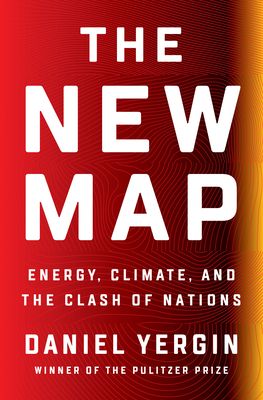
Dr. Roland Steele: Exactly. They are voracious. And that energy has to come from somewhere. It has to be drilled, mined, piped, and shipped across the globe. And that, right there, is the connection we're exploring today. The invisible world of data and technology is completely dependent on the very visible, very contentious world of energy and geopolitics. And our guide to this new reality is Daniel Yergin’s brilliant book, "New Map."
Nelle Ashley: A book I found fascinating because it’s all about mapping out complex, interconnected systems, which is exactly what you do with data.
Dr. Roland Steele: Precisely. Yergin argues that the old maps of power are obsolete. A new map is being drawn, and it's defined by sudden, seismic shifts in who controls the world's energy. So today we'll dive deep into this from two main perspectives. First, we'll explore how the American shale boom redrew the lines of conflict with Russia and China. Then, we'll pivot to the future and look at how the race for green energy is creating a brand new, and potentially more dangerous, geopolitical map.
Deep Dive into Core Topic 1: The New Great Power Game: Shale, Ships, and Silicon
SECTION
Dr. Roland Steele: So, let's start with that first point: the American shale revolution. For most of the 20th century, the story of American foreign policy was, in many ways, a story of its dependence on Middle Eastern oil. Every decision in the region was viewed through the lens of, "How does this affect the flow of oil?"
Nelle Ashley: It was the critical variable in the equation. You secure the oil, you secure the economy.
Dr. Roland Steele: Absolutely. Then, starting in the early 2000s, something incredible happened, largely unnoticed by the wider world. A few determined wildcatters in Texas and Pennsylvania perfected a combination of two technologies: hydraulic fracturing, or fracking, and horizontal drilling. For years, everyone knew there was oil and gas trapped in shale rock, but it was considered impossible to get out economically. These guys figured it out.
Nelle Ashley: It was a classic technological disruption. A single innovation that makes the impossible, possible. And then profitable.
Dr. Roland Steele: And the consequences were world-altering. Within a decade, the United States went from being the world's largest importer of energy to, stunningly, the world's number one producer of both oil and natural gas. Think about that. The entire geopolitical calculus of the last 70 years was upended. Suddenly, the U. S. wasn't quite so existentially concerned about the Strait of Hormuz.
Nelle Ashley: So, Roland, are you saying that this technological breakthrough in drilling is directly linked to the more confrontational stance the U. S. has taken with China over the last decade? That seems like a huge leap, but I can see the logic.
Dr. Roland Steele: It’s not a leap; it’s the core of the argument. Energy independence gave the United States strategic confidence. It untethered American foreign policy. For decades, the U. S. military's primary mission was arguably to police the world's energy sea lanes, especially those coming out of the Persian Gulf. The shale boom allowed for what Washington has been wanting to do for years: the "Pivot to Asia." It freed up the political capital and strategic focus to confront what it saw as its main long-term rival: China.
Nelle Ashley: So the shale boom essentially funded, or at least enabled, the geopolitical pivot. You're reallocating your risk-management resources, so to speak. Instead of focusing on securing oil tankers from the Middle East, you can focus on, say, freedom of navigation in the South China Sea.
Dr. Roland Steele: You've hit it exactly. And the South China Sea is the perfect example. Why does the U. S. care so much about a few islands there? Because it's the superhighway for global trade. It's where the energy flows to China, Japan, and South Korea, and it's where the finished goods, the iPhones and the sneakers, flow out. Yergin calls it the world's most critical commercial waterway. China wants to control it, to turn it into a private lake. The U. S., now less worried about its own energy supply, can push back hard, asserting that these are international waters.
Nelle Ashley: It's a battle over the network protocol for global trade. Who gets to set the rules of the road? And it's fascinating that the battleground is both physical—with aircraft carriers—and technological, with the fight over 5G, semiconductors, and data flows. It's all part of the same conflict over who controls the 21st-century's critical infrastructure.
Dr. Roland Steele: That's the new map. The conflict isn't just about territory anymore. It's about controlling the entire supply chain, from the shale fields in Texas, to the shipping lanes off the coast of China, to the silicon in the phone in your pocket. It's a single, integrated battlefield.
Deep Dive into Core Topic 2: The Climate Map: From Oil Barons to Lithium Lords
SECTION
Dr. Roland Steele: But Nelle, just as this map of oil and gas power seems to be settling, Yergin argues a completely new one is being drawn right under our feet. And this brings us to our second point: the climate map.
Nelle Ashley: Right, the transition to renewable energy. Which everyone assumes is this universally positive, conflict-reducing move. But I suspect it's not that simple.
Dr. Roland Steele: Not at all. It's not an end to geopolitics; it's a reshuffling of the deck. We're moving from a world whose power dynamics are defined by oil and gas to one that will be defined by a new set of commodities: the minerals that make green technology possible.
Nelle Ashley: You’re talking about lithium, cobalt, nickel, copper, rare earth elements... the ingredients for batteries, wind turbines, and solar panels.
Dr. Roland Steele: Precisely. And the numbers are just staggering. Yergin points out that a conventional car might have about 40 pounds of copper. A fully electric vehicle? Over 180 pounds. A single onshore wind turbine can contain thousands of pounds of copper. The demand for these minerals is set to explode. And this creates a new map of dependencies.
Nelle Ashley: And from a data perspective, this is where it gets really interesting. The dataset for geopolitical power is literally changing. For a century, analysts tracked barrels of oil and cubic feet of gas. Now, the critical data points are tons of processed lithium, control over cobalt mines, and the capacity of polysilicon factories for solar panels.
Dr. Roland Steele: And who has been thinking about this for twenty years? Who has been quietly building a dominant position in this new supply chain?
Nelle Ashley: China.
Dr. Roland Steele: China. It's a masterclass in long-term strategy. While the West was focused on the Middle East, China was locking up mining contracts in Africa and South America and, even more importantly, building a near-total monopoly on the complex of these minerals. For example, the Democratic Republic of Congo produces over 60% of the world's cobalt. But over 70% of that cobalt is then sent to China to be refined into battery-grade material.
Nelle Ashley: That’s terrifying from a risk analysis perspective. The supply chain for oil, for all its problems, is relatively diversified. It's found in dozens of countries. But what you're describing is a system with critical, single points of failure. If China decides to restrict the export of processed cobalt or lithium, the entire global EV and battery industry could grind to a halt.
Dr. Roland Steele: That is the controversial reality of the green transition. We are potentially trading a dependency on a group of countries in the Middle East for a much deeper, more concentrated dependency on a single strategic rival. The new map of energy might be greener, but it could also be far more brittle and far more contentious. The power of OPEC could be replaced by the power of what some are calling "Min-PEC"—a cartel of mineral producers, with China at its head.
Nelle Ashley: So the fight for a cleaner planet is inadvertently creating the next great geopolitical weapon: control over the building blocks of the future economy. It's a profound paradox.
Dr. Roland Steele: It is. And it shows that no matter what the energy source is, the quest for power and the struggle to control resources—to draw the map in your favor—is a constant in human history.
Synthesis & Takeaways
SECTION
Dr. Roland Steele: So, when we step back and look at the whole picture, what Yergin's 'New Map' really shows us is a world in a state of profound flux. The old power structures built on oil are being fractured by a new reality of American energy abundance, which in turn has fueled a direct confrontation with China.
Nelle Ashley: And at the exact same time, the necessary push towards a green future is creating an entirely new map of power, one based on critical minerals, where China has already established a formidable, strategic lead.
Dr. Roland Steele: It's a dizzying picture. It feels like the rules of the game are being rewritten in real-time.
Nelle Ashley: I think that's the key takeaway for me, as an analyst. It's a story of systems and dependencies. Whether the critical resource is oil, or data, or lithium, the fundamental question of the 21st century is about who controls the flow. The commodities change, the technologies change, the map is redrawn, but the underlying game of controlling the network—the supply chain—remains the same. It's just become infinitely more complex.
Dr. Roland Steele: A perfect synthesis. And it leaves us with a challenge, not just for nations, but for all of us. So, for our listeners, as you go about your week, we want to leave you with a question to ponder, a way to apply this thinking to your own world.
Nelle Ashley: Ask yourself: what is the most critical resource that my industry, my company, or even my daily life depends on? Is it data, is it a specific software, is it a physical commodity?
Dr. Roland Steele: And once you've identified it, ask the second, more important question: Who is drawing the map that controls it?