

Future-Proofing Emergency Services: Tech & Urban Resilience
Golden Hook & Introduction
SECTION
Nova: Atlas, I've got a challenge for you. Give me five words that describe the future of emergency services, knowing what you know about global energy and climate shifts. Make it snappy.
Atlas: Five words, huh? Okay, I'd say: "Interconnected, adaptive, urgent, local, brave."
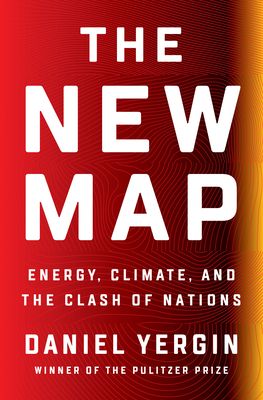
Nova: Oh, I like that! "Interconnected, adaptive, urgent, local, brave." That's a pretty powerful snapshot. And it perfectly sets the stage for our conversation today, because we're diving into a book that really helps us understand those words are so critical: Daniel Yergin's "The New Map: Energy, Climate, and the Clash of Nations."
Atlas: That's a big title, Nova. Yergin is a Pulitzer Prize winner, a true giant in energy geopolitics. His previous work, "The Prize," is practically required reading for anyone in the field. He's known for mapping out these massive, complex global forces.
Nova: Absolutely. And what's fascinating about Yergin is how he manages to translate these vast, intricate global systems – the energy markets, climate policy, technological races – into something that feels deeply relevant to our everyday lives. He shows us how decisions made in boardrooms or war rooms thousands of miles away can directly impact the siren you hear on your street.
Atlas: That makes me wonder, then, how does a book about geopolitics, global energy, and climate actually help us think about something as immediate and localized as emergency services? For many of us, those feel like entirely different universes.
Geopolitical Forces and Urban Vulnerability
SECTION
Nova: That's the million-dollar question, isn't it? And it's precisely where Yergin's work becomes indispensable. He argues, quite compellingly, that the future of emergency services – how we respond to crises, how resilient our cities are – is intrinsically linked to these grand geopolitical forces.
Atlas: So you're saying that the price of oil, or a new climate agreement, or a tech breakthrough in, say, battery storage, isn't just about economics or policy, but about whether our fire departments have fuel, or if our hospitals have power during a blackout?
Nova: Exactly. Think about it this way: a geopolitical shift isn't just a headline. It's a cascade. Take energy transitions, for example. The move towards renewables is vital, but it also creates vulnerabilities. If a city relies heavily on a new, decentralized grid, what happens when a cyberattack targets that infrastructure? Or if a massive solar farm is hit by an extreme weather event? These aren't hypothetical anxieties; they are direct consequences of global shifts meeting local realities.
Atlas: Oh, I see. So the changing energy landscape, as Yergin meticulously charts it, isn't just about where our electricity comes from, but how robust and secure that supply is, especially when our cities are under duress. It's about systemic fragility.
Nova: Precisely. Yergin illustrates how the interconnectedness of our world means that a conflict in one region can disrupt supply chains globally, impacting everything from medical supplies to fuel for first responders. Or consider climate change, another huge focus for him. We're seeing more frequent and intense extreme weather events. These aren't just 'natural disasters' in isolation; they're often exacerbated by global climate patterns he describes.
Atlas: That's going to resonate with anyone who struggles with planning for the unpredictable. If you're running an emergency service, you're constantly trying to anticipate the next crisis. But how do you anticipate a crisis that's born out of a global energy market fluctuation or a shifting climate pattern? It feels almost too big to grasp.
Nova: It does feel immense, but Yergin gives us a framework. He talks about how nations are literally redrawing "the new map" based on resource access, trade routes, and technological dominance. And when we talk about urban resilience, we're essentially talking about how well a city can withstand the tremors of these global shifts. If a city's infrastructure – its power, water, communication – is built on assumptions that are being fundamentally challenged by these global forces, then it's inherently vulnerable.
Atlas: So, for example, a city located in a coastal area that might face increased flooding due to rising sea levels, as predicted by climate models Yergin discusses, needs to think about its emergency response differently than it did even twenty years ago. The very definition of 'emergency' expands.
Nova: Absolutely. And it's not just the immediate flooding. It's the cascading effects: displacement of populations, strain on healthcare, disruption of transportation networks, potential for civil unrest. These are all emergencies that can be amplified by geopolitical and climate factors. Yergin's genius is in showing us that these aren't isolated events; they're all threads in the same global tapestry.
Atlas: That’s a great way to put it. It’s like, we used to think of emergencies as discrete events – a fire, an earthquake. But now, they're becoming symptoms of larger, interconnected systemic pressures. It makes you realize how much foresight is truly needed.
Strategic Foresight and Regional Adaptation
SECTION
Nova: Which brings us perfectly to our second core idea: strategic foresight for urban resilience. If "The New Map" shows us the looming challenges, then strategic foresight is about how we navigate them. It's about moving from reacting to predicting, from repairing to building better.
Atlas: Okay, so if we understand these macro trends from Yergin's book, the next step is to translate that into actionable strategies at a regional level. But how do you even begin to do that? How do you take something as abstract as "geopolitical forces" and turn it into a concrete plan for, say, a local fire department or a city's public health system?
Nova: It starts with asking the deep questions, precisely like the one we posed earlier: How might global energy transitions and climate impacts specifically influence the types of emergency responses and infrastructure adaptations needed in region over the next 10-20 years? This isn't a one-size-fits-all answer. A coastal city in Florida will have different priorities than a landlocked city in Arizona.
Atlas: That makes sense. It requires a highly localized interpretation of global trends. So, if your region is heavily reliant on a certain energy source that's becoming geopolitically unstable, your emergency services need to have contingency plans for alternative power, or even micro-grids.
Nova: Exactly. And it's not just about energy. Consider water resources, which are increasingly under pressure due to climate change. How will water scarcity or extreme droughts impact firefighting capabilities? Or the spread of vector-borne diseases that thrive in changing climates – how does that reshape public health emergency responses? Strategic foresight means anticipating these specific regional impacts.
Atlas: So it's about scenario planning, really. Building different future narratives based on these geopolitical and climate variables, and then designing responses for each. It sounds like a lot of work, but essential for someone driven by a desire for impact and dedicated to community safety.
Nova: It is. Yergin's book, while not a how-to guide for emergency services, provides the essential context. It's like giving urban planners and emergency managers a much more accurate weather map for the next two decades, rather than just the next five days. With that map, they can start to build infrastructure that isn't just robust for today, but resilient for tomorrow.
Atlas: And this isn't just about physical infrastructure, is it? It's also about human resilience, community networks, and how people interact during crises. Because a strong community can often be the first line of defense or recovery.
Nova: Absolutely. Strategic foresight isn't just about steel and concrete; it's about social infrastructure too. How do we foster community cohesion so that during a climate-induced displacement, for instance, people can support each other? How do we leverage technology, not just for response, but for early warning systems and citizen engagement? Yergin's work reminds us that these are not isolated problems, but interconnected challenges requiring comprehensive, forward-looking solutions.
Atlas: That’s actually really inspiring. It means we're not just passively waiting for the next disaster. We're actively shaping our capacity to meet it. It's about proactive building rather than reactive patching.
Synthesis & Takeaways
SECTION
Nova: And that's the profound takeaway from connecting Daniel Yergin's "The New Map" to the future of emergency services. It's a call to elevate our thinking, to understand that the local sirens we hear are often echoes of global shifts. We can't afford to see them as separate.
Atlas: Right, like, a hurricane isn't just a weather event anymore; it's a climate event, driven by global patterns. And our response to it can be made stronger or weaker by geopolitical stability, energy policies, and technological advancements.
Nova: Precisely. The deep insight here is that true urban resilience isn't just about having good emergency protocols; it's about embedding a geopolitical and climate-aware mindset into every layer of urban planning and emergency response. It's about building for a future that is, by Yergin's account, increasingly complex and interconnected.
Atlas: So, for our listeners who are community builders and resilient strategists, the message is clear: your work at the local level is profoundly impacted by global forces. Understanding "The New Map" isn't an academic exercise; it's a vital tool for safeguarding your community’s future.
Nova: It's about seeing the whole board, not just your piece. And with that expanded perspective, we can begin to build truly future-proof emergency services. This is Aibrary. Congratulations on your growth!