

The Art of Influence: Mastering Communication for Deeper Engagement
Golden Hook & Introduction
SECTION
Nova: Okay Atlas, quick game: I'll say a high-stakes scenario, you tell me the first thing that comes to mind for navigating it successfully. Ready?
Atlas: Oh, I like this! Hit me. I’m ready to flex my communication muscles.
Nova: Alright, first one: a parent-teacher conference where both sides are convinced the other isn't listening.
Atlas: Whoa, instant tension! My first thought is... finding common ground. Seriously, just one tiny point of agreement to build on.
Nova: Exactly! See, you're already tapping into the goldmine we're exploring today. We’re diving deep into some truly transformative ideas from a collection of books that redefine how we think about communication and influence.
Atlas: And we're talking about more than just "talking nicely," right? Because sometimes, the stakes are so high that "nice" just doesn't cut it.
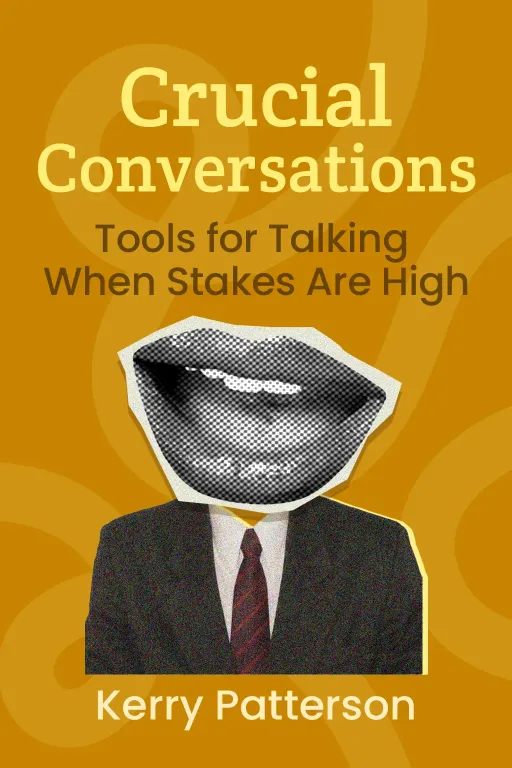
Nova: Absolutely not. Today, we're unpacking the profound insights from three powerhouse books: by Kerry Patterson, Joseph Grenny, Ron McMillan, and Al Switzler; by the incredible Brené Brown; and by the former FBI hostage negotiator, Chris Voss. This isn't about manipulation; it's about mastering communication for deeper engagement, especially when the waters get choppy.
Atlas: That’s a powerful lineup! What’s fascinating about these authors is how they each bring such distinct, yet complementary, perspectives. You have the academic rigor of the team, the deep empathy and research from Brené Brown, and then Chris Voss, who literally negotiated for lives. It’s a masterclass in understanding human behavior under pressure.
Nova: Precisely. And what ties them all together, what Nova's Take really amplifies, is this idea that effective communication isn't just about what you say. It's profoundly about you listen, you empathize, and you create a safe space for authentic dialogue. It’s about transforming those challenges into opportunities for growth, both personally and within a community.
Atlas: That’s a bold claim, transforming challenges into opportunities. For many of our listeners, especially those leading teams or navigating complex community dynamics, communication often feels like a minefield. So, where do we even begin to unpack this?
Nova: Well, let's start with the idea of "crucial conversations" itself. The authors of that book define them as discussions where opinions differ, stakes are high, and emotions run strong. Think about it: these aren't just polite chats. These are the moments that define relationships, careers, and the trajectory of an organization.
Atlas: I can definitely relate. For anyone in a leadership position, or even just trying to get their family to agree on dinner, these situations pop up constantly. But what makes them "crucial" beyond just being difficult?
Nova: That’s a great question, and it’s where the insights really begin to crystallize. The team, with their extensive research into organizational behavior, found that the ability to navigate these moments successfully is the single greatest predictor of success in relationships and careers. They’re not just difficult; they’re.
Atlas: So, the quality of our lives and our leadership is directly tied to how well we handle these moments when everything is on the line? That’s a pretty heavy thought.
Nova: It is. And what their research revealed is that most people either avoid these conversations altogether, leading to festering issues and resentment, or they handle them poorly, resorting to aggression or passive aggression. Neither is effective. Their core insight is about moving towards a "pool of shared meaning."
Atlas: A "pool of shared meaning." Can you unpack that a bit? It sounds almost poetic, but I imagine it’s quite practical.
Nova: It's incredibly practical. Imagine a conversation where everyone feels safe to contribute their ideas, even if those ideas are controversial or unpopular. The "pool" is the collective understanding that emerges when everyone's views, feelings, and data are openly shared. The bigger the pool, the better the decisions, and the stronger the commitment to those decisions.
Atlas: So, it's not about one person winning an argument, but everyone contributing to a richer understanding? That’s a shift in perspective. But how do you create that safety, especially when emotions are running high and opinions are diametrically opposed? That’s the million-dollar question for many leaders.
Nova: Exactly, Atlas! And this is where the genius of their framework comes in. They talk about "starting with heart," meaning you have to get clear on what you really want for yourself, for the other person, and for the relationship, before you even open your mouth. It's a fundamental shift from "winning" to "learning."
Atlas: Okay, so it’s about intentionality and a genuine desire for mutual understanding, not just getting your point across. That makes sense. It’s like, if you walk in ready for battle, you’re probably going to get one.
Nova: Precisely. And then they introduce tools for to create that safety. One of the most powerful is "Make it Safe." When you notice safety is at risk – people are getting defensive, withdrawing, or becoming aggressive – you need to step out of the content of the conversation and address the safety issue. For example, if someone feels you’re attacking them, you might say, "My intent is not to blame you; it's to find a solution that works for everyone. Can we agree on that?"
Atlas: So, you're almost meta-communicating. You're talking about the conversation itself, not just the topic. That’s a sophisticated move. It's like pausing the game to say, "Hey, are we still playing by the rules, or are we just throwing punches?"
Nova: Exactly! You're re-establishing mutual purpose and mutual respect. And this is vital for any leader trying to engage diverse stakeholders. If people don't feel safe, they won't share their true concerns, and you'll never reach that pool of shared meaning. This is why the book has become a bedrock for effective stakeholder engagement and conflict resolution in countless organizations.
Atlas: I can see that. Without safety, you get silence or violence, as they put it. And neither leads to effective outcomes. But what if someone is being difficult? What if they’re coming in with a clear agenda to dominate, not collaborate?
Vulnerability, Courage & Negotiation
SECTION
Nova: That's a perfect segue, Atlas, because it brings us to the profound work of Brené Brown in. While gives us the tactical framework for tough talks, Brown gives us the and to even show up for them.
Atlas: Ah, Brené Brown. Her work on vulnerability and shame has resonated with so many. But how does that translate into the often-tough world of leadership and high-stakes communication? It almost seems counterintuitive to bring vulnerability into a negotiation.
Nova: It's not counterintuitive at all; it's foundational. Brown argues that vulnerability isn't weakness; it's our most accurate measure of courage. And in leadership, courage is essential for trust, innovation, and psychological safety. She fundamentally changed the conversation around what "strong leadership" looks like.
Atlas: So, instead of the stoic, impenetrable leader, she's advocating for a leader who can say, "I don't have all the answers," or "I'm struggling with this too"? That sounds incredibly powerful for building connection.
Nova: It is. She talks about "leaning into vulnerability" and having "tough conversations with whole hearts." This means showing up authentically, being willing to feel uncomfortable, and acknowledging the humanity in the situation. It's about empathy, which she defines as feeling people, not just them.
Atlas: I imagine that would be incredibly disarming in a crucial conversation. If someone comes in with their guard up, ready for a fight, and you respond with empathy and a willingness to be vulnerable yourself, it changes the dynamic. It creates a bridge.
Nova: Precisely. And this is particularly relevant for our listeners who are focused on building stronger community ties and fostering psychological safety. If you, as a leader, aren't willing to be vulnerable, how can you expect your team or community members to be? That trust simply won't form. Brown's work has been widely acclaimed for its ability to transform organizational culture by humanizing leadership.
Atlas: So, gives us the how-to, and gives us the emotional and courageous foundation. But what happens when you’re not just trying to build shared meaning, but you actively need to an outcome, or even negotiate a specific demand? That's where Chris Voss comes in, I imagine?
Nova: You've hit the nail on the head, Atlas. Chris Voss, the former lead international hostage negotiator for the FBI, literally wrote the book on "Negotiating As If Your Life Depends On It." His approach is a tactical masterclass in understanding and influencing others, and it complements the previous two perfectly.
Atlas: I’ve heard about his methods. It’s not about being aggressive or dominating, is it? It’s much more subtle, almost psychological.
Nova: Far from it. Voss’s core philosophy is that negotiation isn't about confrontation; it's about. He believes that "he who has the most information wins." He teaches you to listen, not just to hear, but to what the other person truly values, what their fears are, and what drives their decisions.
Atlas: So, it's about uncovering the hidden motivations and desires, rather than just arguing over positions. That’s a huge shift from traditional negotiation tactics. I can see how that would be applicable to engaging diverse stakeholders, where everyone comes with their own unique set of priorities.
Nova: Absolutely. One of his most powerful tools is "Tactical Empathy." This isn't about agreeing with the other side, but about understanding their perspective so deeply that you can articulate it back to them better than they can themselves. When you do that, you create a momentary connection, and they feel heard.
Atlas: That sounds incredibly powerful. If you can make someone feel truly heard, even if you don't agree with them, you've taken a massive step towards building rapport and opening them up to your perspective.
Nova: Exactly. He uses techniques like "mirroring," where you repeat the last one to three words the other person said, and "labeling," where you acknowledge their emotions – "It sounds like you're feeling frustrated." These aren't just tricks; they're scientifically backed methods to de-escalate tension and build trust, even in the most high-stakes situations.
Atlas: I can see how a leader focused on visionary leadership and building stronger community ties would find these tools invaluable. Whether it's negotiating a budget, resolving a conflict between departments, or engaging a skeptical community group, these are universal principles.
Nova: They truly are. Voss's methods, while born from hostage negotiations, are incredibly applicable to everyday life, from getting a better deal on a car to resolving a family disagreement. It's all about understanding human psychology and leveraging it ethically to achieve better outcomes for everyone.
Synthesis & Takeaways
SECTION
Nova: So, bringing all three of these incredible books together, what's the overarching message for our listeners, especially those who are constantly seeking optimization and driving for impact?
Atlas: That’s the deep question, isn’t it? I think it boils down to this: influence isn’t about force or manipulation. It’s about intentionality, courage, and deep understanding. It's about approaching every interaction, especially the tough ones, not as a battle to be won, but as a complex human puzzle to be solved collaboratively.
Nova: Beautifully put, Atlas. And it requires a fundamental mindset shift. From, we learn to create that "pool of shared meaning" by making it safe. From Brené Brown, we learn that true strength in leadership comes from vulnerability and empathy, allowing us to show up with "whole hearts." And from Chris Voss, we get the tactical blueprint for listening deeply and using "tactical empathy" to understand the other side's world, even when lives are on the line.
Atlas: It’s almost like a progression. You need the courage and empathy from Brown to even to engage in these tough talks. Then you need the framework from to ensure those talks are productive and safe. And finally, you leverage Voss’s negotiation strategies to truly influence and achieve mutually beneficial outcomes. It’s a holistic approach to communication mastery.
Nova: It’s truly about elevating communication from a basic function to an art form. And the tiny step for our listeners this week, before their next important meeting, is to identify just one 'crucial conversation' they need to have. Then, plan their approach, not with a script of what to say, but with an intention of active listening and creating that shared meaning.
Atlas: And the deep question I keep coming back to is: how can we empower students to engage in more crucial conversations, fostering their own communication skills and sense of agency? Because if we can teach these skills early, imagine the future leaders we could cultivate.
Nova: That’s the ultimate impact, isn't it? Equipping the next generation with these tools to navigate a complex world with grace and effectiveness. It’s about shaping tomorrow’s learning landscape by focusing on these fundamental human skills.
Atlas: Absolutely. This isn't just about professional development; it’s about personal growth, building deeper connections, and genuinely transforming challenges into opportunities.
Nova: That’s the heart of it. This is Aibrary. Congratulations on your growth!